


Subway Pool Café
Chloé Quenum
26. – 29.03.2026
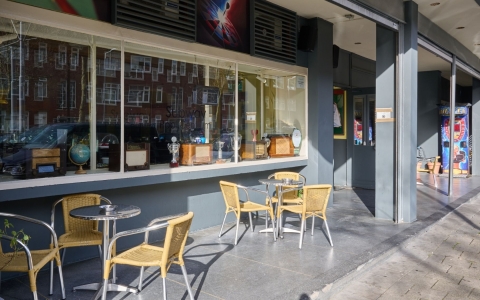
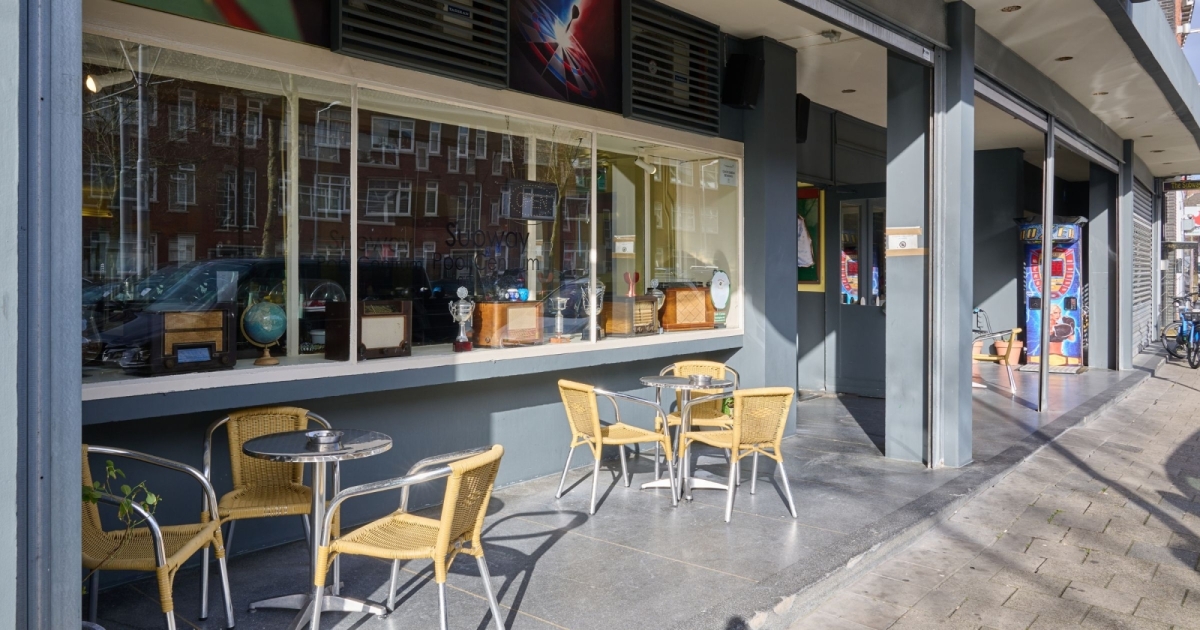
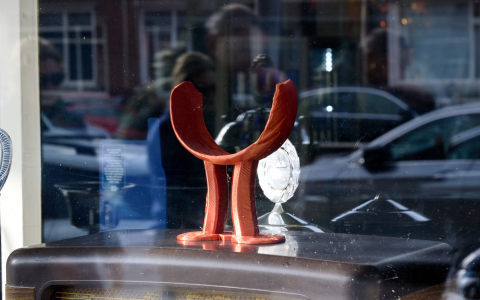
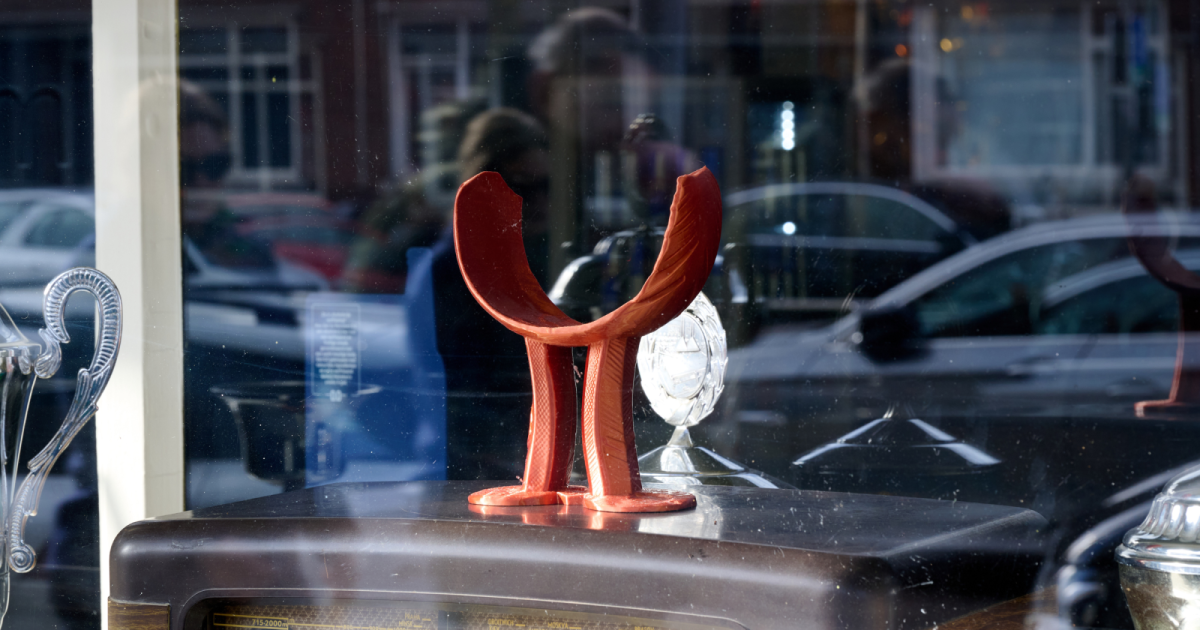
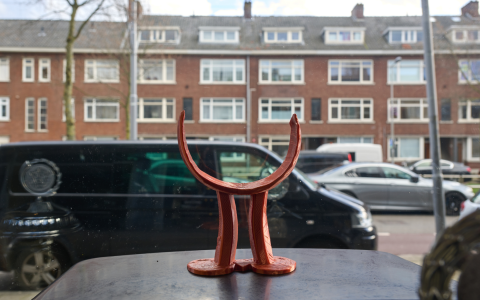
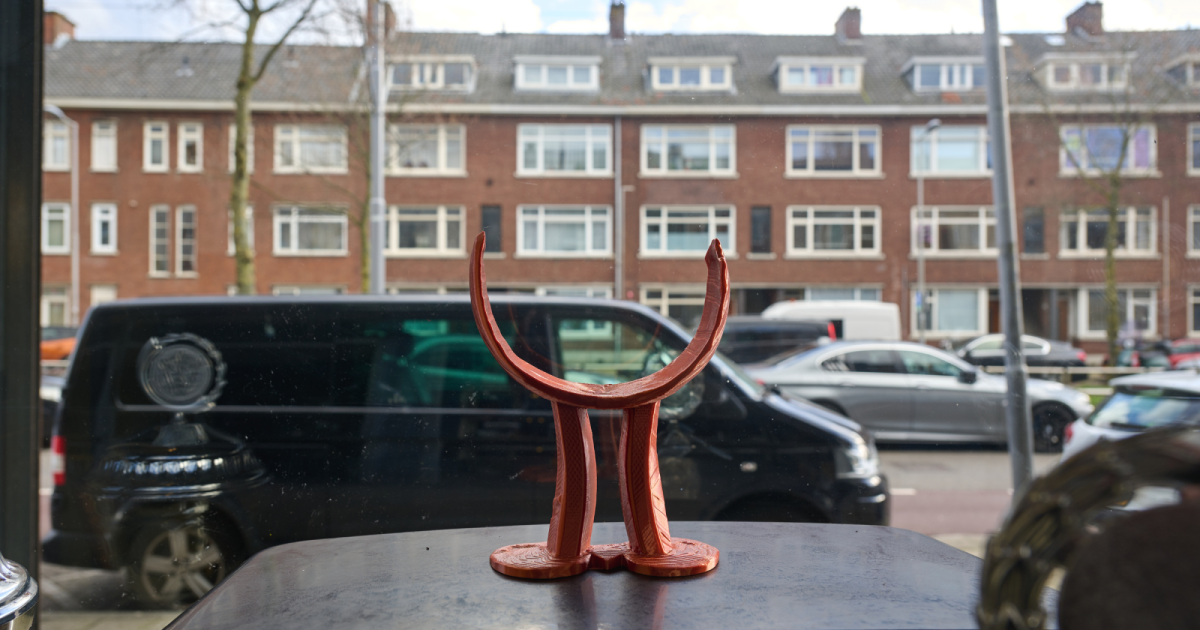
Subway Pool Café, also part of last year’s festival edition, returns as one of the exhibition locations. Once a former cinema, the space was reimagined by Tas and transformed into a cozy entertainment venue in Rotterdam. Today, it consists of a brown café and a large hall featuring 17 pool tables.
The work shown at Subway is part of the series Low Light Rituals, with which the artist presents 3D-printed headrests derived from traditional forms originating in West Africa, Asia and Oceania. At once ritual object, functional device and speculative proposition, each headrest occupies an ambiguous position between ethnographic artifact and something closer to fiction. The use of 3D printing, a technology associated with standardisation and infinite reproducibility, to produce forms inherited from cultures long fetishised and reconfigured by colonial history, is central to the work’s tension. The headrests are hollow, and this emptiness is deliberate, rejecting exoticisation and redirecting attention toward surface, form and the circulation of models. Some of the objects function as lamps, their artificial light introducing a dystopian undertone in which the ritual becomes a device and the protective object is transformed into a signal. These unstable relics, critical objects without a fixed origin, question post-colonial logics of appropriation and dissemination of cultural forms while resisting any single interpretation.
Other artworks from the series were presented at Kapsalon Charlois, Oude Kerk, Attractiepark Rivoli, Planet Cake and Art Rotterdam.
Artwork:
Chloé Quenum, Low Light Rituals II, 2026
Chloé Quenum's works was presented in collaboration with Agence de Voyages.
Chloé Quenum (1983, Paris) explores the circulation, slippage, and transformation of meaning through graphic, linguistic, and symbolic elements drawn from different cultures. By extracting them from their original context, she endows them with a new consistency and vitality, as if transmuted as kind of glitch. Her works become material signs, assemblages of mixed origins where references shift and free themselves from fixed frameworks of interpretation. The artist questions how displacement, translation, and transfiguration reshape our relationship to objects, symbols, and narratives. Through this process of extraction and reconfiguration, she reveals the tensions between memory and erasure, inheritance and reappropriation, transmission and resistance. Crossing the boundaries between disciplines and traditions, Chloé Quenum constructs a cryptic language in which each form acts as a vector of poetic and political resistance. Her works interrogate the evocative power of symbols, their ability to generate new narratives and to make long-silenced or scattered histories resonate.
Agence de Voyages is an art space founded in 2024 in Paris. Its distinctive feature is its precise and subtle alteration of the perception of art and exhibitions, achieved through its careful placement on an ambivalent threshold where aesthetic delight and critical deconstruction can occur simultaneously. Therefore, it deploys a plethora of strategies involving border-crossing and -suspending within the context of a gallery. These include confronting the interiority of the living space with the exteriority of the commercial sphere; combining classical framing, hanging and installations with unconventional concepts of display and social engagement; and reflecting the relationship between art and literature, intermingling publishing and exhibiting practices. Agence de Voyage is a space which aims to infiltrate contemporary issues into historical formats such as painting and the novel and vice versa. On an analytical level the gallery wants to playfully separate interpretative historical frameworks from their respective disciplines and apply them to other forms of expression. The space showed artists like Monica Bär, David Medallal, Mimosa Echard, Jean-Luc Blanc, Chloé Quenum, Stefano Faoro and Birgit Megerle.