


Art Rotterdam
Raymond W. Barion, Tina Braegger, Jakob Brugge, Julia Dubsky, Olivier Foulon, Sitara Abuzar Ghaznawi, Jos de Gruyter & Harald Thys, Thomas Helbig, Erwin Kneihsl, Wjm Kok, Vesta Kroese, Gabriel Kuri, Daniel Laufer, Sam Marshall Lockyer, Bernd Lohaus & Nora Schultz, Mathieu Meijers, Sinaida Michalskaja, Kenichi Ogawa, Nie Pastille, Zahra Pourghomi, Chloé Quenum, Joke Robaard, Richard Sides, David Weiss, Luigi Zuccheri
26. – 29.03.2026
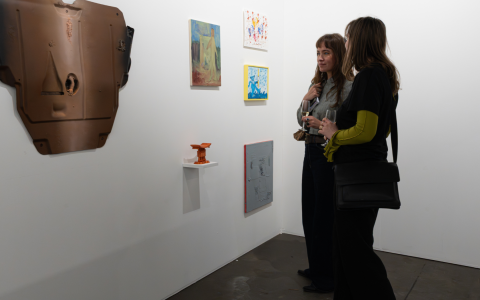
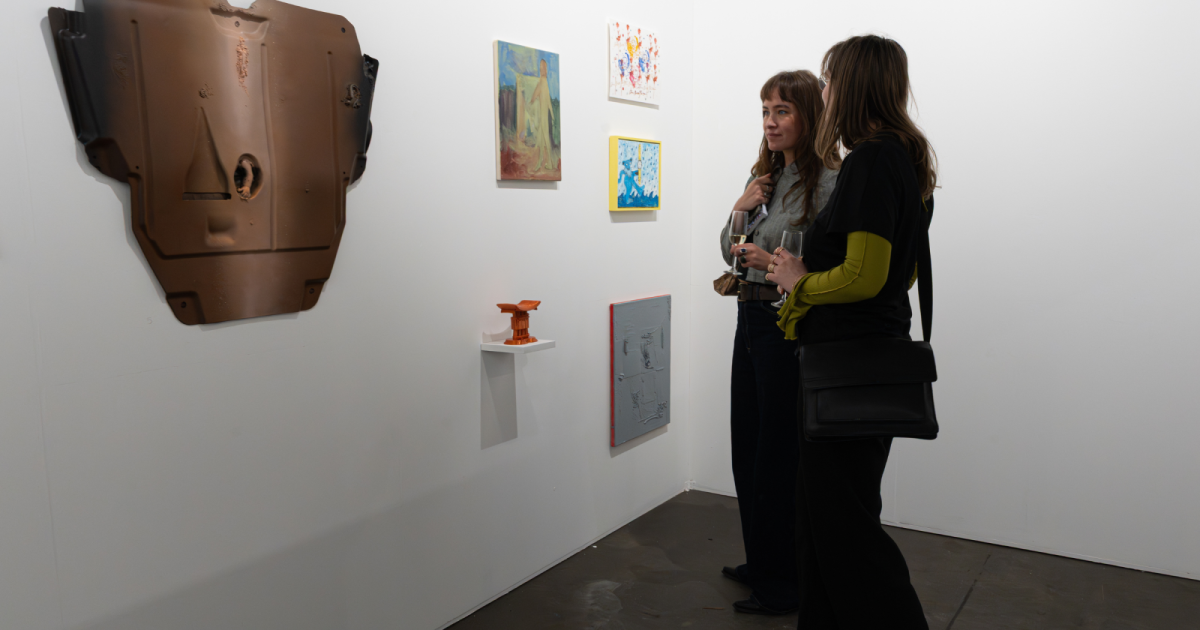
Exhibition View at Art Rotterdam, March 2026. Photo: Lucy Scheurs
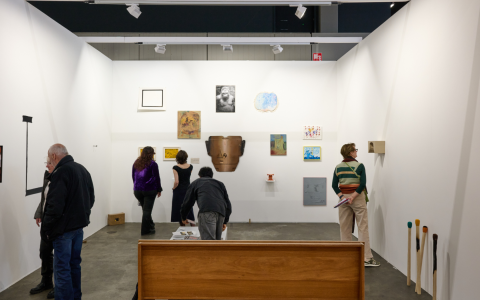
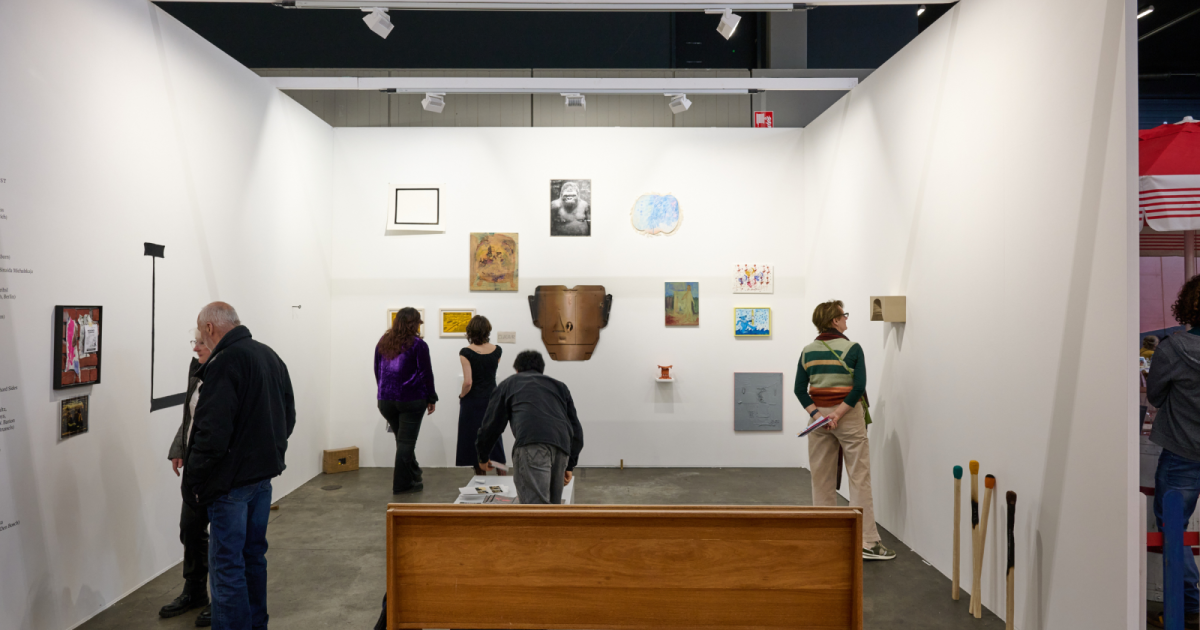
Exhibition View at Art Rotterdam, March 2026. Photo: Frans Parthesius
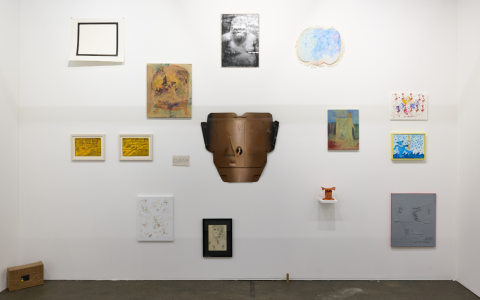
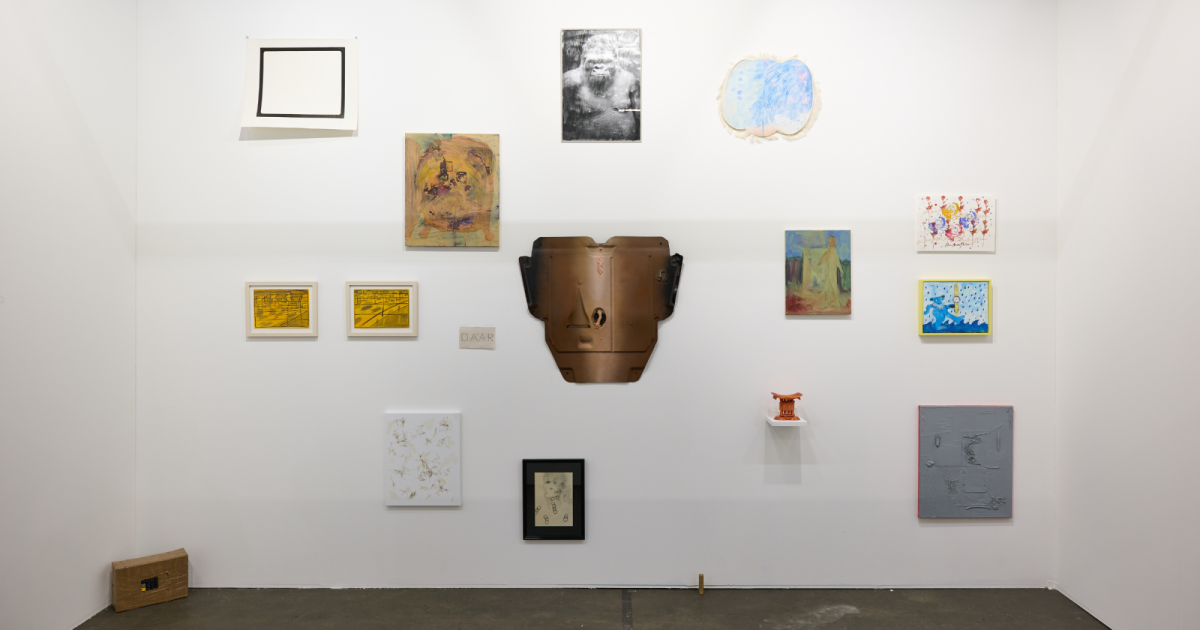
Exhibition View at Art Rotterdam, March 2026. Photo: Frans Parthesius
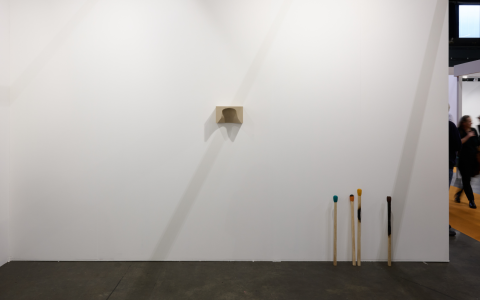
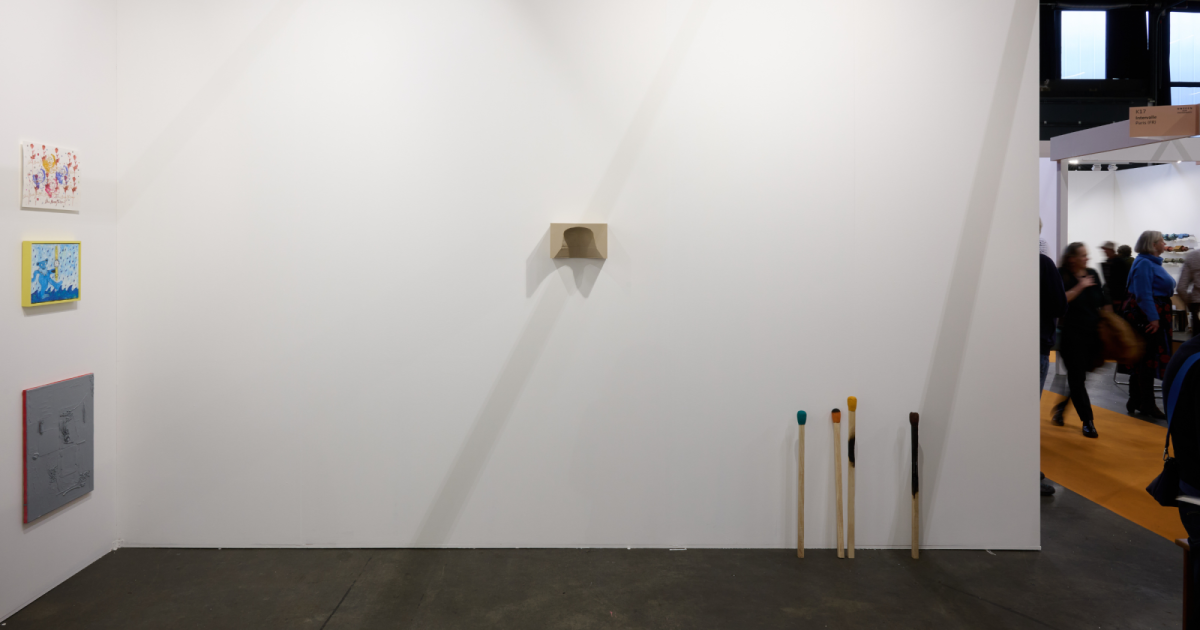
Exhibition View at Art Rotterdam, March 2026. Photo: Frans Parthesius
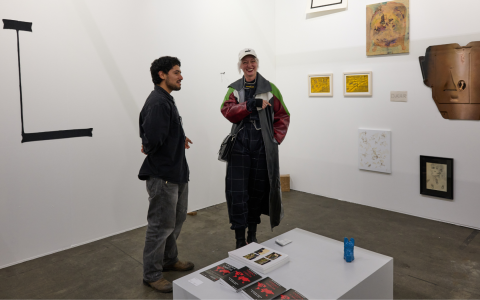
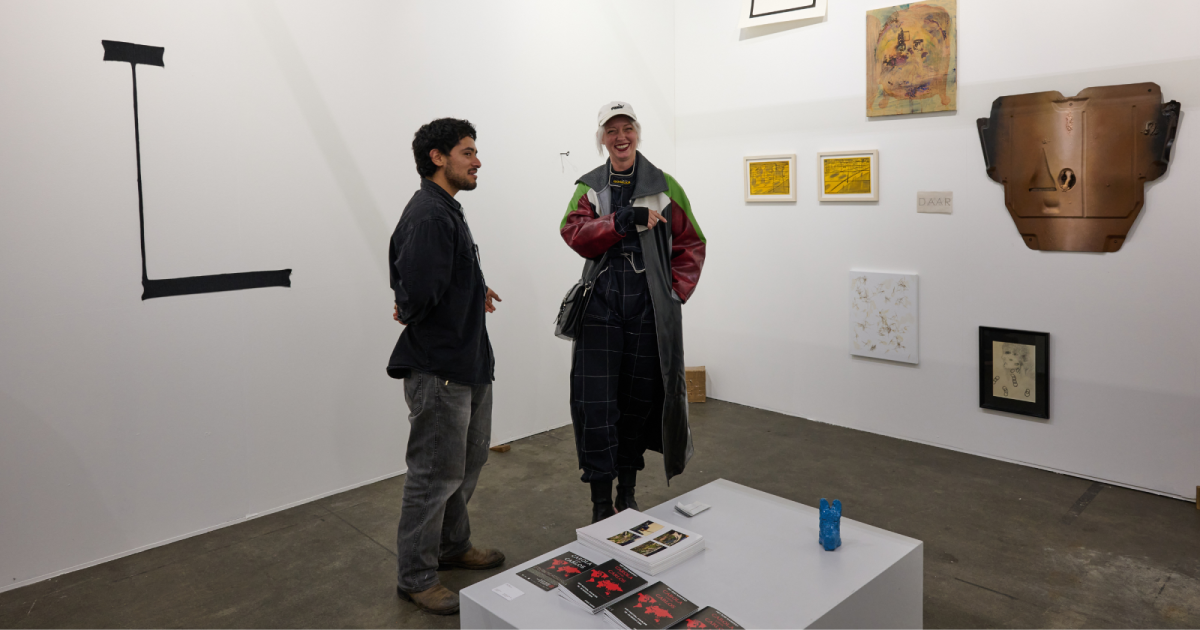
Exhibition View at Art Rotterdam, March 2026. Photo: Frans Parthesius
Het Zuid Manifest presented a booth in Art Rotterdam’s Main Section, bringing together works by artists participating in the festival across Charlois. The presentation functioned as a compressed, abstracted version of the festival, a scale model in 25 square metres of what unfolded outdoors and indoors over eighteen locations throughout the neighbourhood. The works were presented in collaboration with a selection of the galleries and institutions partnering in the festival. For visitors arriving at Art Rotterdam, the booth served as an invitation: step outside the fair and into the neighbourhood.
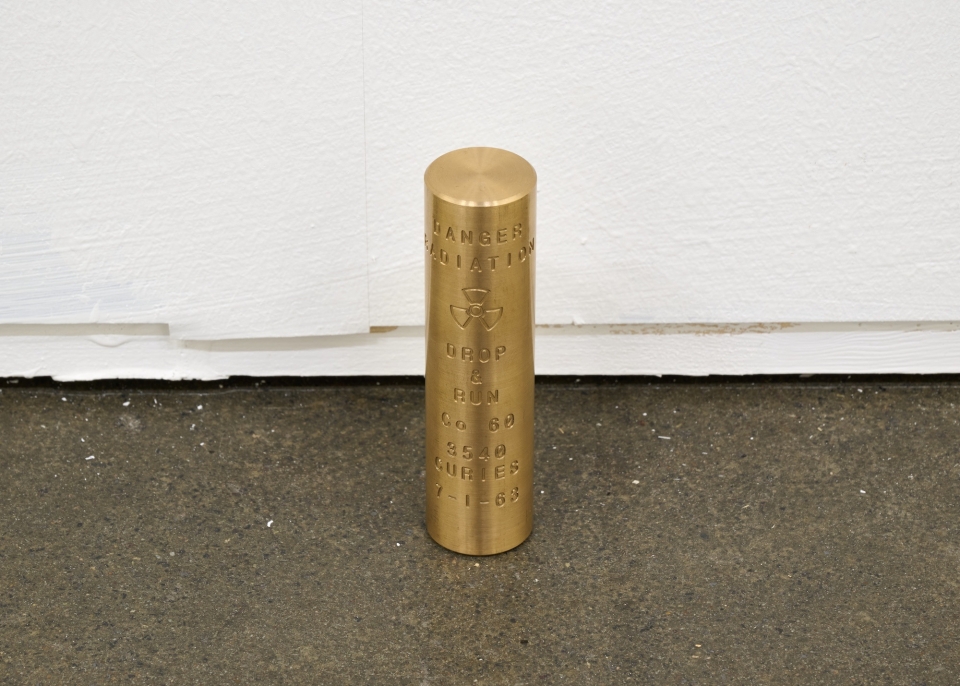
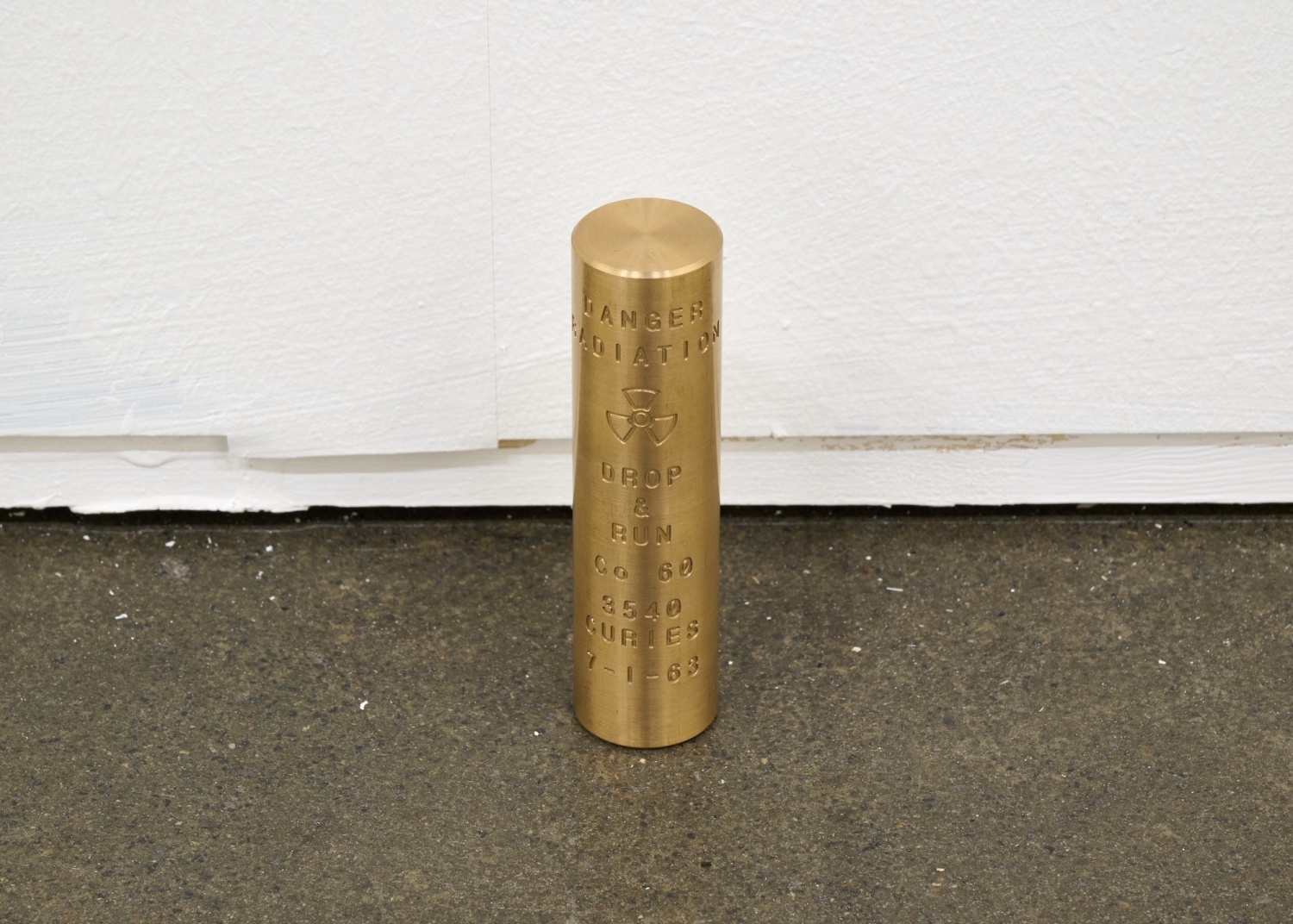
Raymond W. Barion’s sculpture Drop and Run (2025) is a brass replica of a Cobalt 60 sealed radioactive source.The original Cobalt 60 Column was developed at the Chalk River Laboratories in Ontario in the early 1950s. It was developed to help study irradiation effects in biology and industrial contexts. The 'Drop and Run' words engraved in it are supposed to work as a warning, and yet by the time you pick up and start to read 'Drop', the radiation caused by Co60 would already have claimed your arm, finish 'and Run' and the dose of radiation would be lethal.
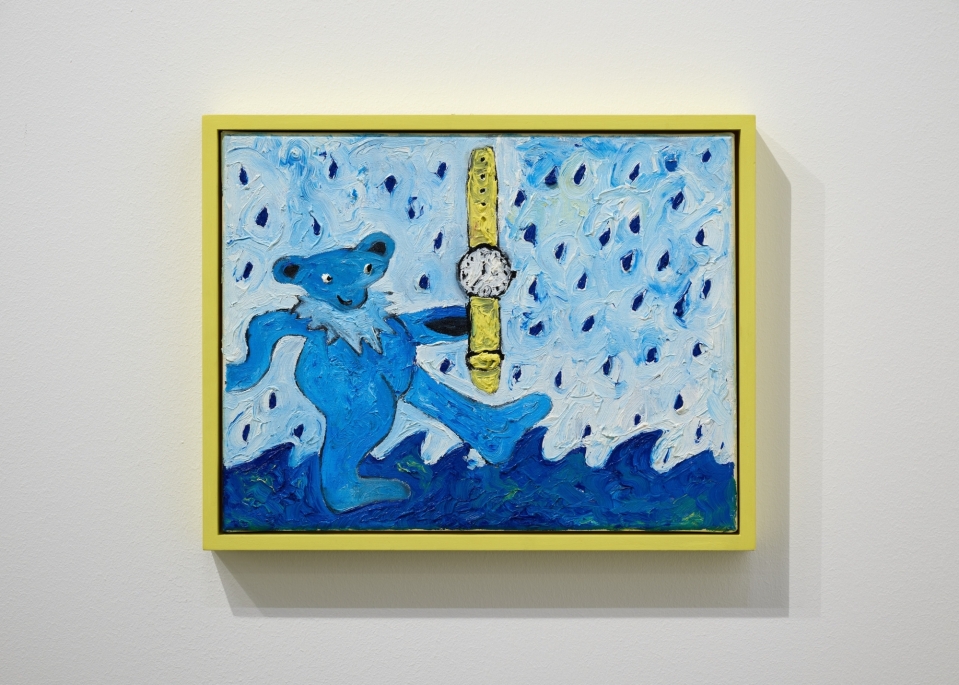
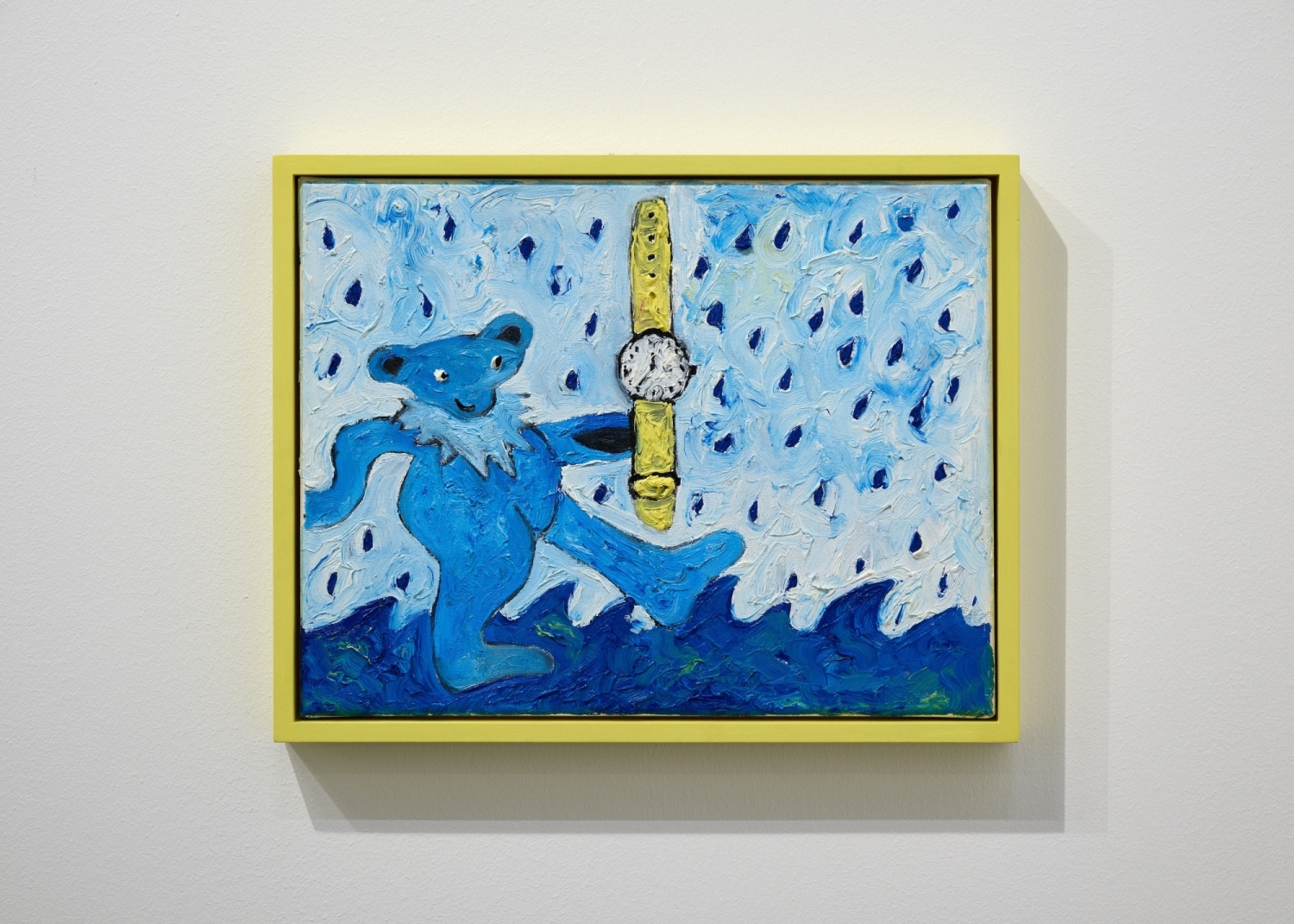
Tina Braegger’s work addresses questions related to originality, reproduction, authenticity, repetition, and difference. Since 2017, she has explored these topics through the motif of the „dancing bear,” a bootleg drawing that became an emblem of the American rock band The Grateful Dead in the 1970s. Braegger’s attraction to the bear has little to do with the band‘s music. Instead, her painting practice conceptually engages with how this counterfeit symbol inverts notions of official and unofficial, original and copy. In Braegger’s paintings, as in the concert parking lots that spawned countless variations of this figure, the bear operates according to the logic of the bootleg. The dancing bear absorbs, sponge-like, characteristics that it encounters through the process of its circulation, canonization, and its own fluctuating values—which Braegger addresses in her endless painterly permutations of this figure.
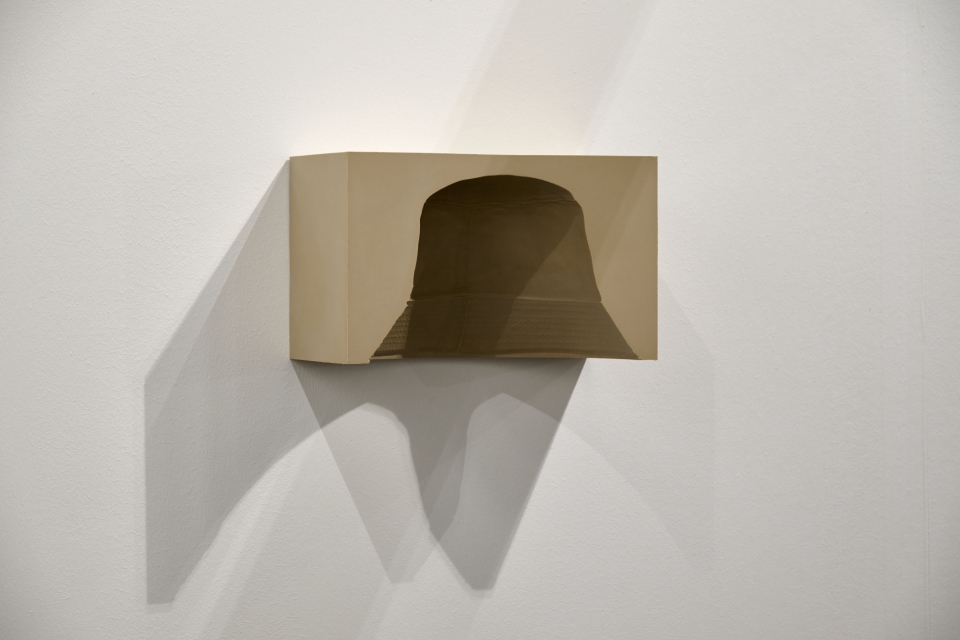
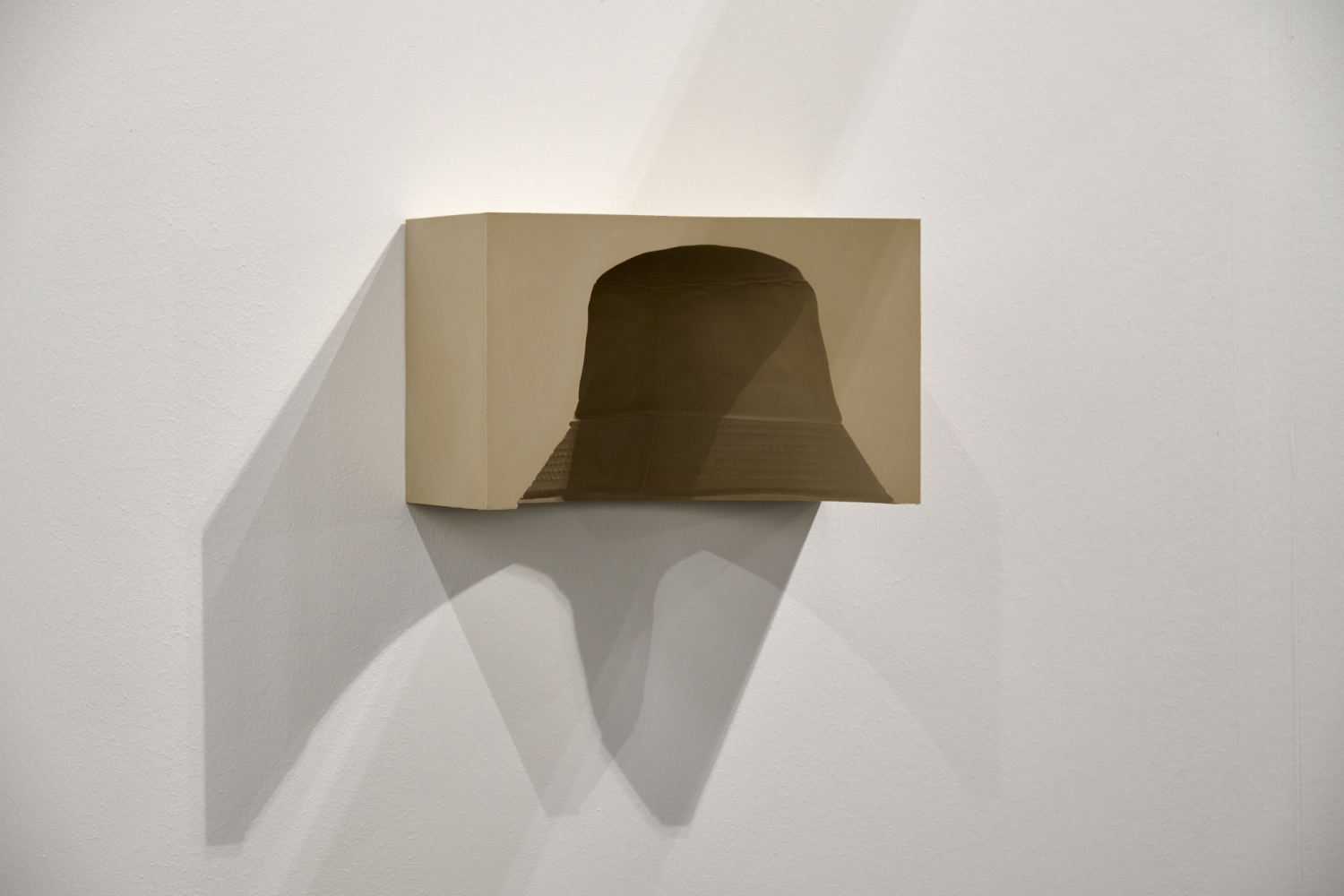
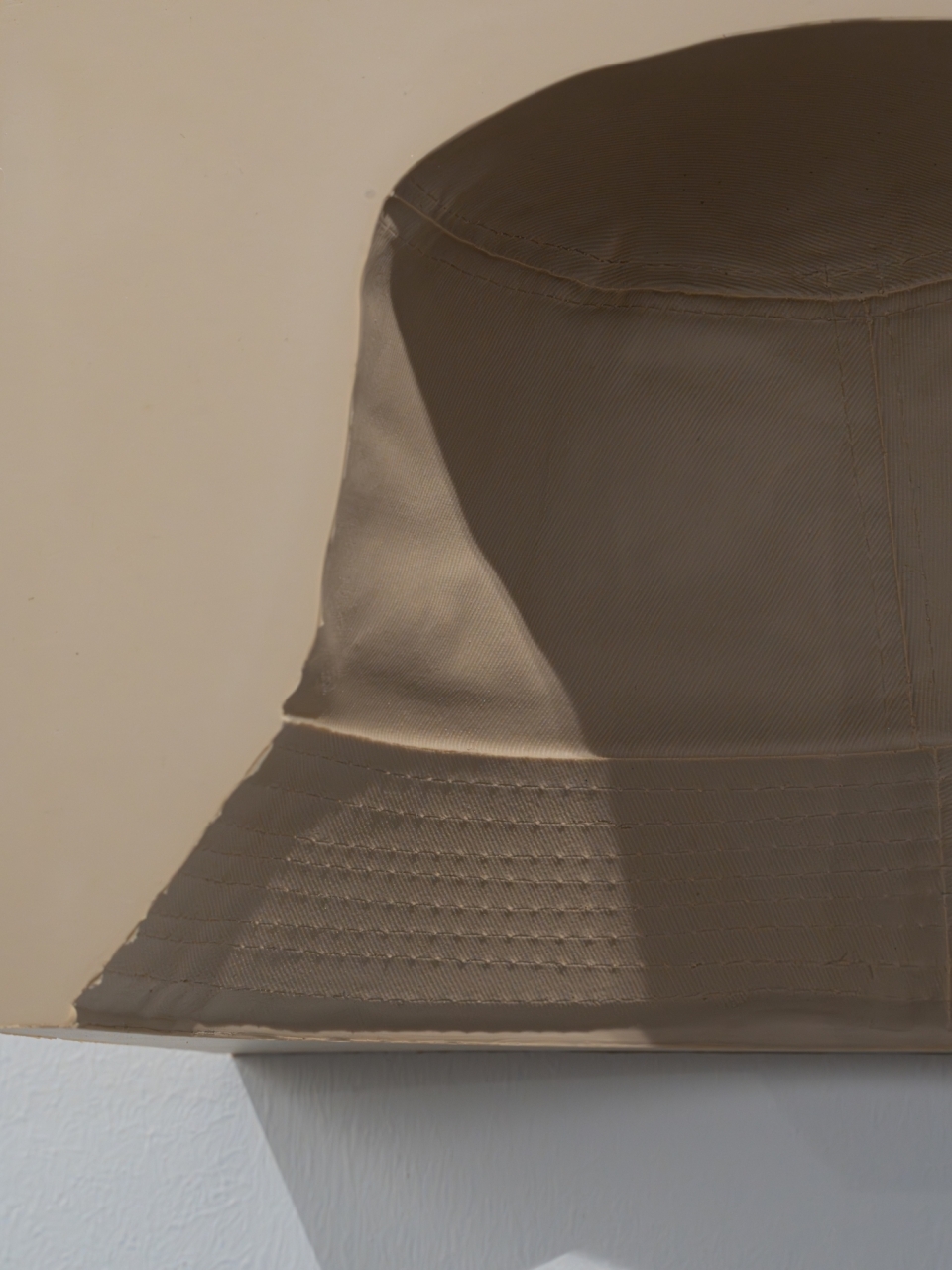
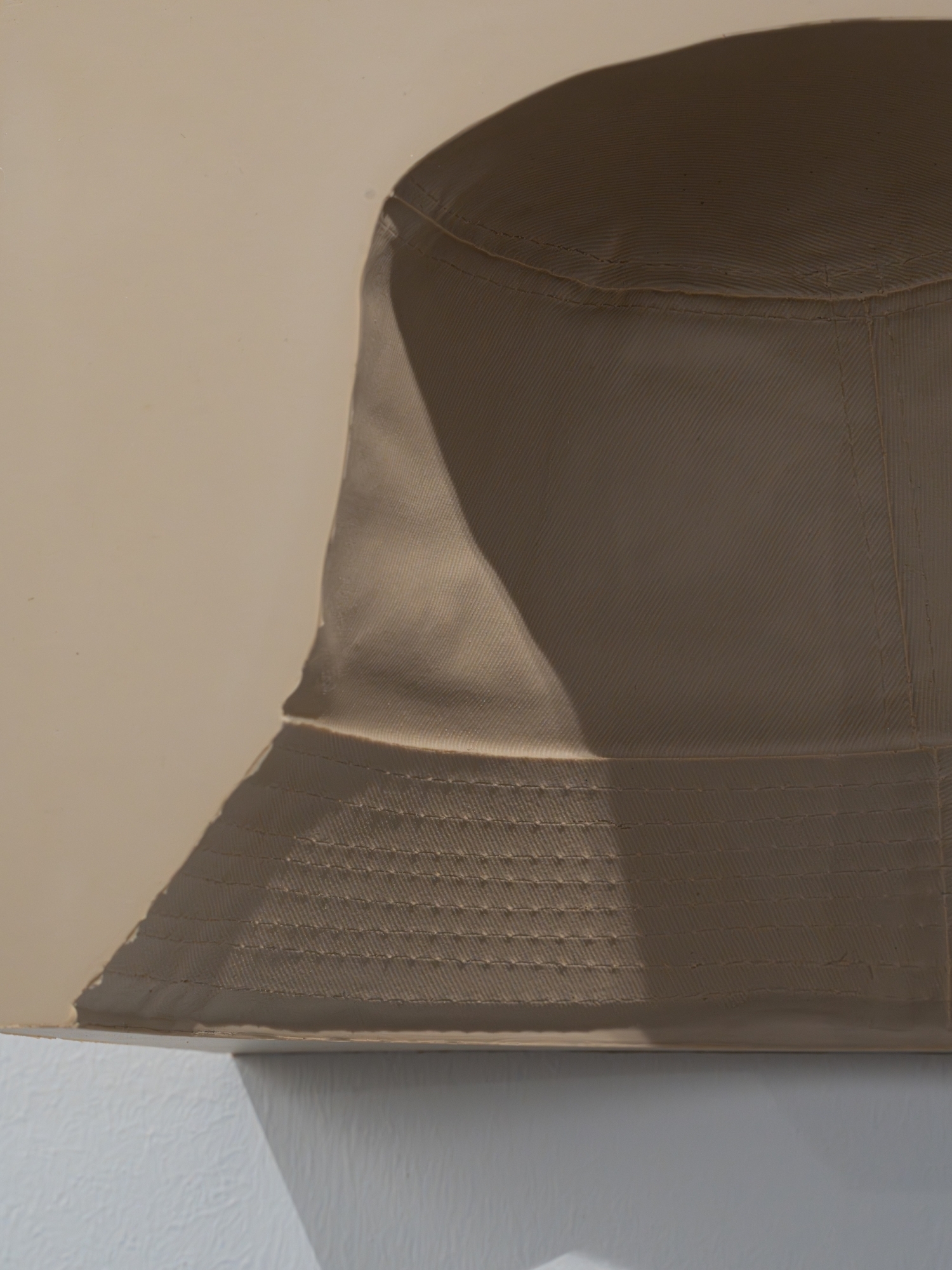
Jakob Brugge's work deals with the symbolic potential of everyday objects, especially clothes. How does a baseball cap or a belt relate to lifestyle, ideology, or political affiliation? When and how does a specific shirt become a uniform, a sign of belonging, a behavior even? These and other questions are prompted by Brugge's work, which often materializes in sculptures that deviate from mere found objects: Symbolic clothes are fabricated, encased, molded, cast, replicated, and transformed by the artist.
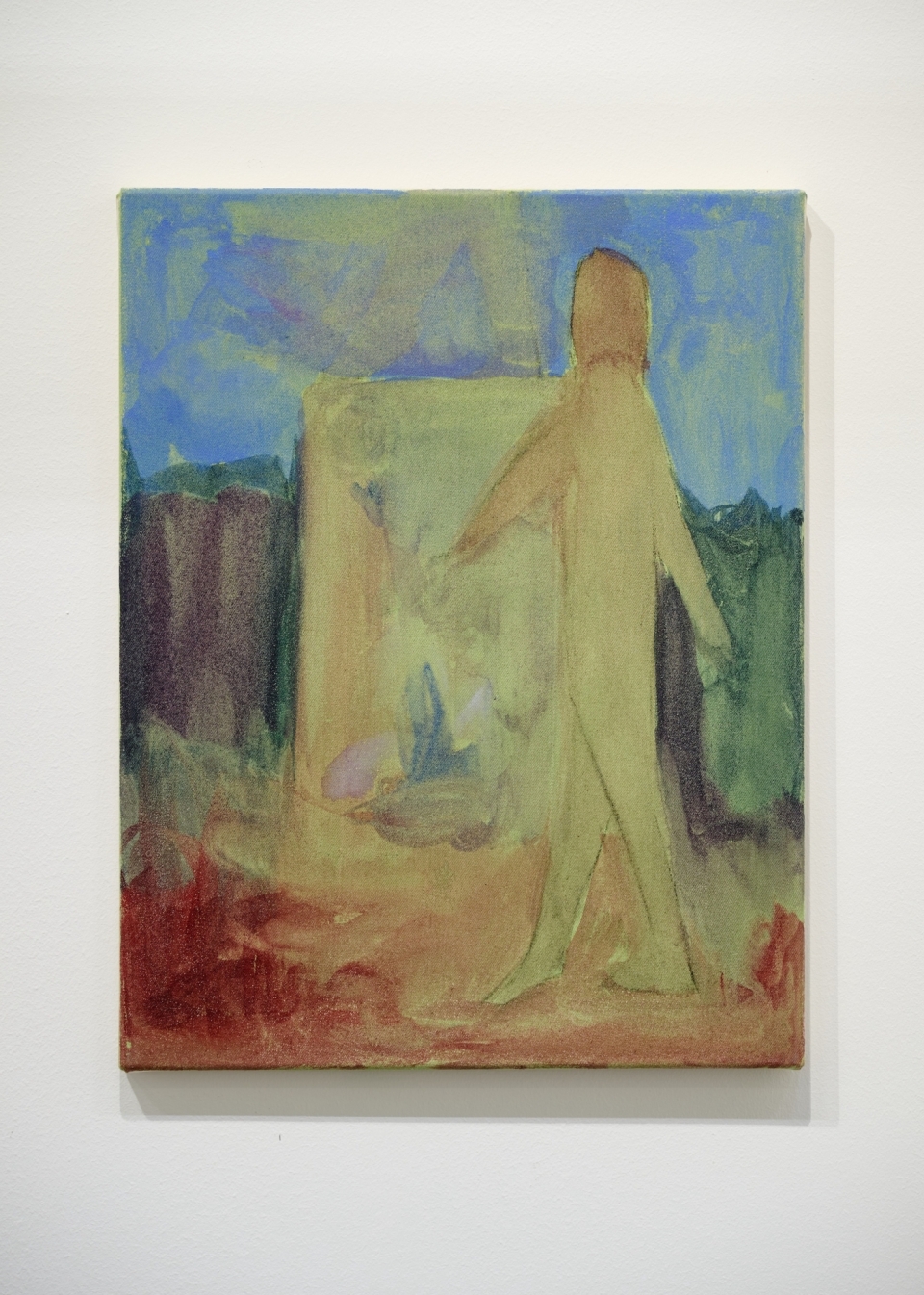
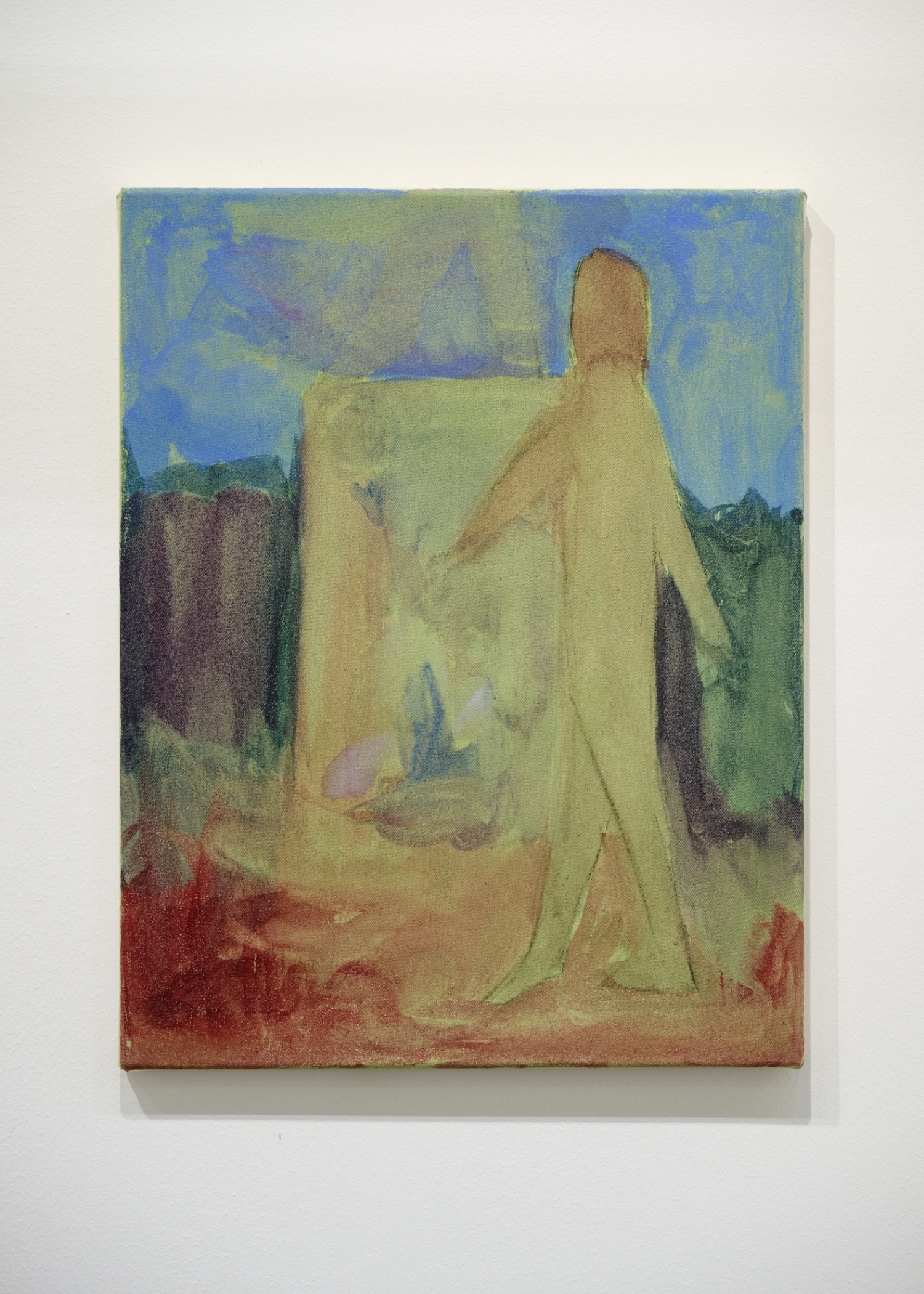
Julia Dubsky's Barometers of Acting reflects her ongoing reflections on the parallels between painting and acting. A painting represents its subject while also asserting itself as a medium — much as our experience of an acted role is coloured by prior associations with the actor performing it. In this sense, both the well-known actor and the medium of painting carry a kind of hyper-familiarity, producing a state of doubleness. The comparison runs deeper: an actor and a painting each perform a similar alchemy, becoming something more in addition to themselves, not in place of themselves. Since 2021, Dubsky has developed this idea through critical writing and exhibitions. Barometers of Acting is part of a series developed from a photograph she took of a statue in Paris, The Greek Actor. The statue's plinth becomes a flat rectangle standing in for the canvas, while the figure on the ground echoes the bronze statue's crossed-leg pose. The title itself fuses two fragments drawn from theories of film acting.
Dubsky also showed three other paintings at Cyro Bloemsierkunst.
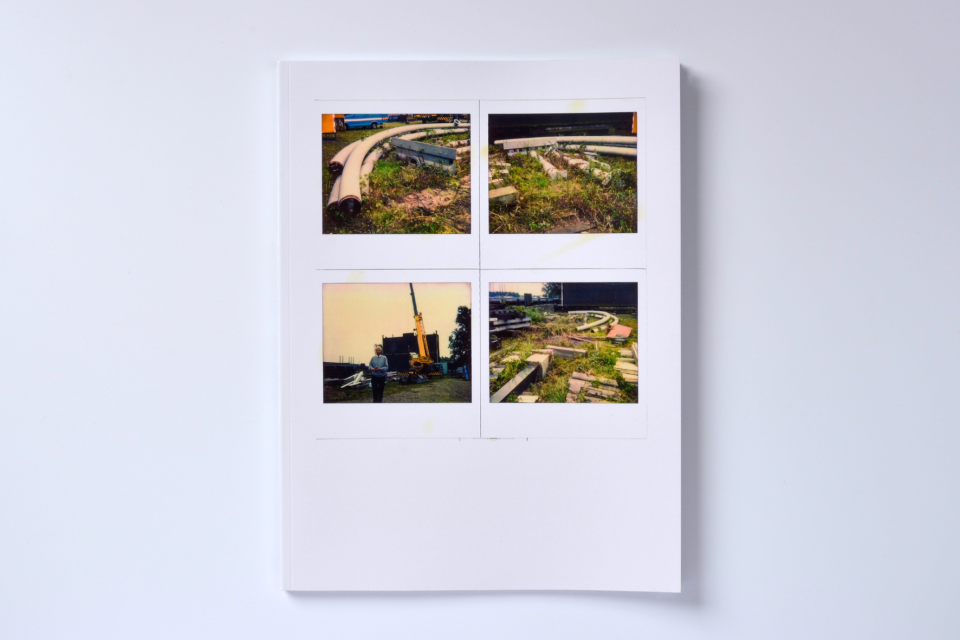
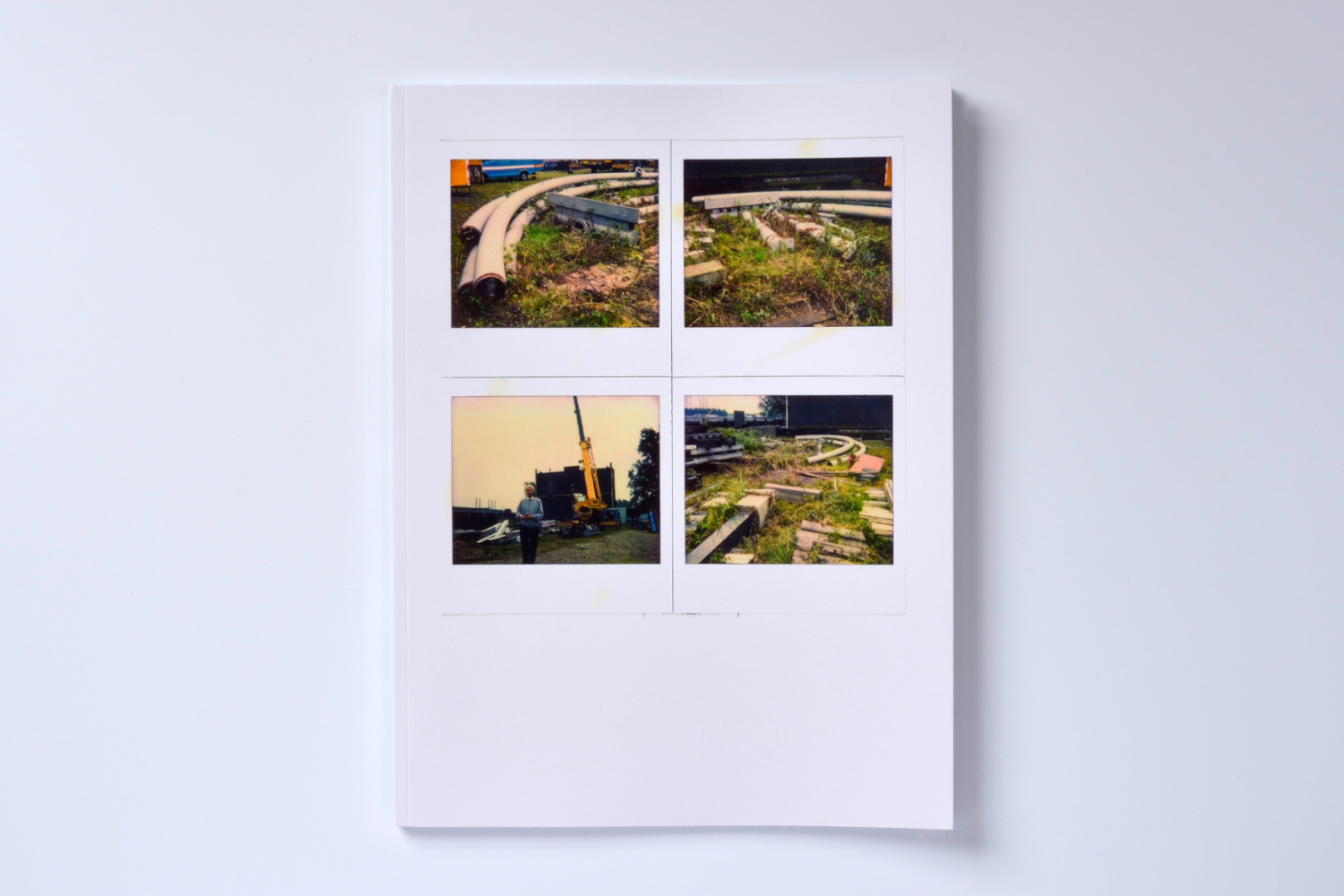
In his 2018 publication Isa Genzken's Ring, Olivier Foulon delves into the history of public art commissions in Rotterdam and revisits the story of Ring, a work by the German artist Isa Genzken. In 1988, at the invitation of Rotterdam's urban sculpture commission Commissie Beelden in de Stad, Genzken intended to install a monumental steel ring, suspended at an angle between two apartment buildings on either side of Mauritsplaats. The sculpture was started but never completed, because some residents believed that the sound of the wind blowing through the empty ring would be too disturbing. Genzken's project was thus abandoned and the various sections of the ring were destroyed.
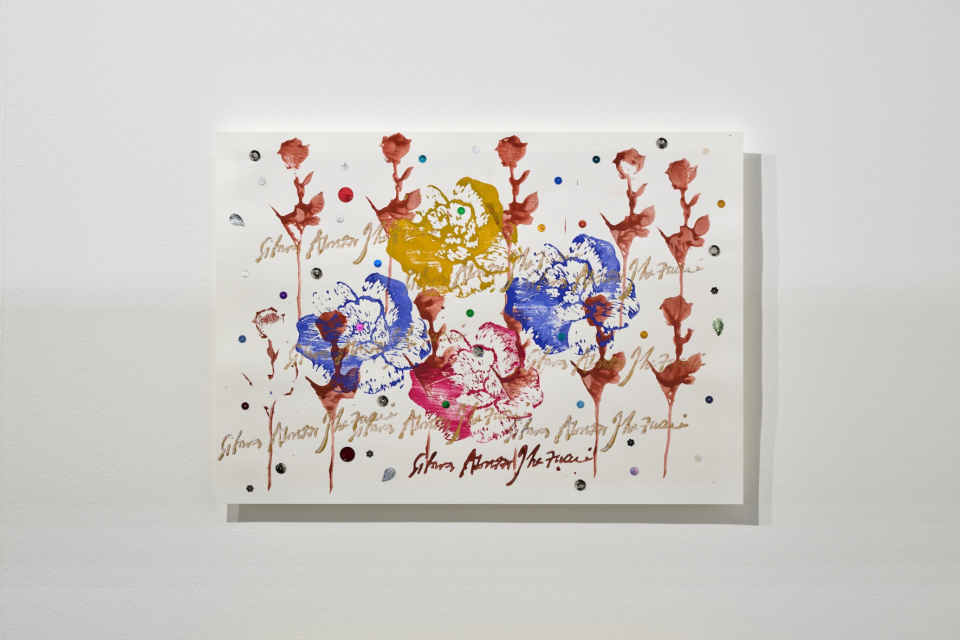
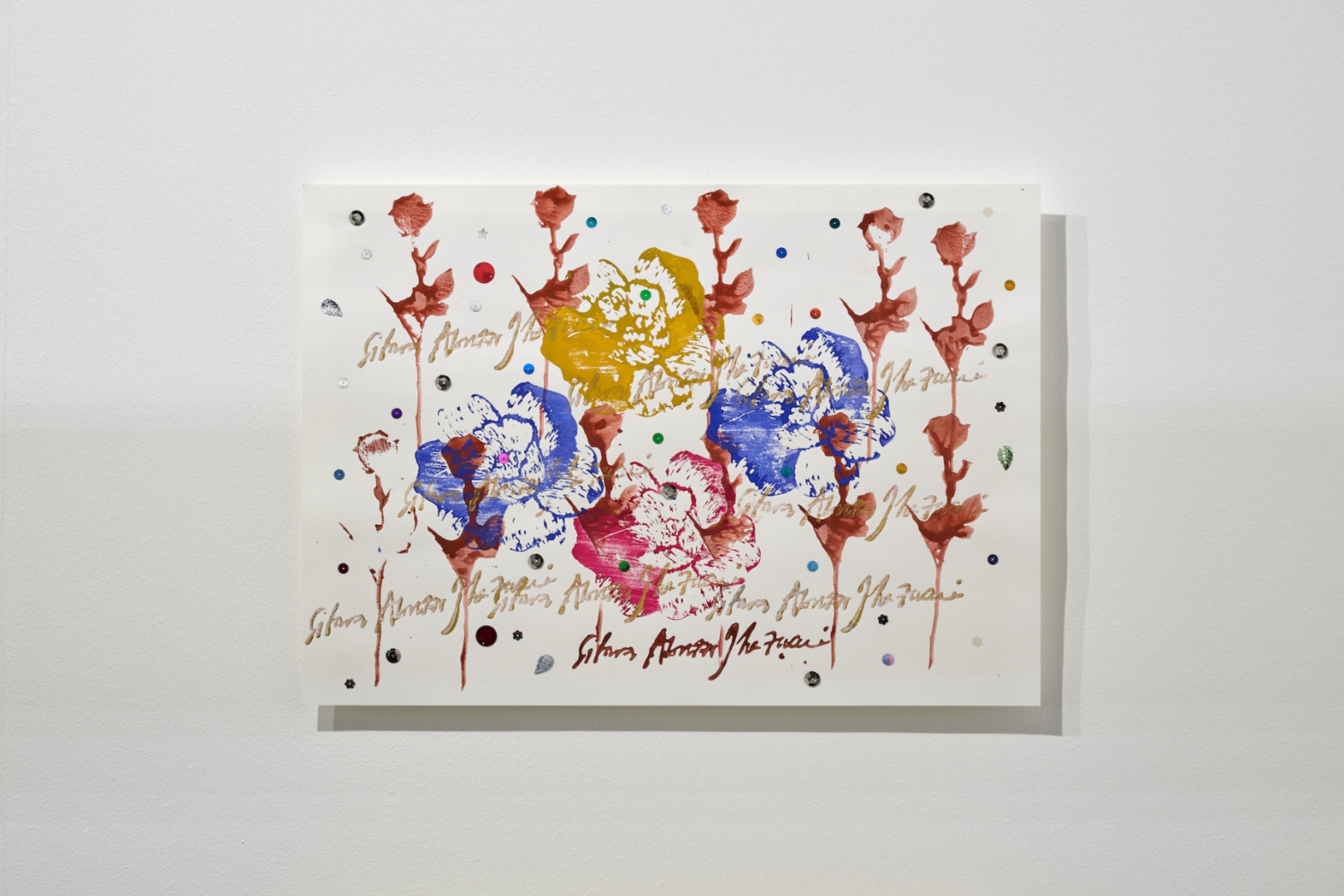
In this work, which is part of a series, Sitara Abuzar Ghaznawi returns to her roots in collage while experimenting with printmaking and stamped motifs. Her signature rose motifs recurs eleven times alongside her autograph, charged with repetition and intensity – gestures that act like a rhythm that is at once meditative and disruptive.
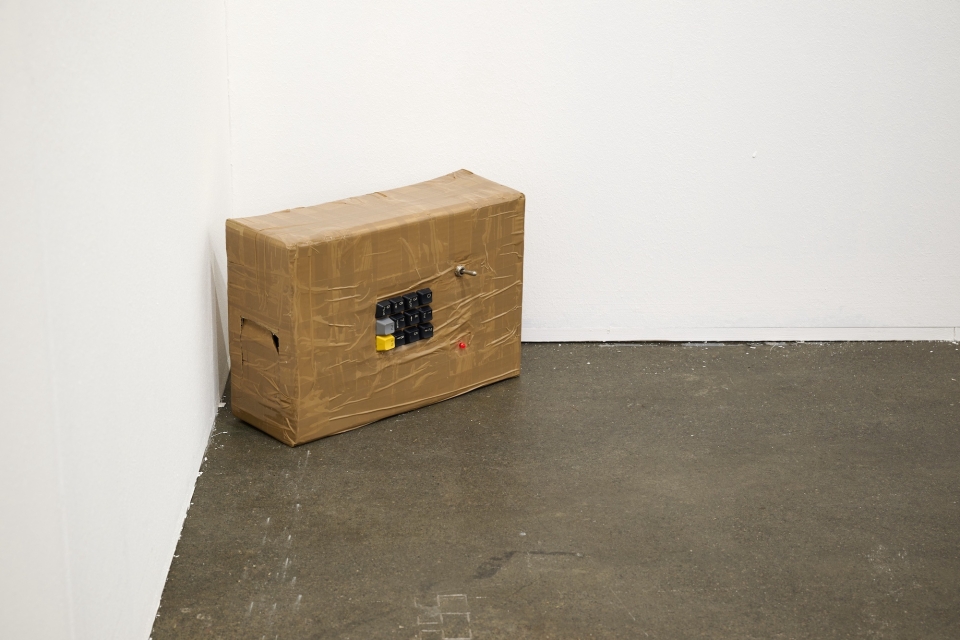
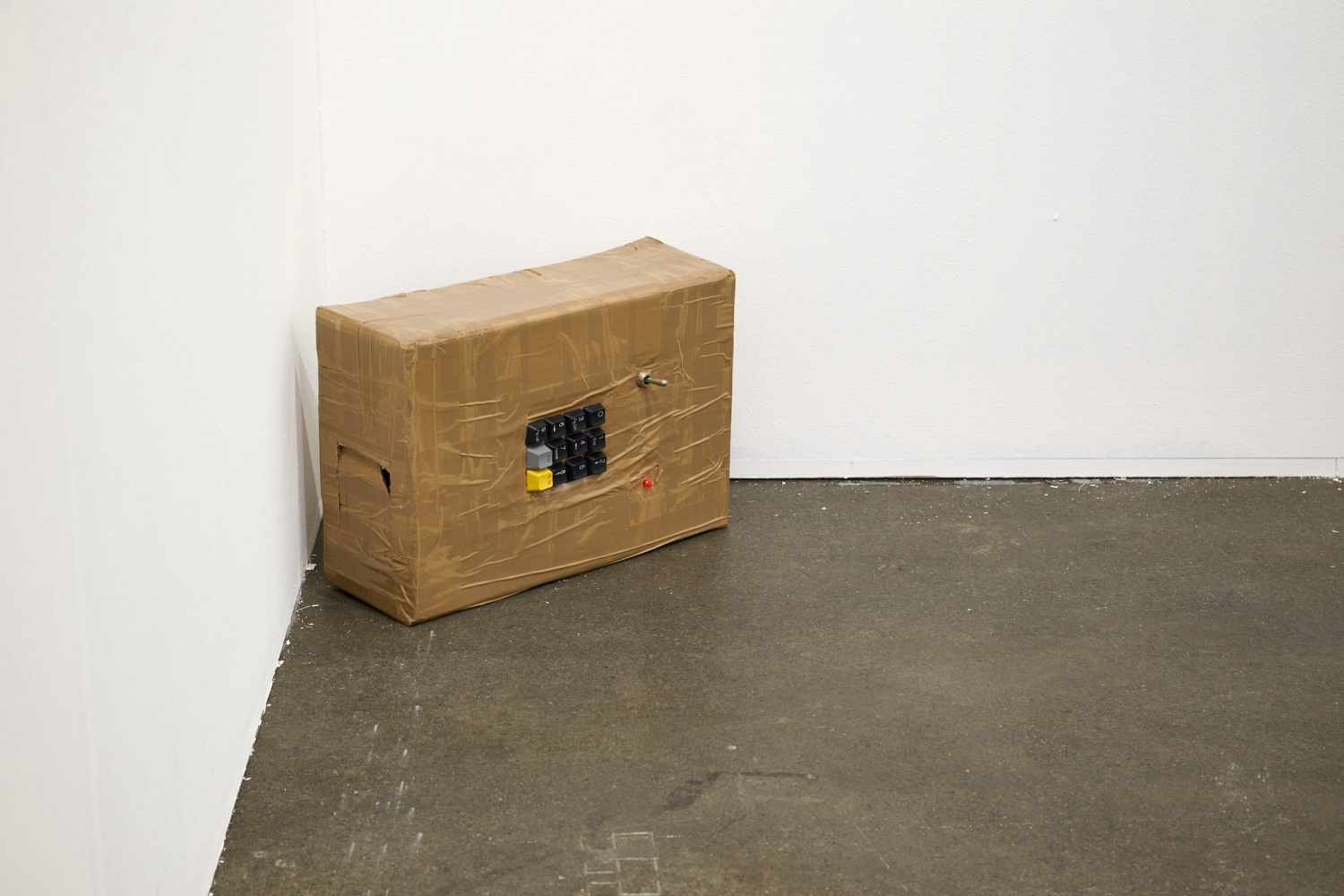
Improvised Explosive Device by duo Jos de Gruyter & Harald Thys is a small cardboard sculpture, an exact copy of a fake time bomb as seen in an episode of the German TV series Aktenzeichen XY... Ungelöst.
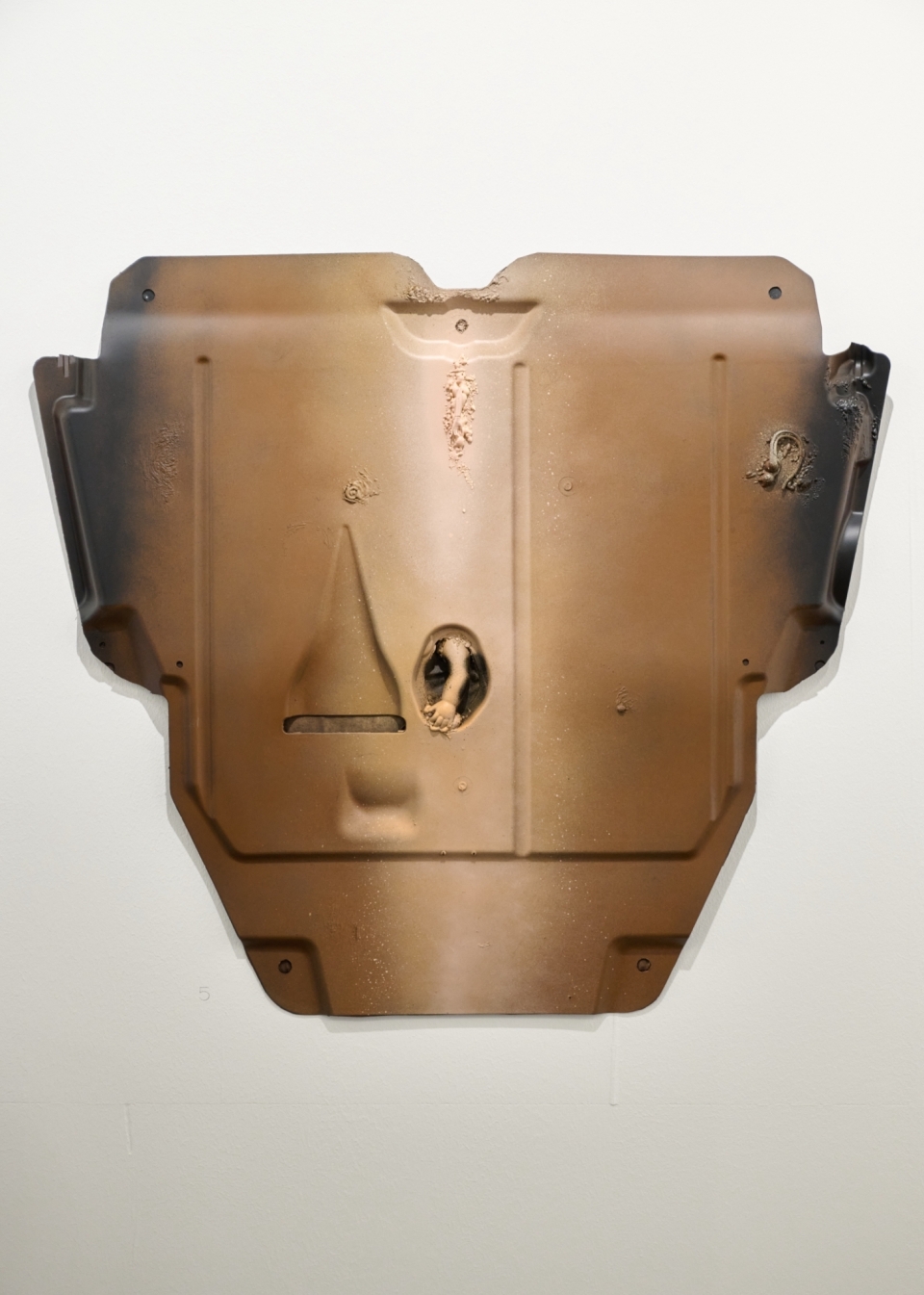
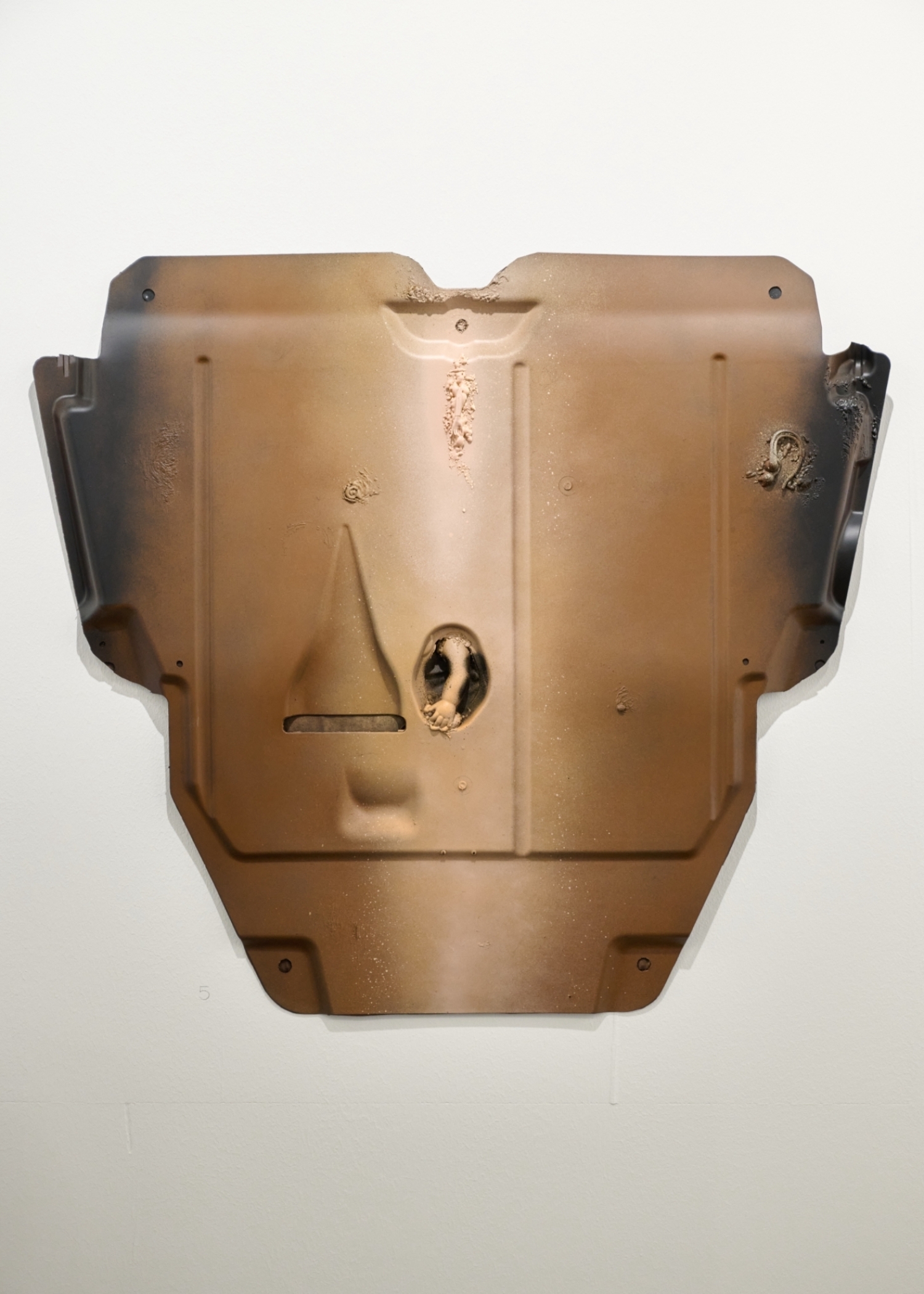
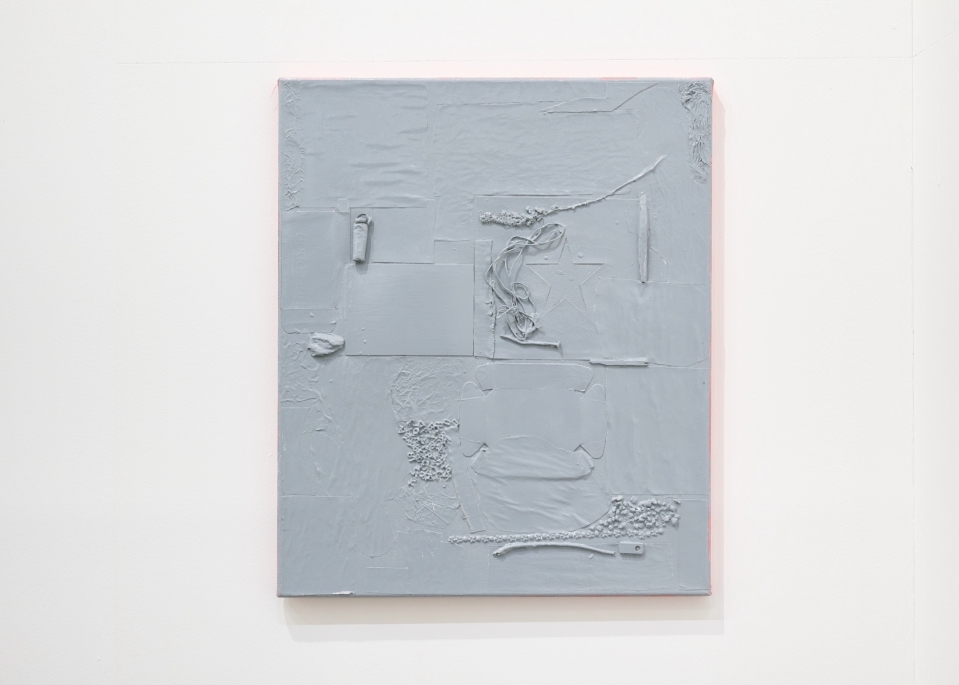
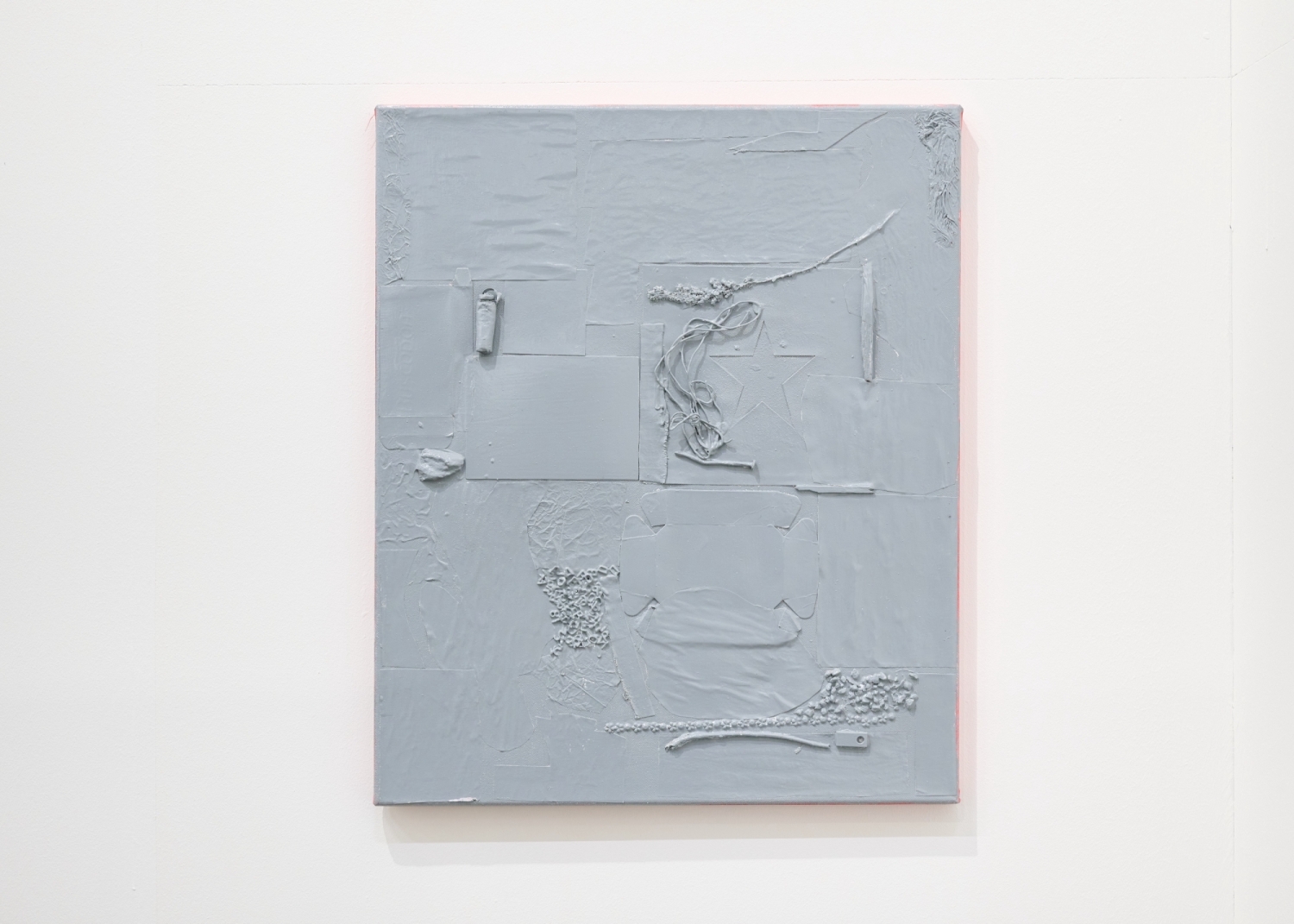
Thomas Helbig's sculpture Machine’s Trophy continues his distinctive formal language: fragments of found objects, unified through heavy overpainting into a single surface. Increasingly he draws on components from mechanical and technical equipment, giving the work a technological edge. The result reads like an animistic transformation of industrial design — a totem for artificial intelligence. Rather than critiquing technology, the work fuses the futuristic promise of these machine parts with an aura of quasi-religious transcendence, drawn from their resemblance to ritual artefacts. This effect is sharpened by fragments of decorative kitsch — a baroque putto's hand emerging from industrial form — activating the viewer's cultural memory. The sculpture hovers between figuration and abstraction
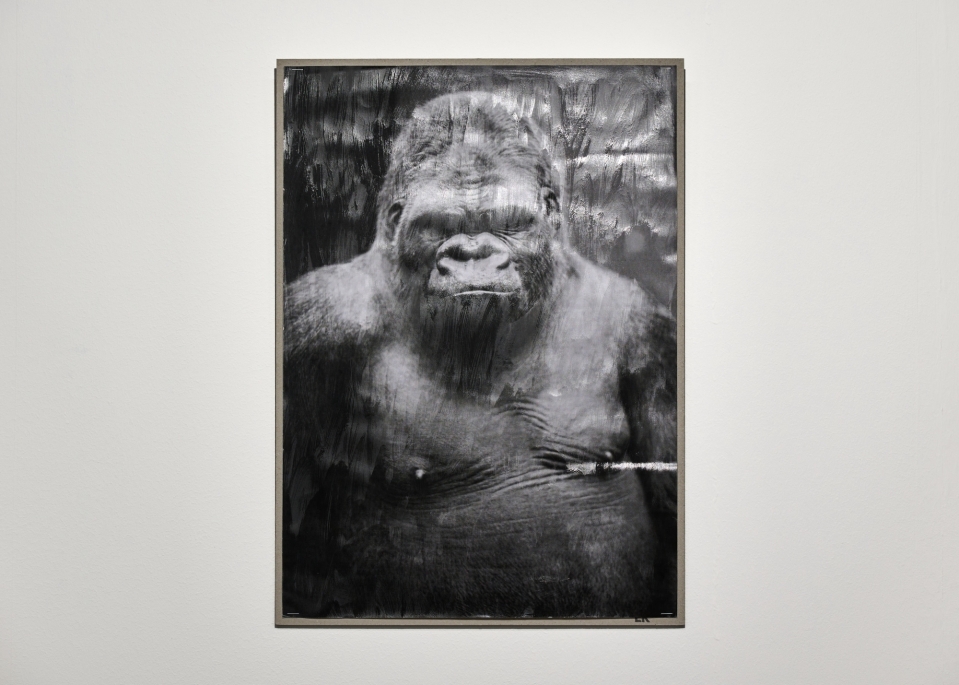
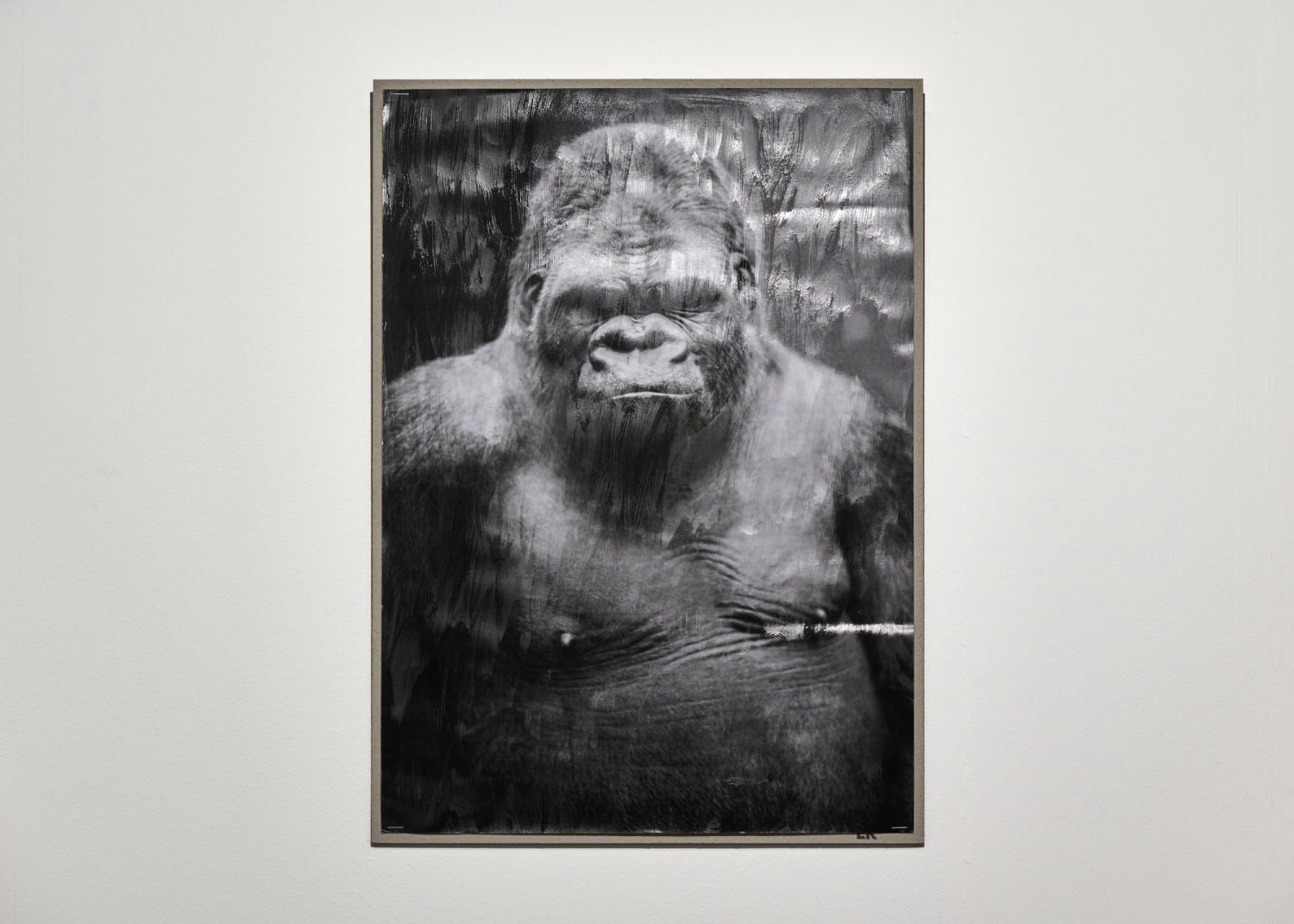
Erwin Kneihsl is an artist and alchemist. His black and white photographs transform landscapes, architectures, and again and again dolls, into inner images with a surreal appearance. The almost exclusively analogue hand prints on baryta paper, characterized by deliberate blurring and extreme contrasts, in reminiscence of the attitude of early punk are getting stapled on simple gray cardboard before Kneihsl finally stamps it in the style of classic art photography (EK); albeit with a rather unusual preference for the front of the print.
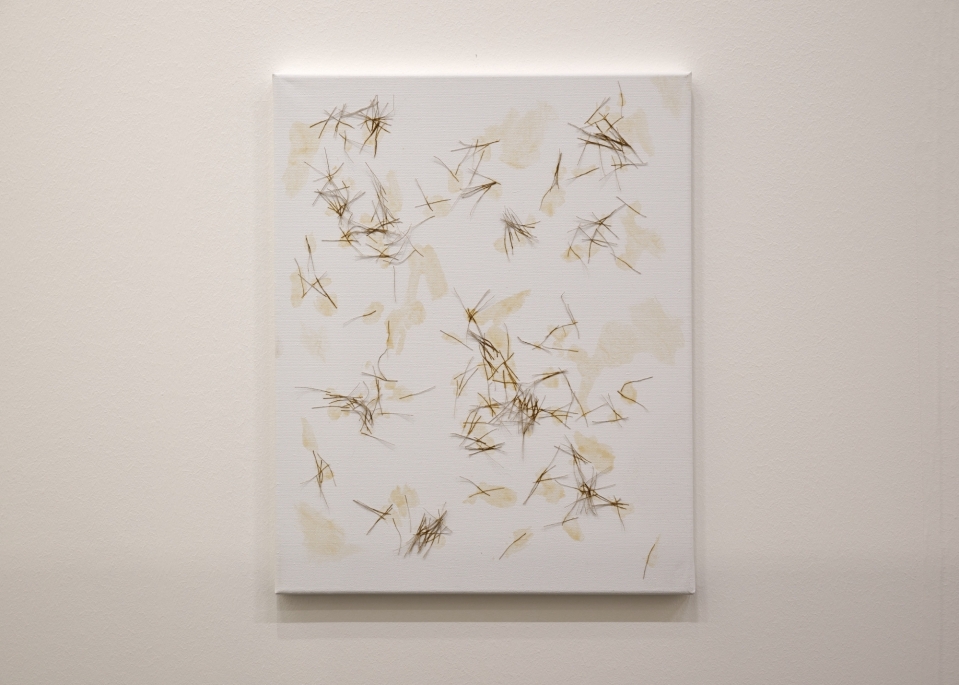
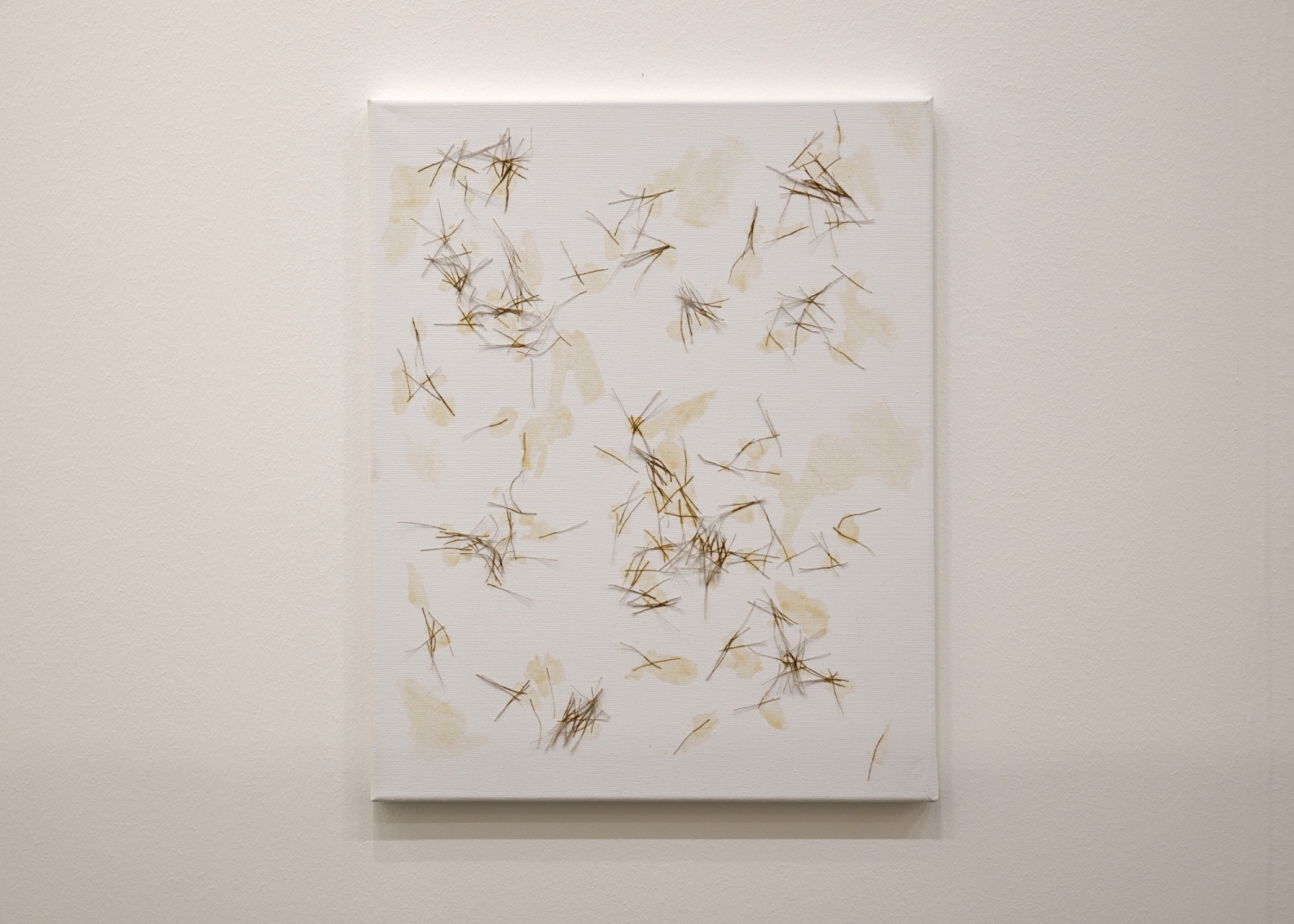
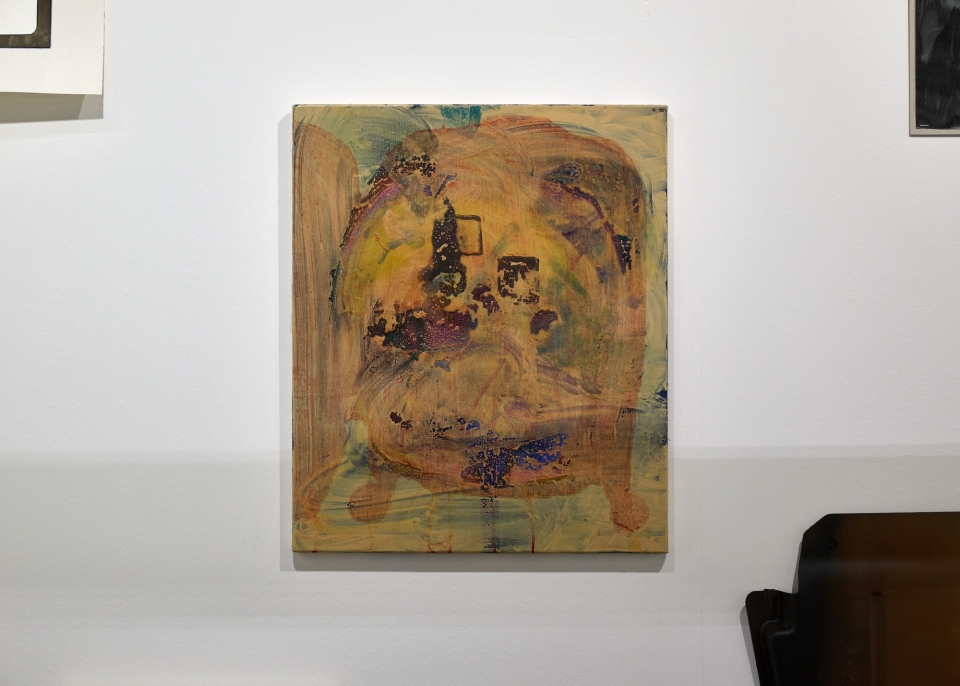
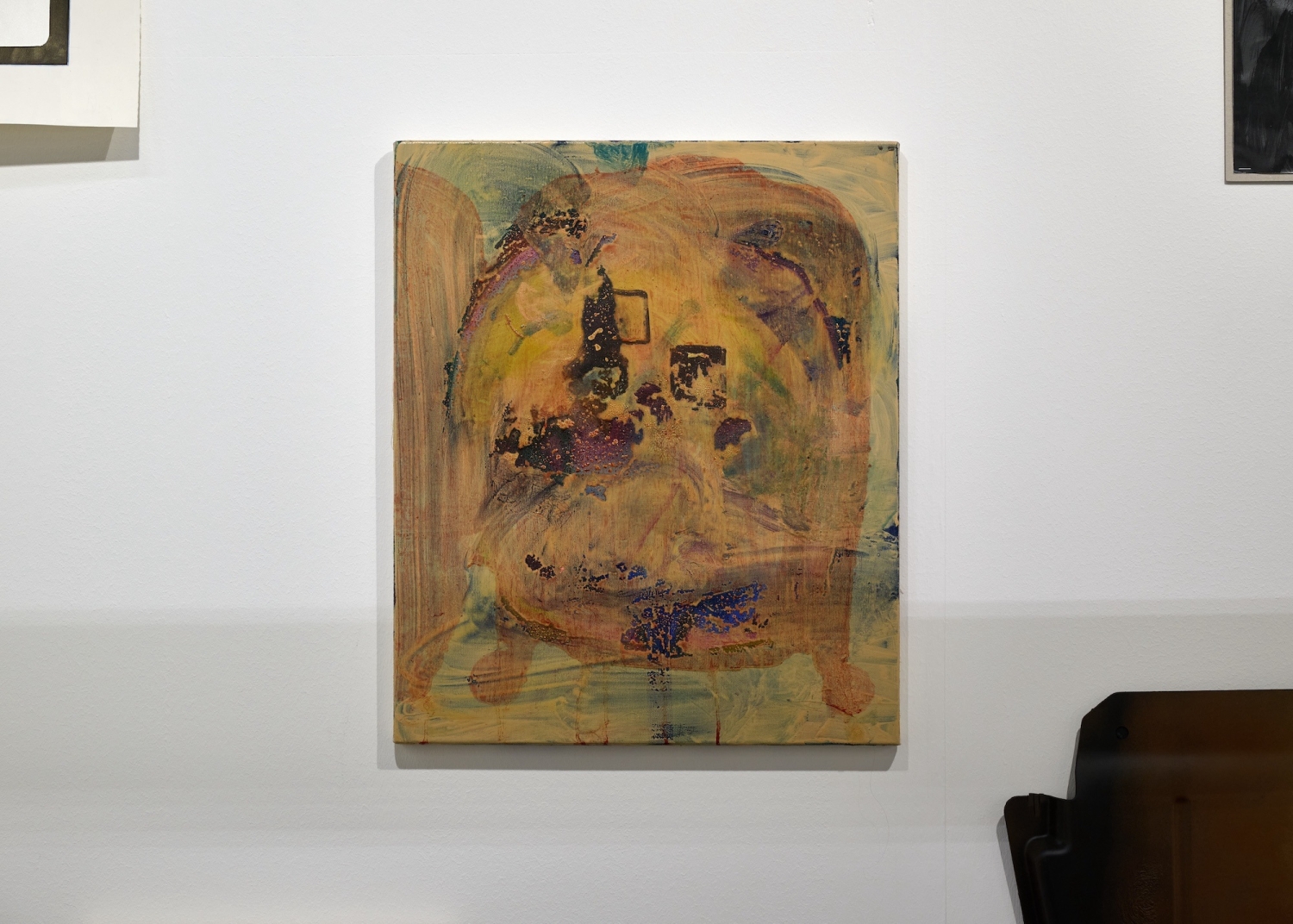
Artist Paul Goede wrote a text about Wjm Kok's painting Residue (Side Effect) (2026) and you can read it here.
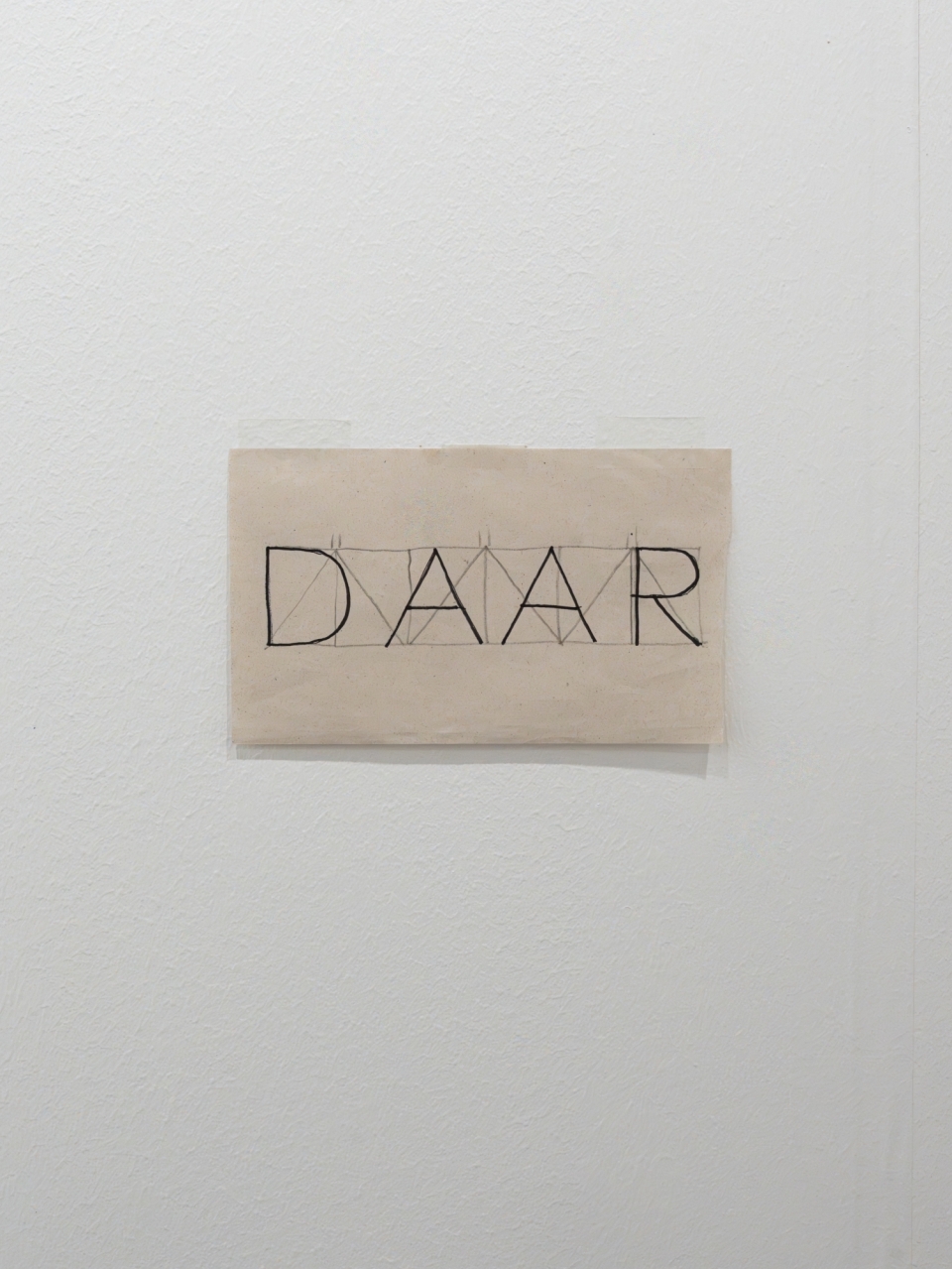
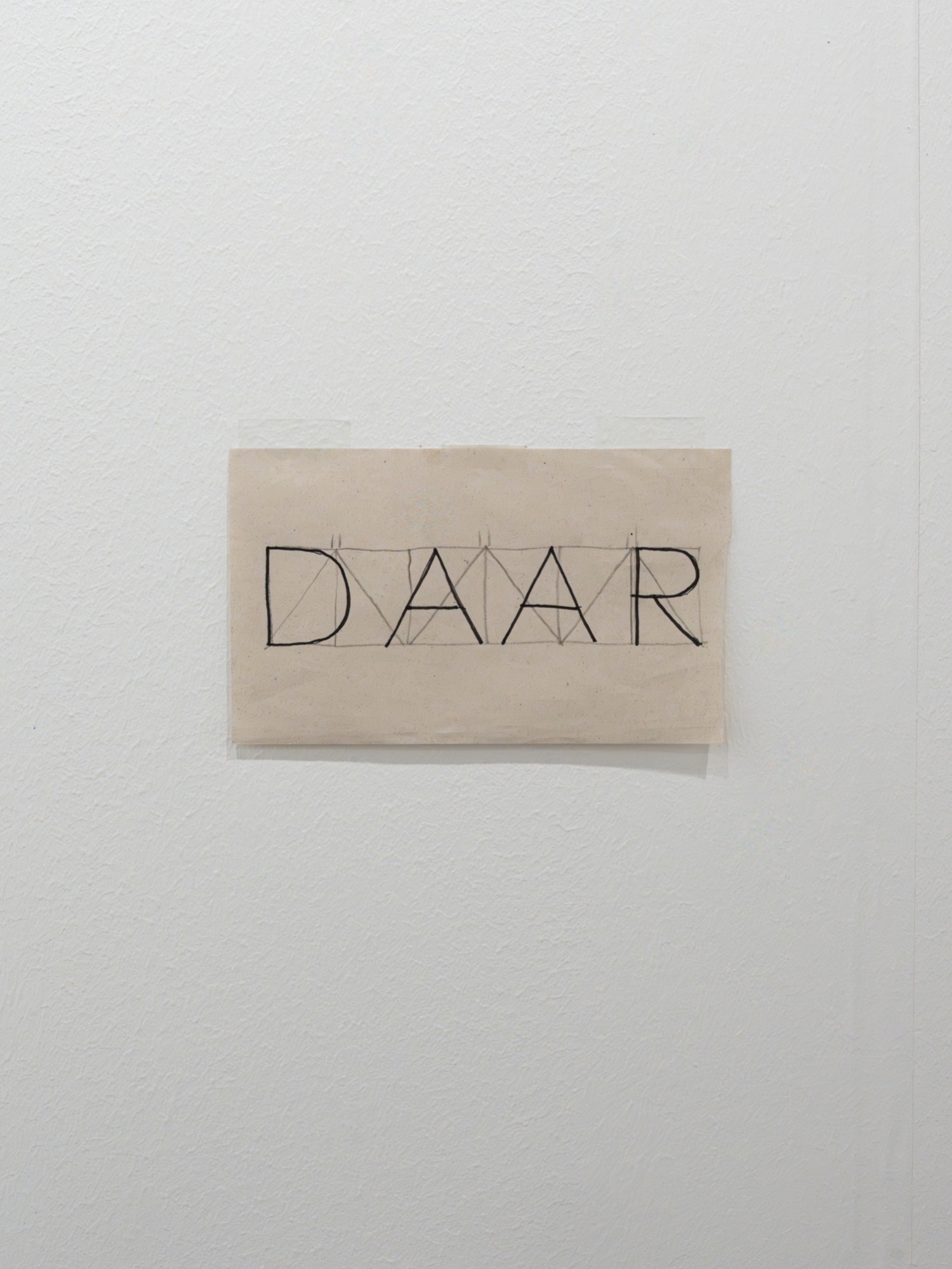
Vesta Kroese's Hier / Daar was originally installed between 2011 and 2016 as two identical neon signs on the façades of the Maastunnel's ventilation buildings in Rotterdam. The work presented here is a sketch of "Daar," one half of that complementary pair: when one side read HIER (here), the other read DAAR (there) — so that neither location was ever fixed as simply "here" or "there." During the festival, Hier / Daar appeared across several formats and locations: a sketch of "Hier" at Rib, a film at Café Buccaneer, a maquette at Attractiepark Rivoli Rotterdam, and a sketch of "Daar" at Art Rotterdam
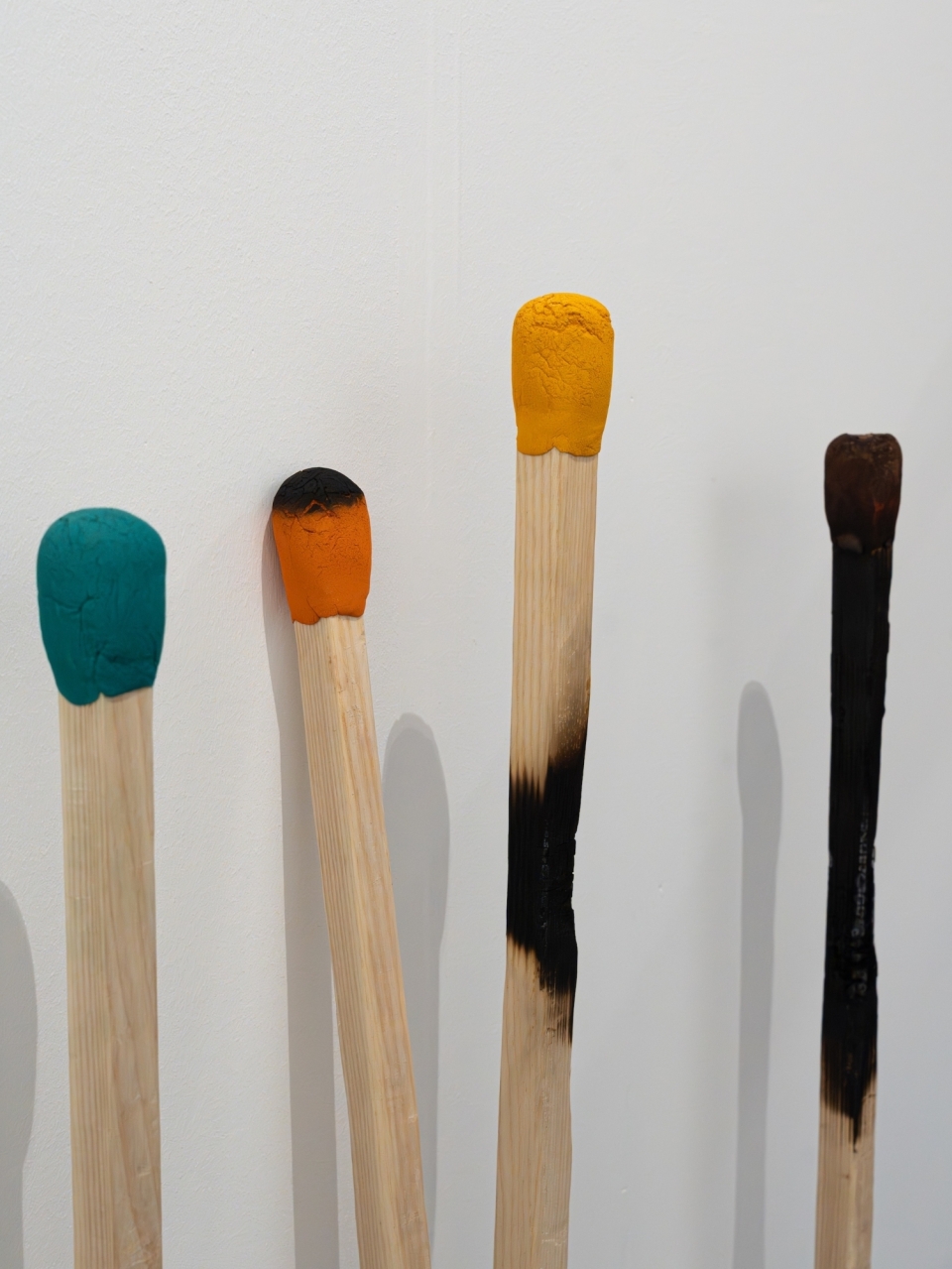
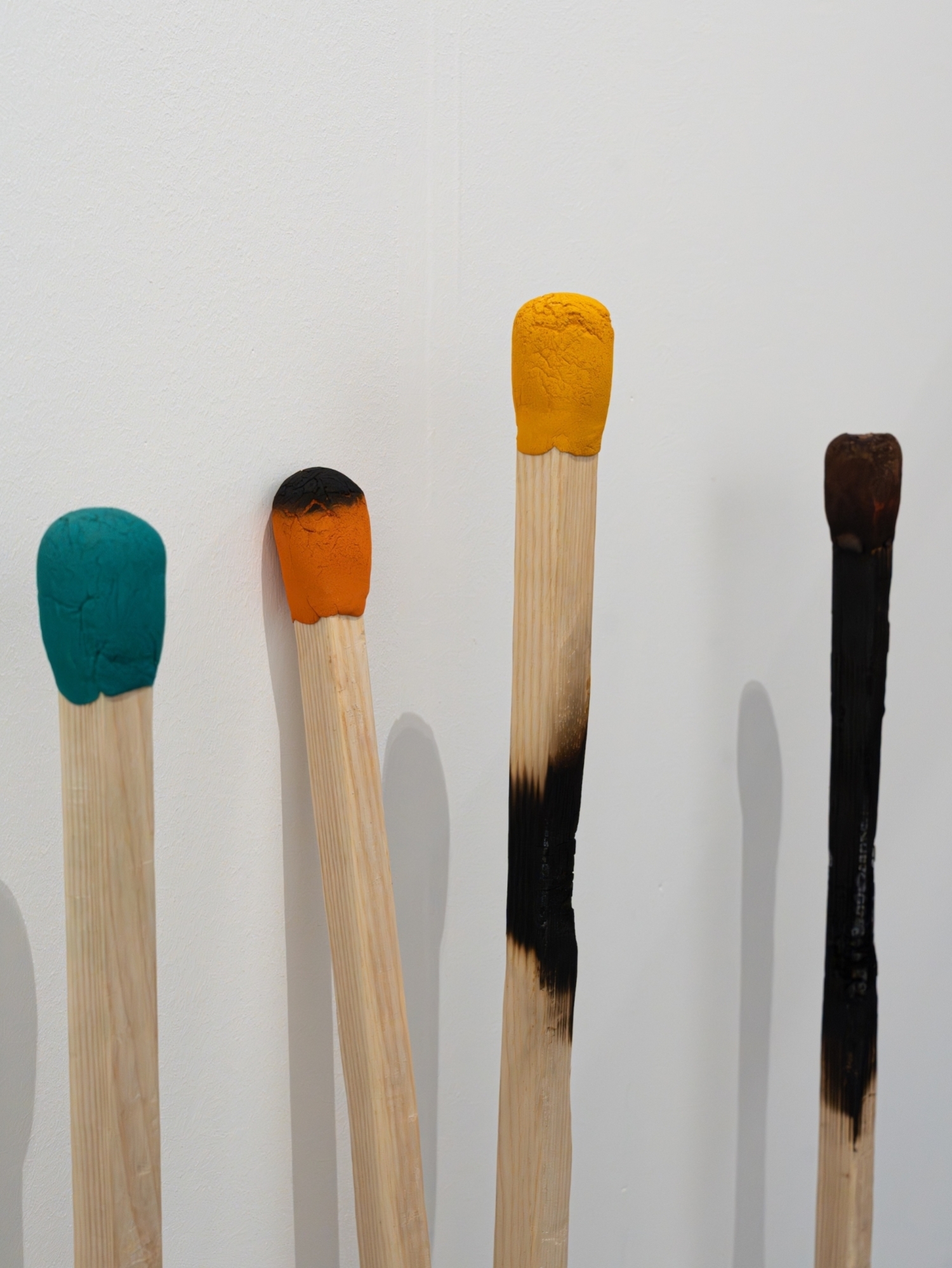
Gabriel Kuri's Error Bars are a series of oversized matchsticks—carved from wood, finished with mixed media, and shown in various states from unlit to charred—distributed across multiple festival locations (Rib, Oude Kerk Charlois, Attractiepark Rivoli, Planet Cake, and Art Rotterdam), where they became a recurring motif that draws attention to the brittle beauty of the everyday. To read more about the work, refer to the documentation of the Oude Kerk location.
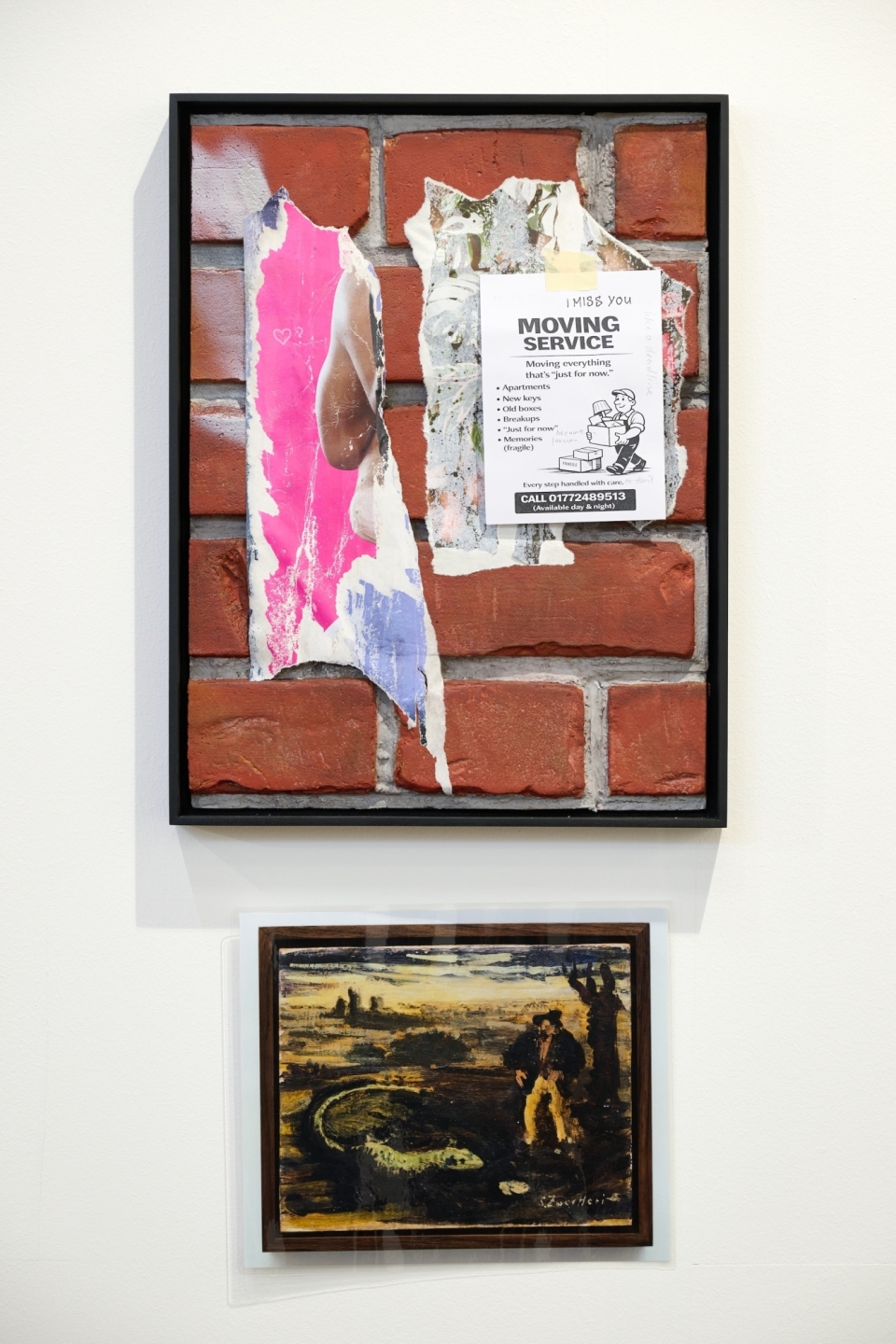
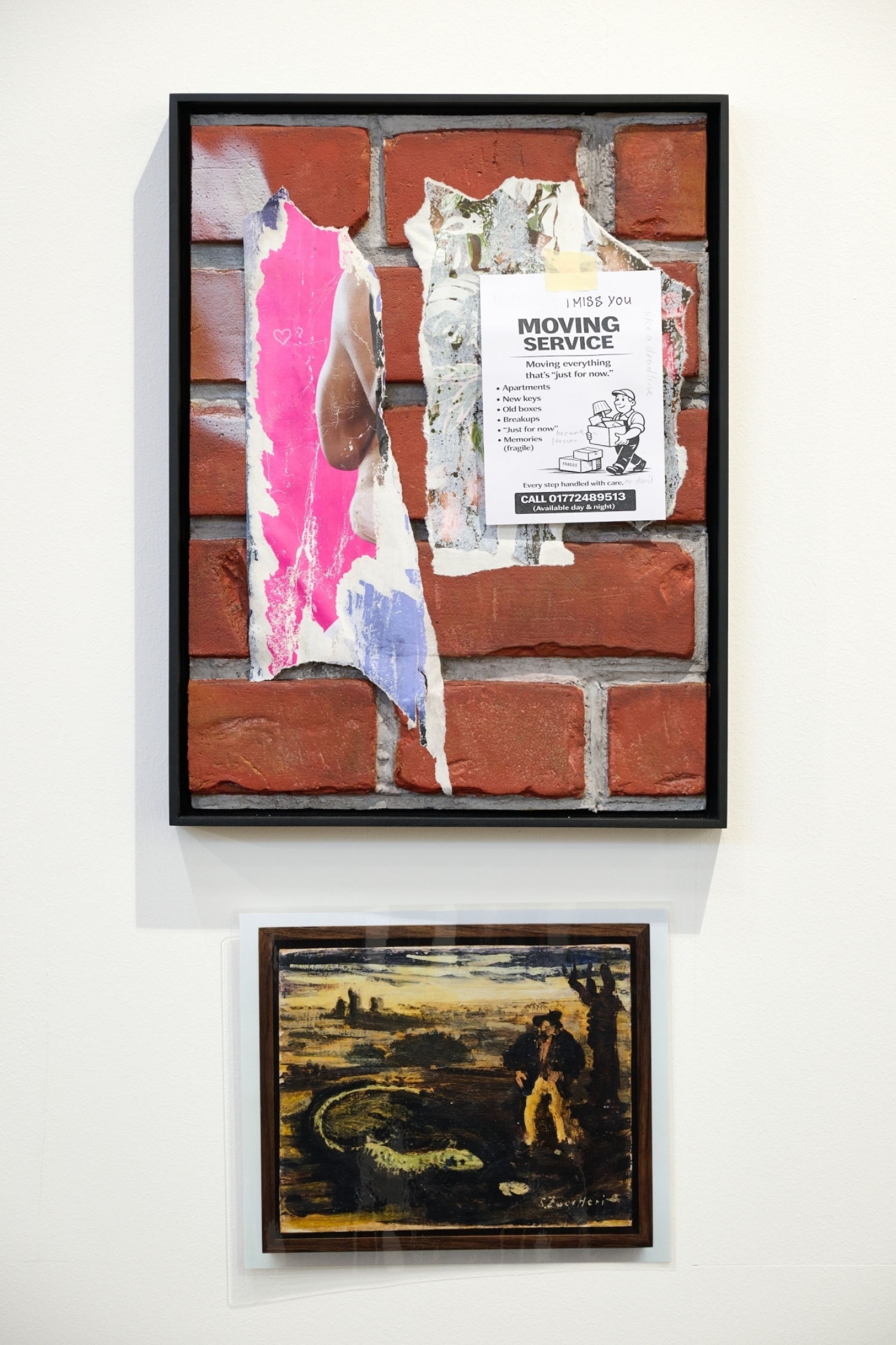
I Miss You Like a Deadline (2026) by Daniel Laufer is part of Palimpsests of the Present, a series of wall-like panels situated between painting, relief and film set. Built from flame-retardant Styrofoam used for theatre and cinematic scenery, the works are painted as brick surfaces and layered with graffiti, stencilled slogans, torn posters and handwritten interventions. Political speech, advertising language, melancholic fragments and ironic commentary collide across these surfaces, turning the wall into a contemporary palimpsest of urban materiality. Conceived as autonomous works while also functioning as scenic elements within a film, the panels oscillate between abstraction and social inscription. Marked, overwritten and interrupted, they shift the visual codes of public space into a painterly and cinematic register. What emerges is an unstable architecture of feeling in which resistance, desire, projection and humour remain visibly entangled, and where the wall itself becomes both image and stage. I Miss You Like a Deadline (2026) was also part of Daniel Laufer's solo exhibition The Architecture of Story, curated by Kunsthalle Lingen and hosted by Rib from 18 April to 6 June 2026.
The vacuums, handbags and suitcases in Sam Marshall Lockyer's painting are made from stencils and outlines of the private containers that populate our domestic and travelling lives, recognisable vessels that do not reveal their contents. A reflection on the possibility of a painting as a physical register of material and space, an opaque container, simultaneously withholding and sharing information.
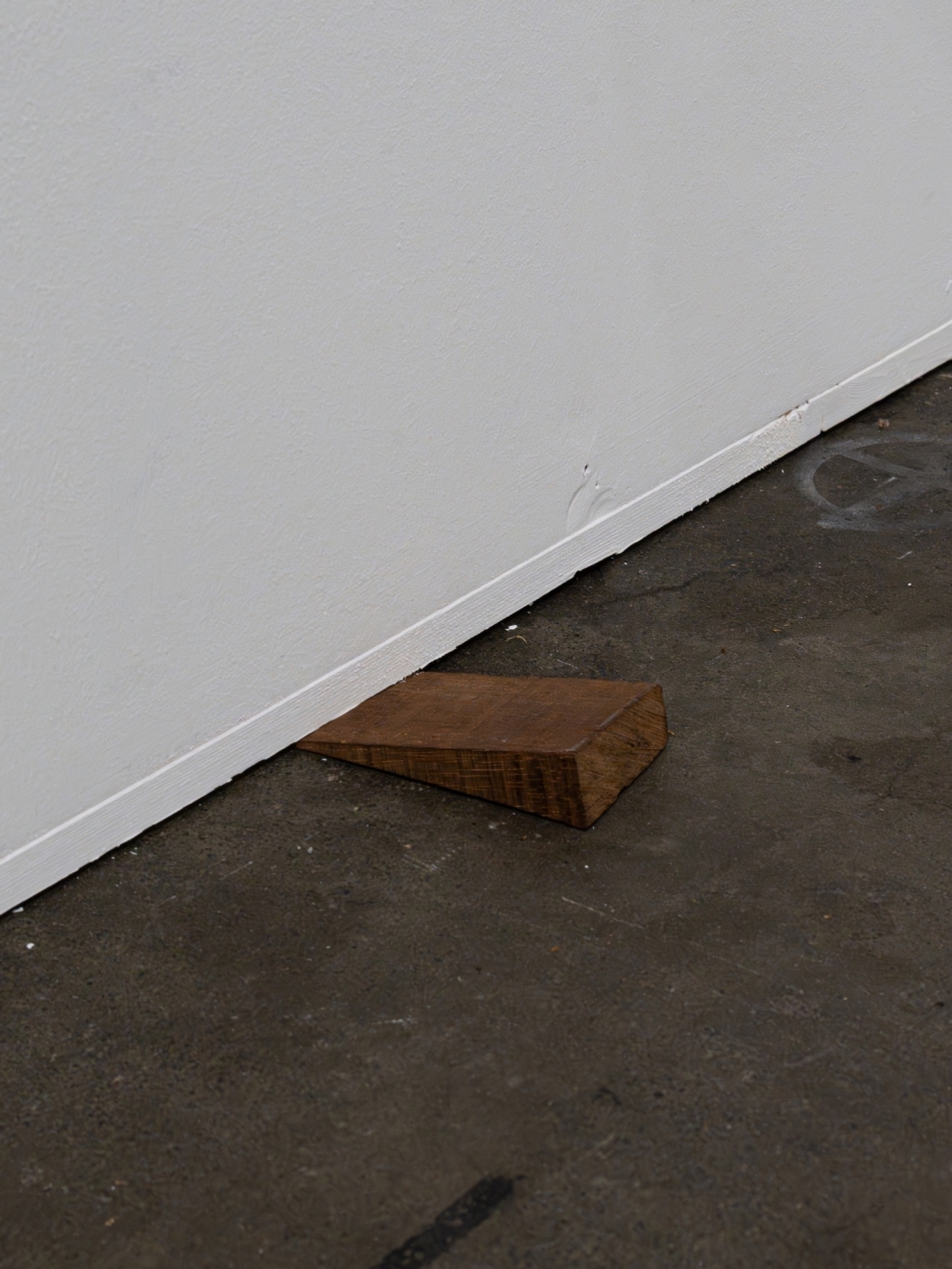
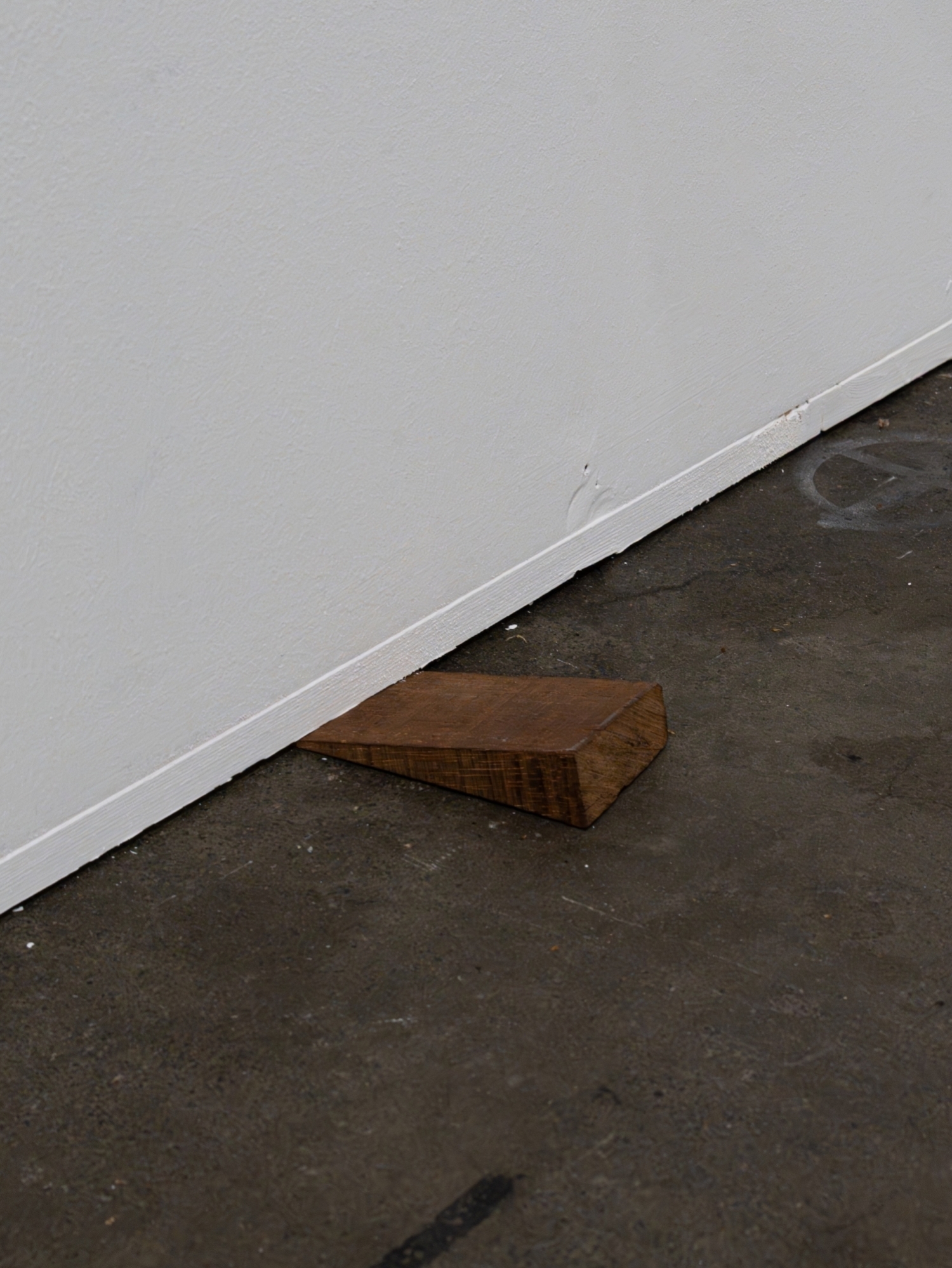
Nora Schultz presents one of the wedges that Bernd Lohaus frequently used in his studio to lift his materials, together with a form of documentation.
In Belgium, the wooden columns that are used in waters to hold ships and mark quays, were usually made from Azobe wood, hard tropical wood that in its density is one of the wood closest to resemble stone. From time to time, these columns get loose, and are washed ashore. This is where Bernd Lohaus used to collect them, and further used them for his sculptures. The wood is so hard that it seemed to never rot. In his studio, Lohaus was surrounded by these beams that are so heavy that moving them alone is an almost impossible task. Lohaus approached this not from the top (as with cranes) but always from the bottom, from the small gap where an irregularity in the wooden surface created a tiny space between the object and the ground. Here he would push a wedge in, to widen the space a little more to fit a metal bar in, to lever the object up, to push small wooden cylinders underneath. With a few rolls under the beam, he could move it slowly through his studio.
The wedge was such an important tool in Lohaus’ work that he sometimes called it “his gold”. He always carried one in his pocket. When installing his work, the wedge is still the most practical tool.
In the course of the exhibition While. Bernd Lohaus and Nora Schultz, Schultz used one of Lohaus’ wedges to lift the Palace of Justice. A small gap was found, an irregularity in the surface of the contour or the building, where the wedge fit in.
At the night of the opening and only about 30 hours after the wedge was installed, it was stolen. This work is a homage to Bernd’s KEIL, Lifting the Palace of Justice. The object itself, the wedge, is by nature always suggesting the action to lift, stabilize or hold open something, such as pages of a book.
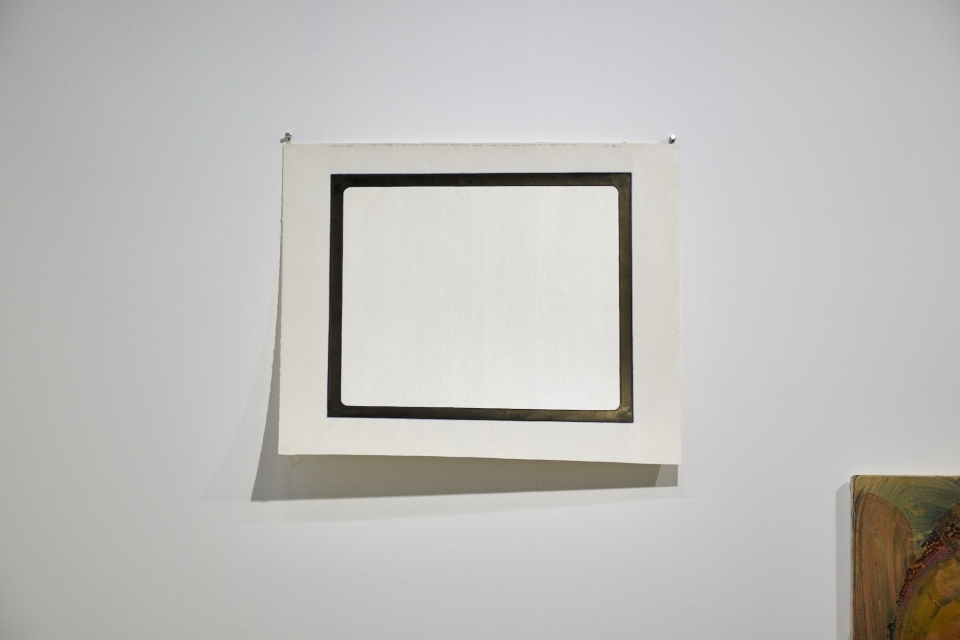
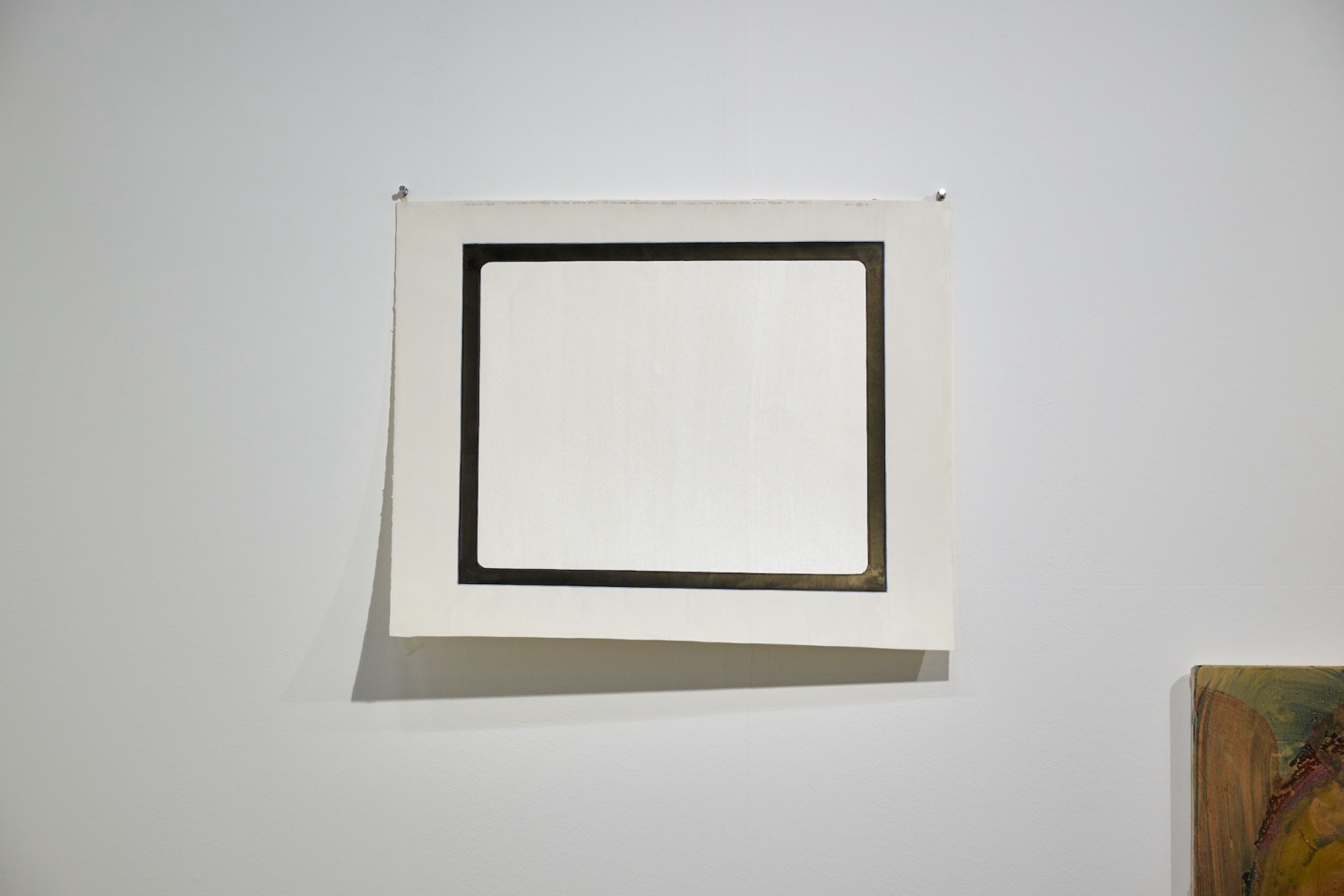
Mathieu Meijers works in both mural and book format, producing drawings with a strong graphic character that move between abstraction and figuration. The works shown here foreground the abstract dimension of his practice: layered compositions in which fields of saturated colour, geometric patterns and metallic surfaces of gold leaf, palladium, silver and copper foil are set against one another. Recurring rectangular forms framed by dark borders evoke screens, windows or thresholds, while diamond grids shift in scale and density across different pages. More information can be found at the Home Gallery page.
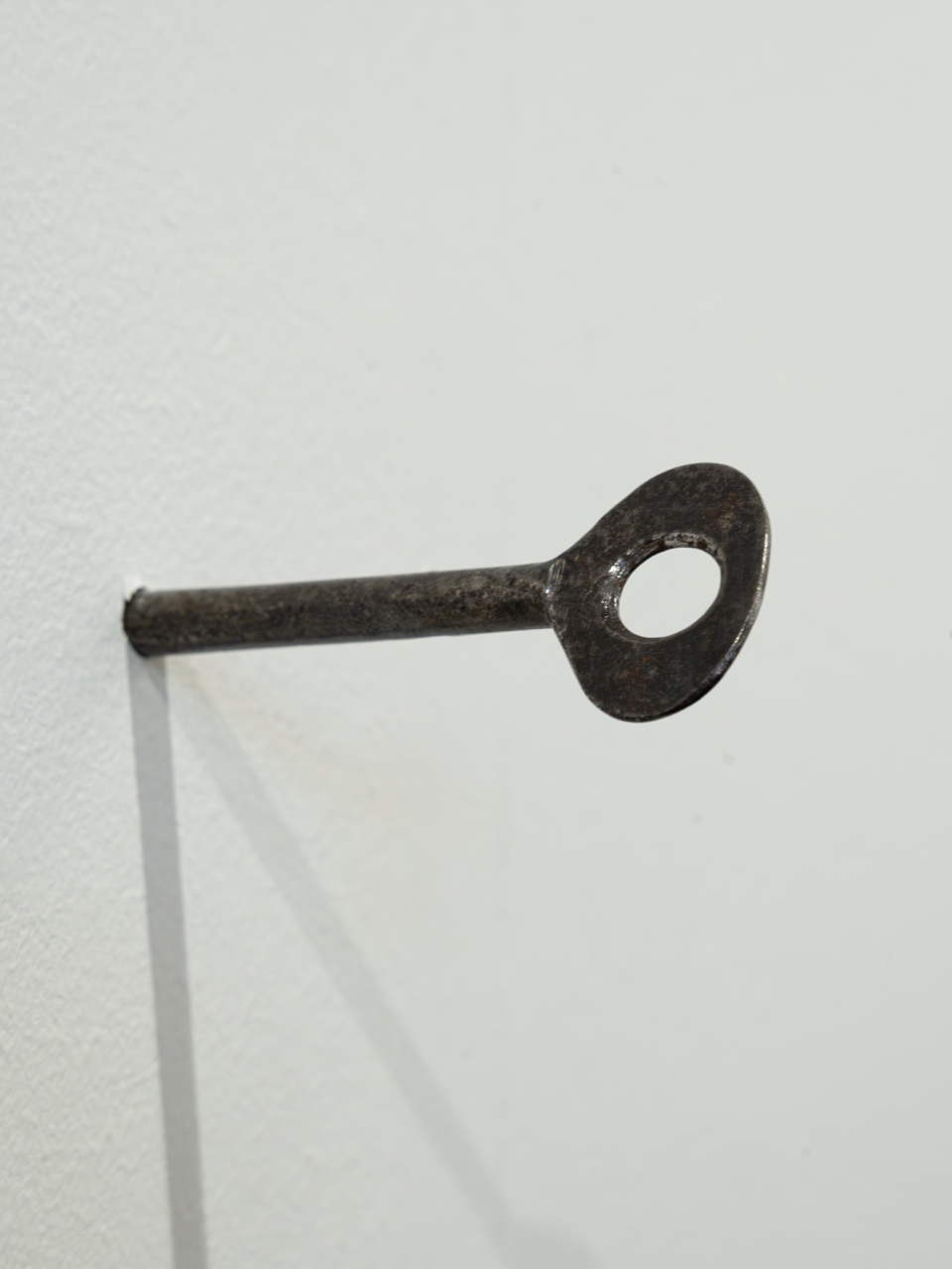
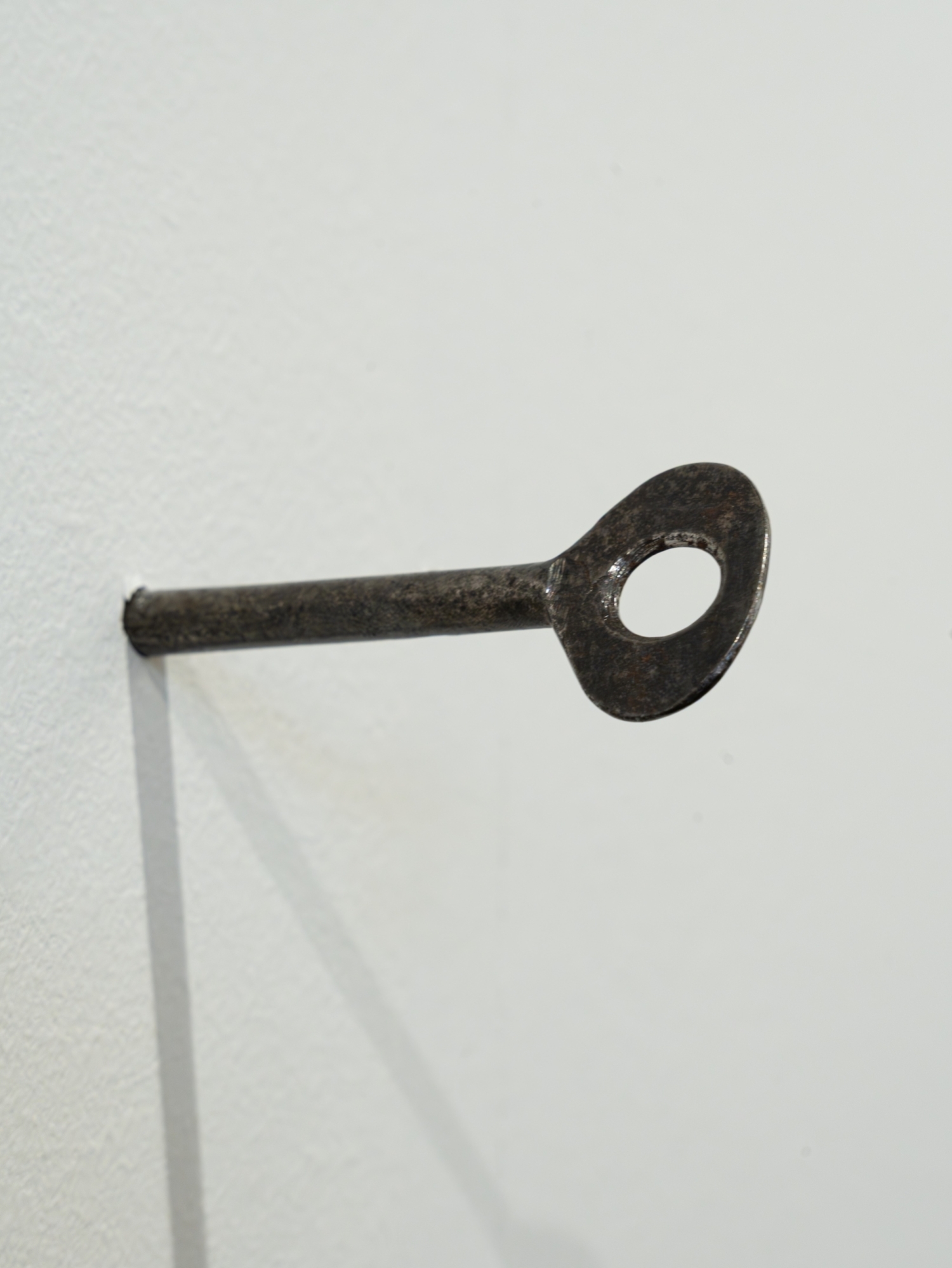
Sinaida Michalskaja treats paradox as a tool for world-building, merging linguistic observation with sensual experience across sculpture, photography, video, and text. Michalskaja often works with found footage and visual or textual citations, re-contextualising fragments and bringing them into dialogue. Her process is one of rigorous collection: concepts drawn from cybernetics, systems theory, and queer theory are paired with physical artefacts – such as rakes, windows, keys – to guide seemingly incompatible systems into conversation. Circularity is not merely a motif in her work; it shapes its very structure, framing both concept and experience.
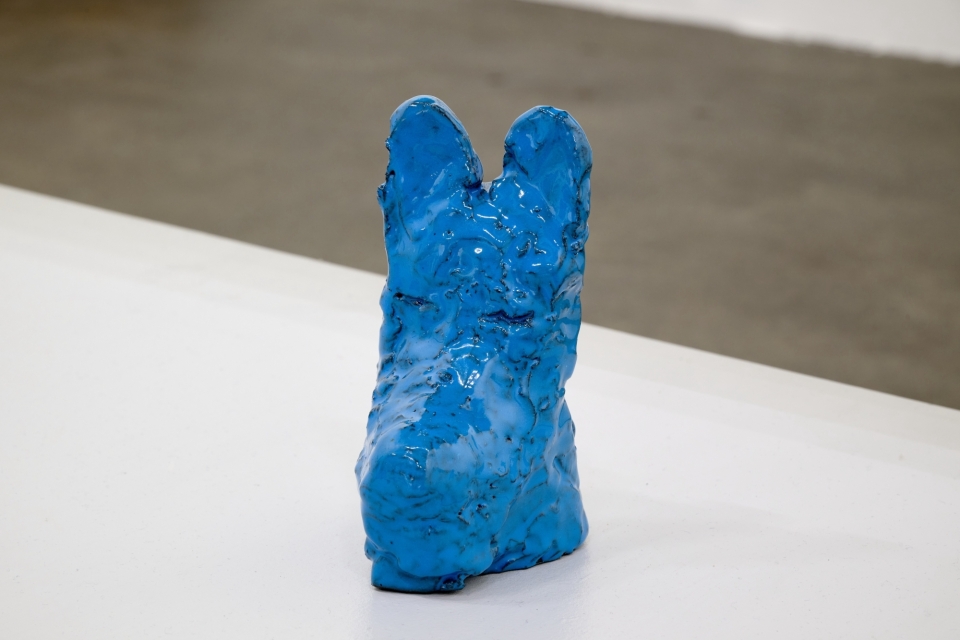
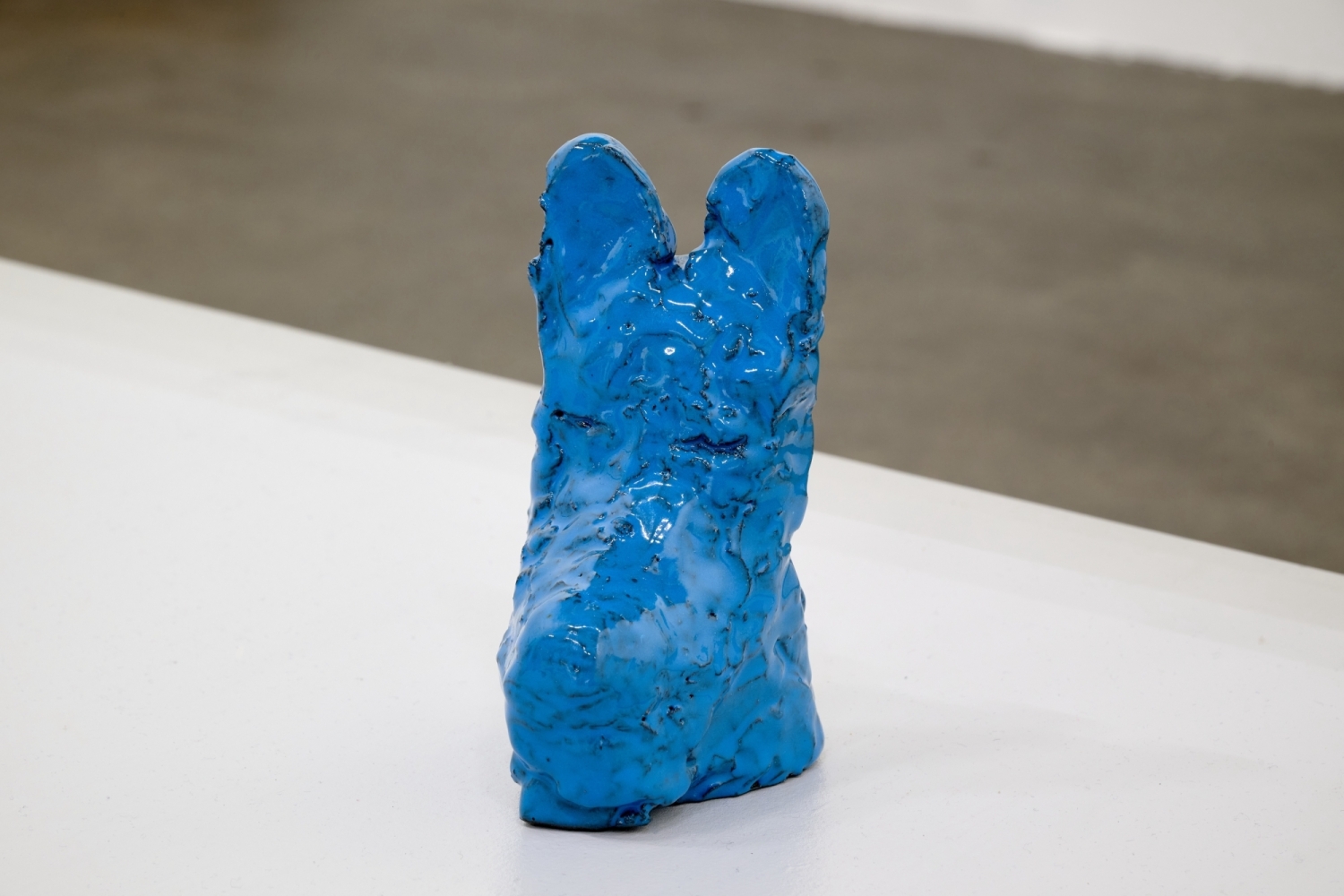
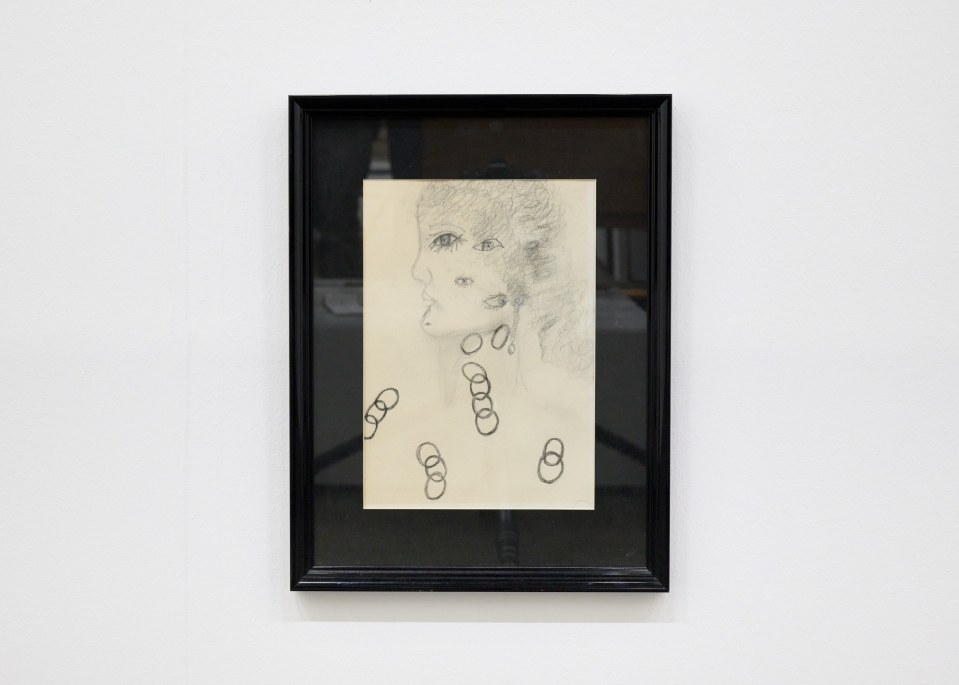
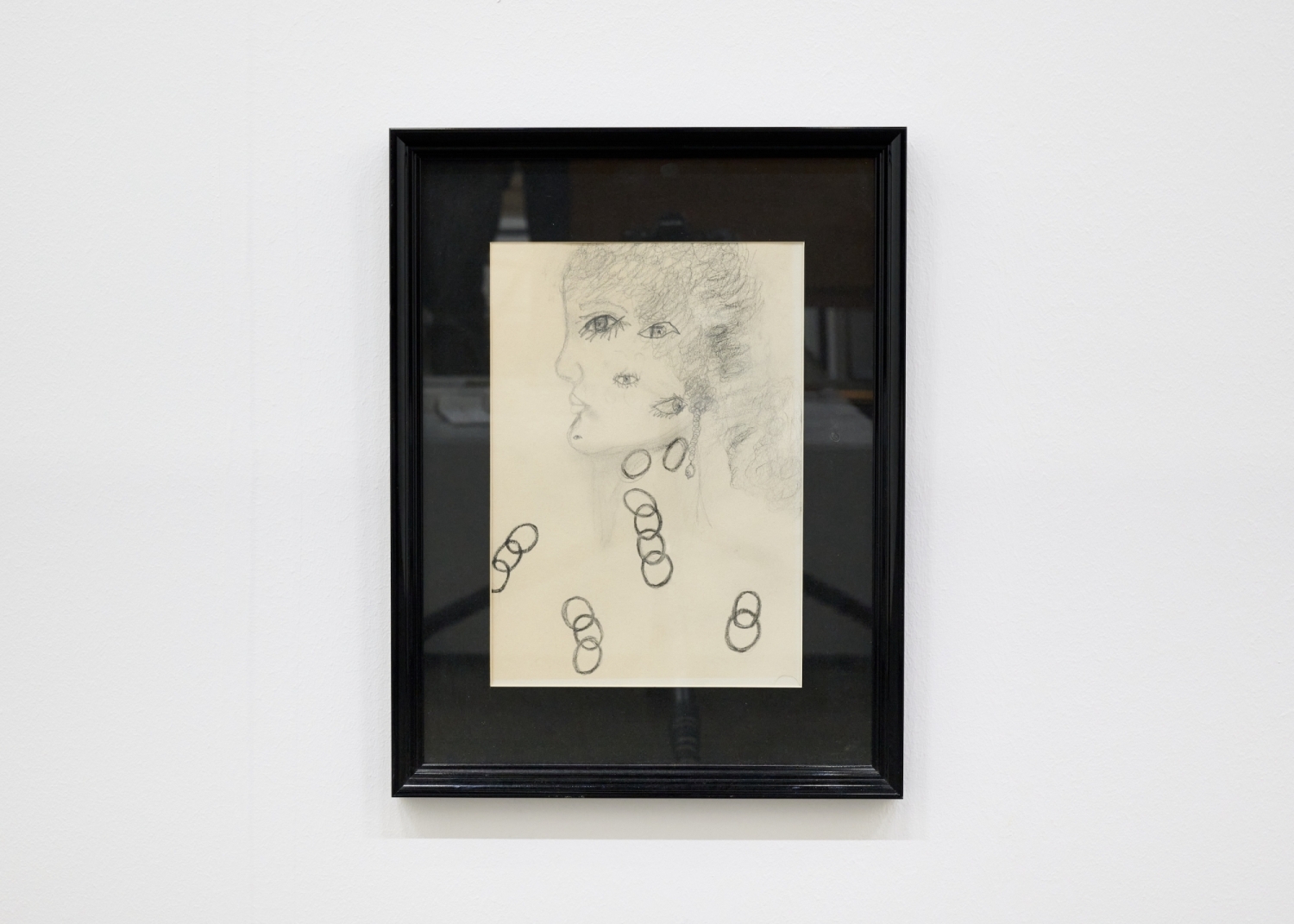
Kenichi Ogawa's small-scale ceramics and paintings centre on sight and touch — the pressing, molding, and breaking of clay that shapes each unique form. Rooted in the traditions of Japanese calligraphy and ceramics, his work replicates everyday objects and moments, treating them as quiet memorials to the present.
His current work explores the theme of "Hot Spring," where animals become human and humans become animal — figures dissolving into peaceful heads above steaming water, growing smaller and simpler. Ogawa's work aims to stay light, reminding us that we have bodies, that we do small things, and that these small things matter in a spinning world. Other ceramics from the series and one painting were presented at De Baronex Seshop.
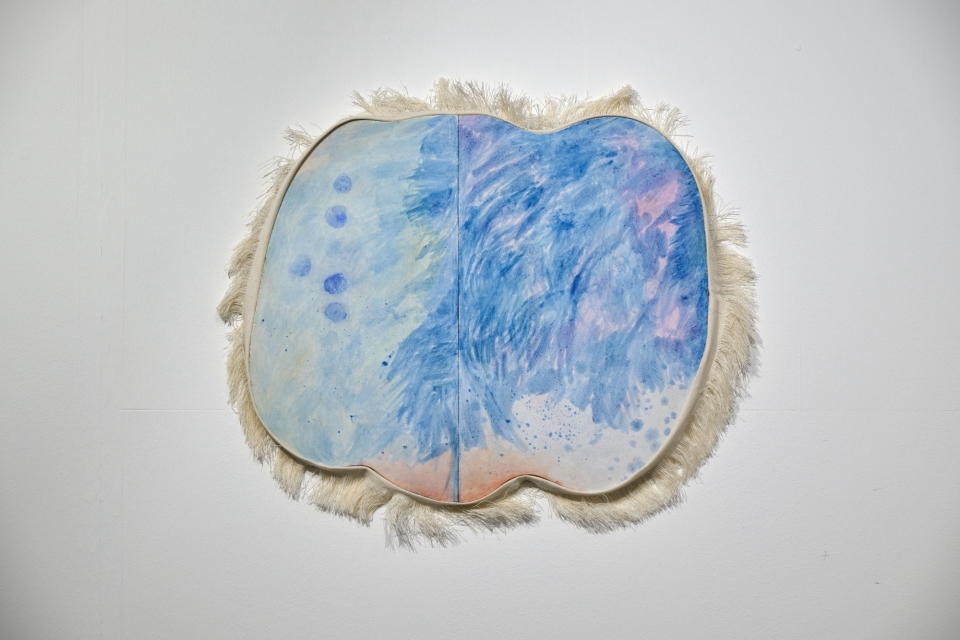
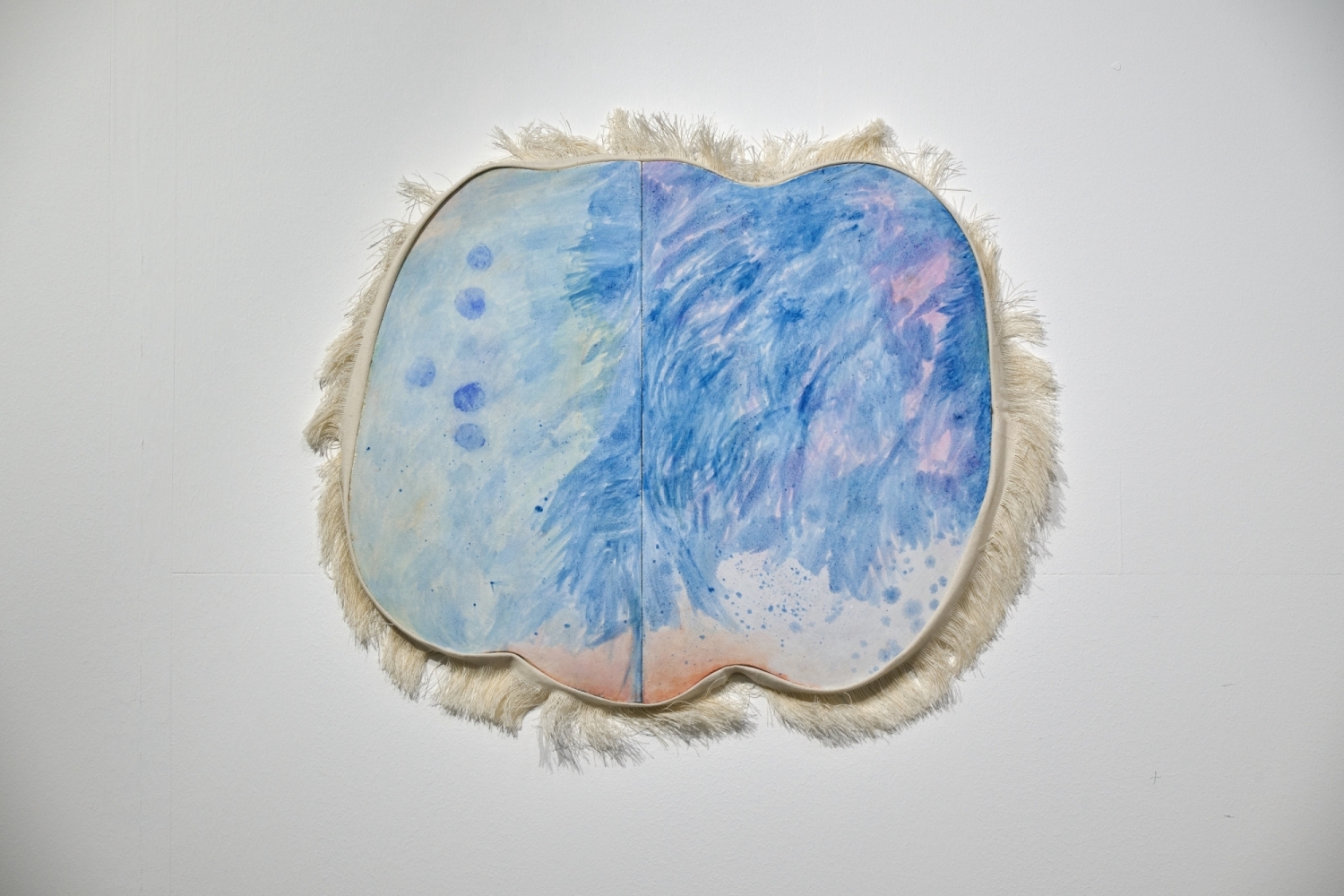
Nie Pastille’s work begins with fragments of random gestures. It feels familiar, awakens memories, triggers moods, but remains open. Colors, shapes, bodies, structures - they open up worlds that cannot be explained, but felt. Like a walk-in dream world that is not always gentle. What holds the work together is affection and care – less as a theme, rather as an inner force. It conveys a feeling of being safe and secure that is not tied to a place, but to closeness and connection. Other artwork by the artist were presented at Rib, Oude Kerk Charlois, Attractiepark Rivoli Rotterdam, and Planet Cake.
Zahra Pourghomi began painting after a visit to the Mauritshuis in The Hague, where she saw Vermeer’s Girl with a Pearl Earring. Struck by the painting, she went home and painted her own version. From there she continued with works she admired, including Van Gogh’s Sunflowers. Alongside painting, Pourghomi is a skilled dressmaker who for years designed and sewed bridal gowns, some of which she sent to young brides in Iran. One of her designs was inspired by a seventeenth-century painting of a woman in a white dress, which she translated into an actual garment. She also explored other interests, such as music. Due to personal circumstances, she eventually had to set these activities aside.
Zahra Pourghomi is also the curator's mother.
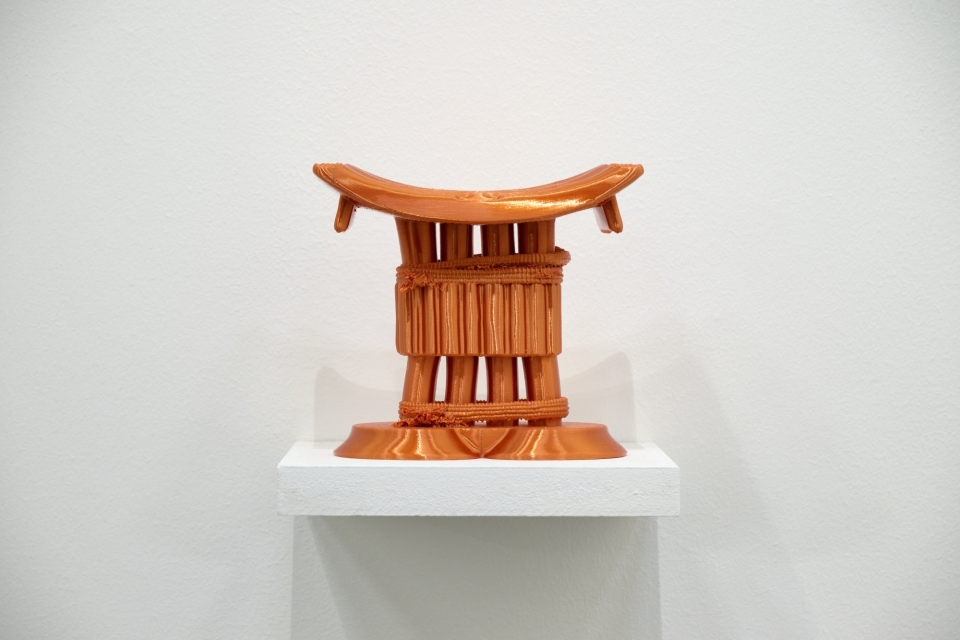
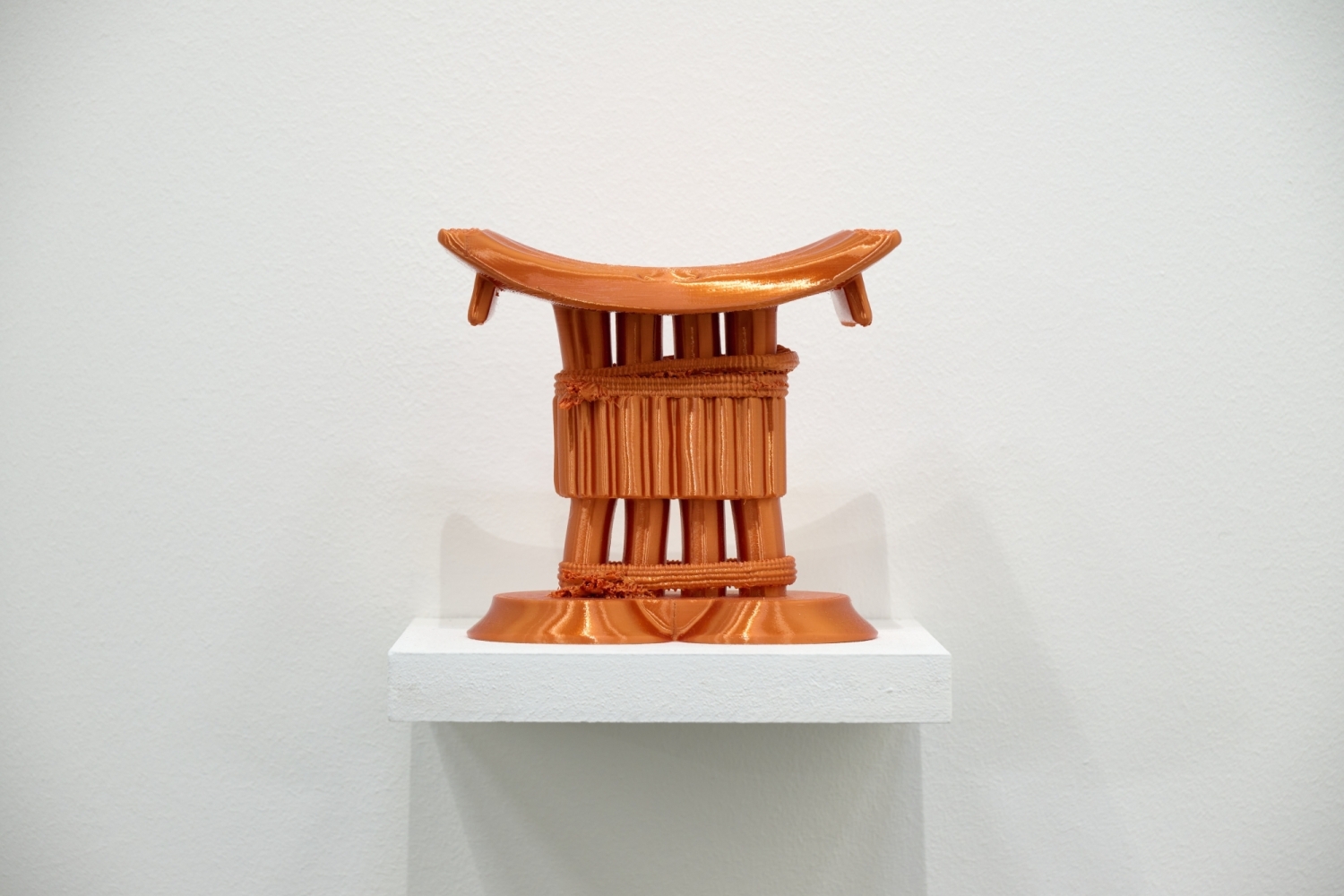
Chloé Quenum's work at Art Rotterdam Rotterdam belongs to her series Low Light Rituals, which reimagines traditional headrest forms from West Africa, Asia, and Oceania as 3D-printed objects. Sitting between ritual artifact and speculative fiction, the hollow headrests use a technology of mass reproduction to revisit forms shaped by colonial history. Other works from the series have been shown at Kapsalon Charlois, Subway Pool Café, Oude Kerk Charlois, Planet Cake, and Attractiepark Rivoli Rotterdam. Those who want to read more can find further information on the Oude Kerk documentation page.
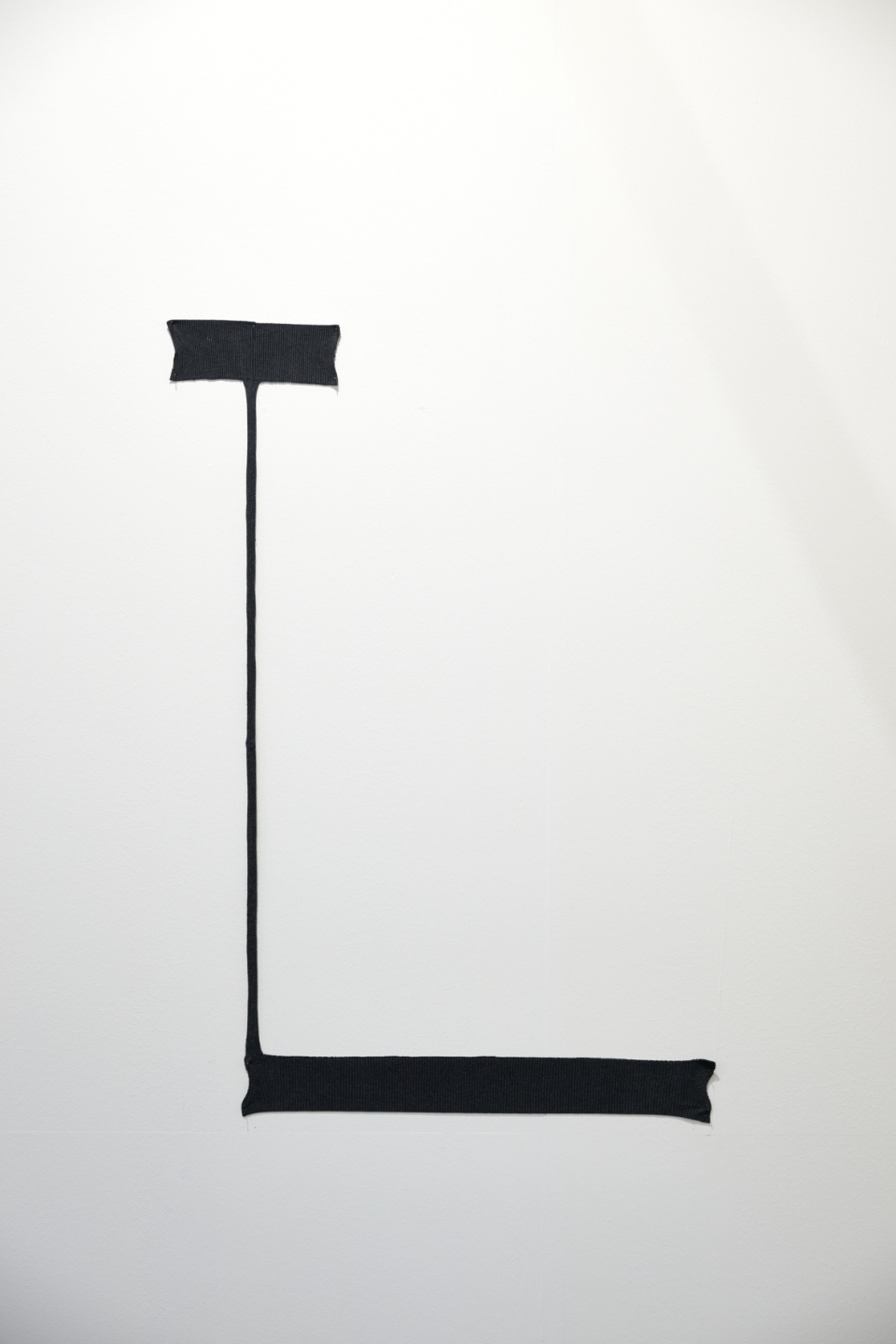
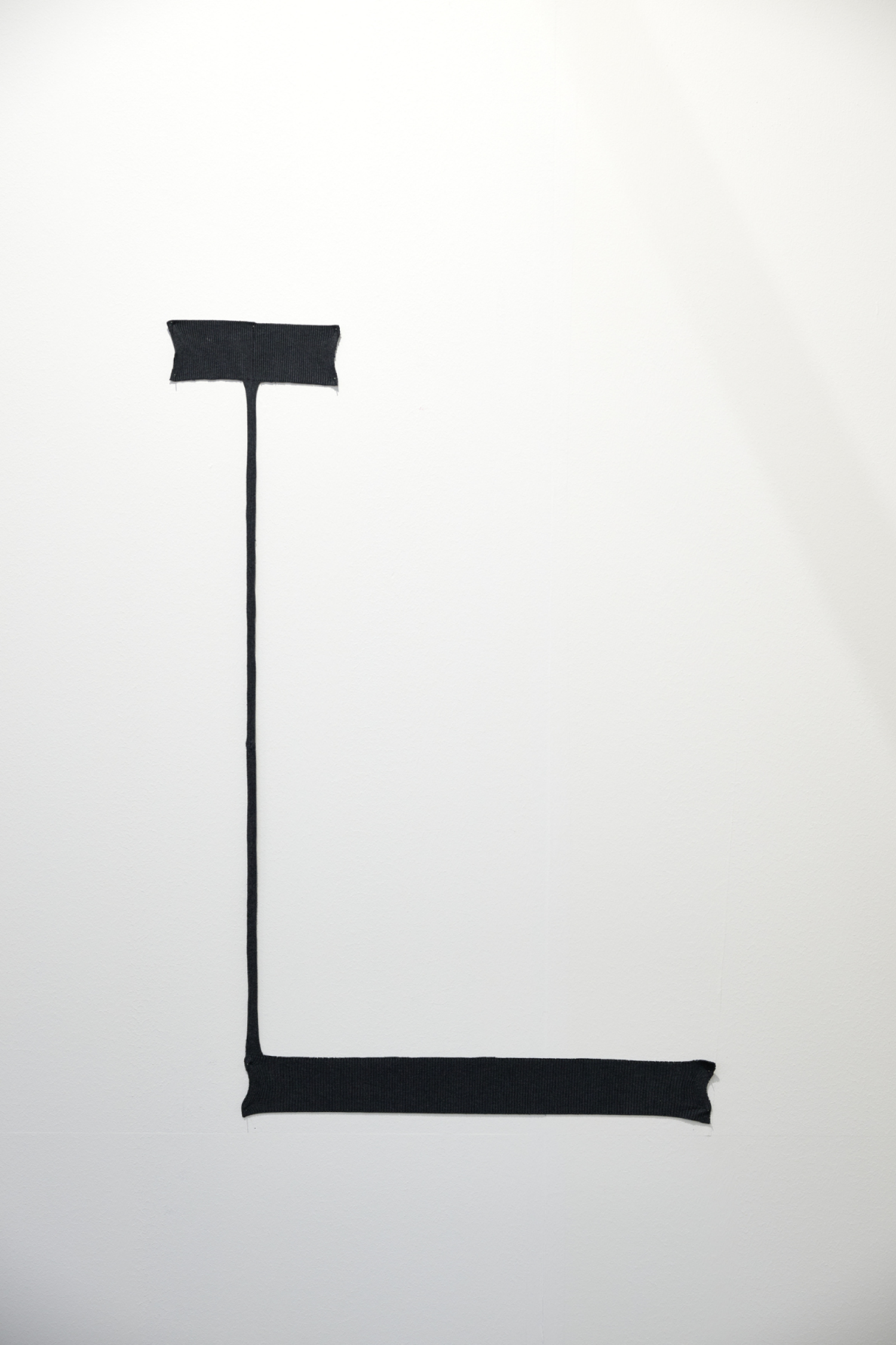
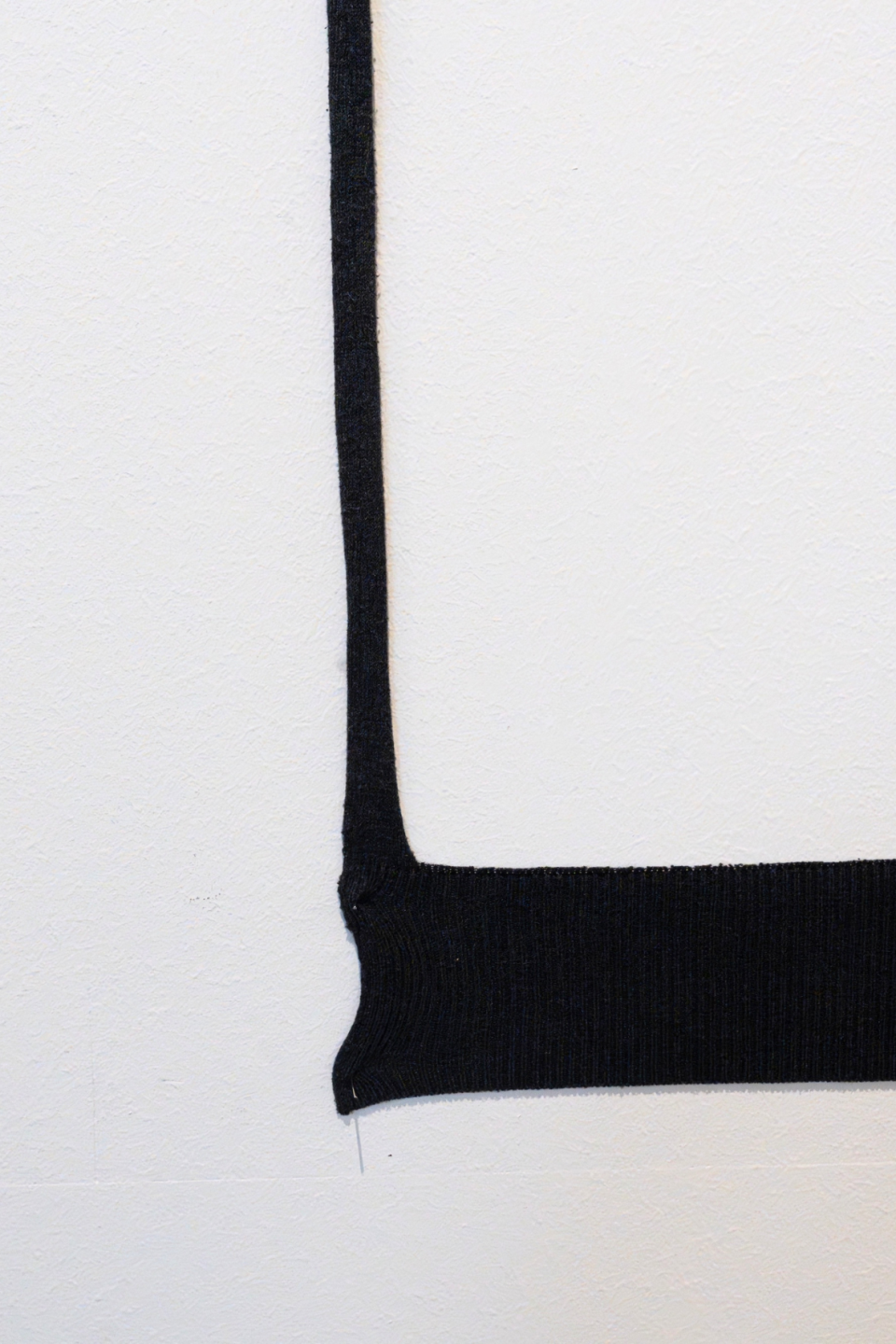
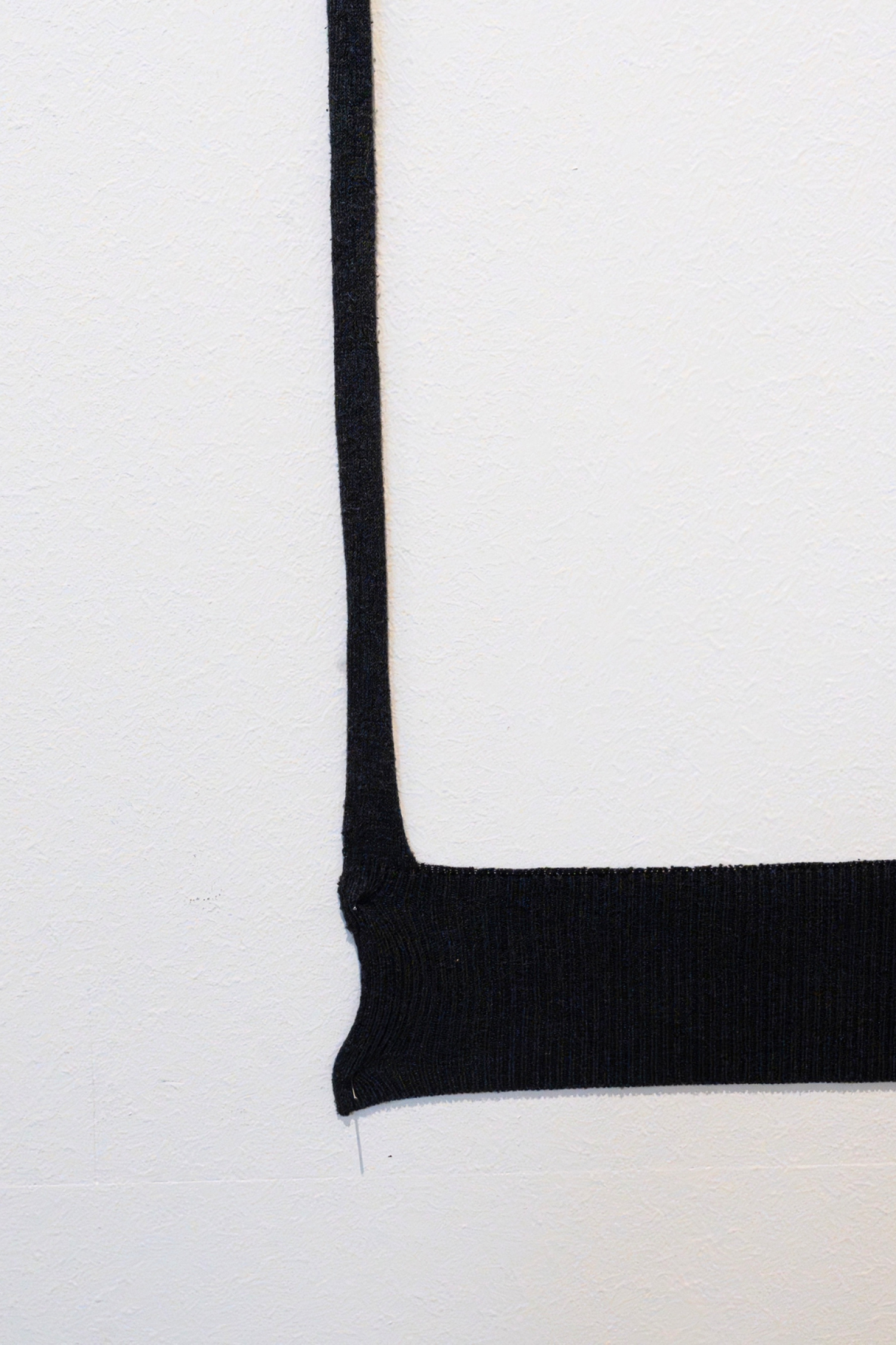
Most clothing is produced at breakneck speed by underpaid and unprotected workers; there is pressure on the seam. Joke Robaard turns attention to this charged threshold and asks: what posture does the worker assume while assembling garments — seated, standing, bent forward? Following movements through the skeletal structures of shirts, sweaters, skirts, and flags, she reads gestures embedded in cloth: planting, refusing, protesting, shaking, shrugging. Selecting and cutting become acts parallel to seeing and reading.
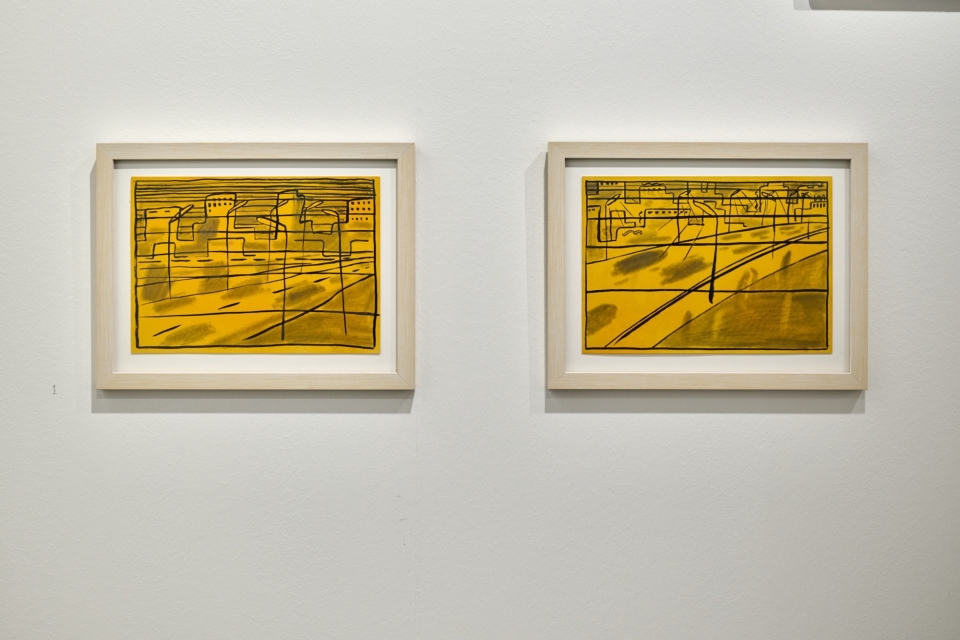
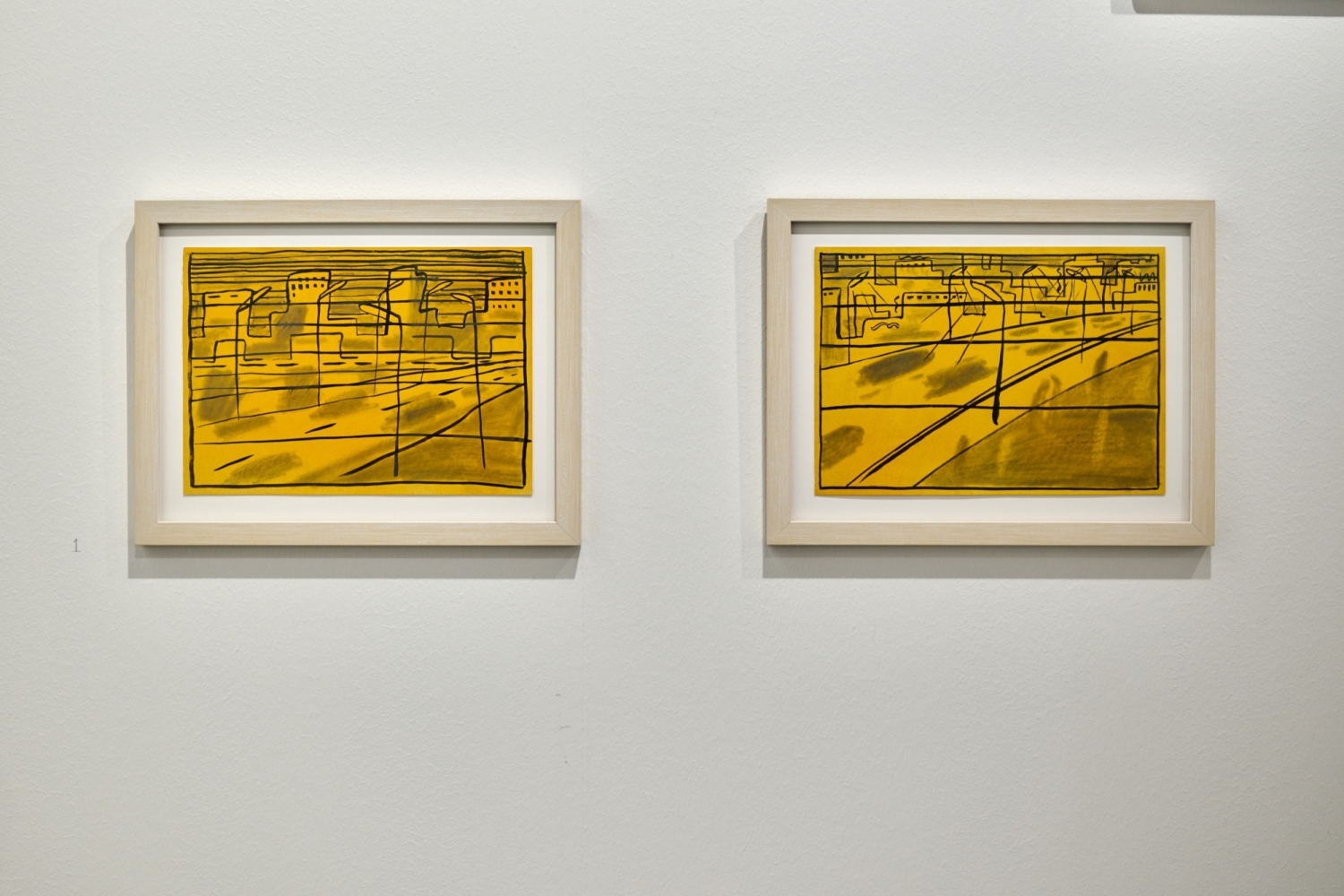
In the 1970s, David Weiss concentrated on ink drawings, producing the series Morgengrauen (Crack of Dawn). In this series, rectangular planes of ink and raw paper form ensembles of buildings in various stages of abstraction. Unlike the grand narratives of post-war art, Weiss turned towards undefined, seemingly banal surroundings, something later often revisited in his collaborative work. In these drawings, anonymous cityscapes are captured with a curious and ambiguous gaze, highlighting the melancholic beauty found in urban anonymity. The reduction of architectural construction to lines and planes forms abstract compositions that evoke Concrete Art, while the mood and intensity of expression shift across the series.
Artworks:
Raymond W. Barion, Drop and Run, 2025
Tina Braegger, He walked upon the water, 2025
Jakob Brugge, Only You, 2025
Julia Dubsky, Barometers Of Acting. We admire the actors’s ability to conceal all effort in portraying their character, yet paradoxically, we still recognize that it is acting we are watching, 2025
Olivier Foulon, Isa Genzken’s Ring, 2018
Sitara Abuzar Ghaznawi, M, Eleven (c), 2025
Jos de Gruyter & Harald Thys, Improvised Explosive Device, 2021
Thomas Helbig, Machine’s Trophy, 2022
Erwin Kneihsl, Ohne Titel (Affe, gelackt), 2014
Wjm Kok, Residue (Side Effect), 2026
Vesta Kroese, Daar (sketch), 2011
Gabriel Kuri, Error Bars, 2026
Daniel Laufer, I Miss You Like a Deadline, 2026
Sam Marshall Lockyer, Gold suitcase, 2025
Bernd Lohaus & Nora Schultz, Bernd’s KEIL Lifting the Palace of Justice, 2026
Mathieu Meijers, Home (left side), 2009
Sinaida Michalskaja, Key hammered into wall, 2023
Kenichi Ogawa, Voices of the Moon, 2024
Nie Pastille, Wolke, 2025
Zahra Pourghomi, Untitled, 2005–2011
Chloé Quenum, Low Light Rituals III, 2026
Joke Robaard, Untitled (Protest) #03, 2025
Richard Sides, Untitled (Garden), 2017–2024
David Weiss, Untitled, 1978
David Weiss, Untitled, 1978
Luigi Zuccheri, Untitled (Lucertola e figura umana), 1955–1960
Raymond W. Barion', Olivier Foulon', Jos de Gruyter & Harald Thys', and Bernd Lohaus & Nora Schultz's work were presented in collaboration with Etablissement d’en Face.
Tina Braegger', and David Weiss' works were presented in collaboration with Galerie Oskar Weiss.
Jakob Brugge's work was presented in collaboration with Gauli Zitter.
Julia Dubsky's work was presented in collaboration with Kirchgasse Gallery.
Sitara Abuzar Ghaznawi' and Sinaida Michalskaja's work were presented in collaboration with Shahin Zarinbal Gallery.
Thomas Helbig' and Erwin Kneihsl' works were presented in collaboration with Galerie Guido W. Baudach.
Wjm Kok's work was presented in collaboration with Stokker Jaeger.
Gabriel Kuri's works were presented in collaboration with Esther Schipper.
Daniel Laufer's work was presented in collaboration with Kunsthalle Lingen.
Sam Marshall Lockyer', and Richard Sides' works were presented in collaboration with KIN.
Mathieu Meijers' work was presented in collaboration with Van Abbehuis.
Kenichi Ogawa', and Joke Robaard' works were presented in collaboration with Galerie Mieke van Schaijk.
Nie Pastille's work was presented in collaboration with JUBG.
Chloé Quenum's work was presented in collaboration with Agence de Voyages.
Luigi Zuccheri's work was presented in collaboration with MMXX.
Raymond Wladyslaw Barion (1995) is a visual artist and curator whose work centers on engagement with the histories of technology and contemporary structures of production. Born and raised between Antwerp, Belgium, and Gdańsk, Poland, Barion studied visual arts and museology before developing a curatorial and sculptural practice around the dimensions of fabrication and material culture. He lives and works in Milan, Italy.
Tina Braegger (1985, Lucerne) lives and works in Basel. She is a painter whose work addresses questions related to originality, reproduction, authenticity, repetition, and difference. Since 2017, she has explored these topics through the motif of the „dancing bear,” a bootleg drawing that became an emblem of the American rock band The Grateful Dead in the 1970s. Braegger’s attraction to the bear has little to do with the band‘s music. Instead, her painting practice conceptually engages with how this counterfeit symbol inverts notions of official and unofficial, original and copy.
Jakob Brugge currently lives and works between Paris and Brussels. His work takes the shape of vitrines housing rubber facsimiles of ordinary objects — partially filled boxes that give structure to a haphazard arrangement of hollow cast forms. Braided belts, boat shoes, t-shirts, hats, and high heels press against each other and their containers, forming a loose ensemble whose historical and ideological specificity is masked by their familiarity. Fabricated, encased, moulded, cast, replicated, and transformed, these symbolic clothes ask how a baseball cap or a belt relates to lifestyle, ideology, or political affiliation — and when a specific shirt becomes a uniform, a sign of belonging, a behaviour even.
Julia Dubsky is an Irish painter and writer based in Berlin. She completed her BA at the National College of Art and Design, Dublin, in 2016, and received the TBG+S Recent Graduate Residency in 2017. From 2018 to 2021, she studied in the MFA class of Jutta Koether at the Hochschule für bildende Künste Hamburg. Recent solo exhibitions include Amanda Wilkinson, London (2025), Kirchgasse, Switzerland (2023/24); Becky's, Berlin (2021); and Amanda Wilkinson, London (2021, 2019). Dubsky was the Art School Alliance resident at Goldsmiths, University of London, funded by the DAAD and the Karl H. Dietz Stiftung (Spring 2020), and a Heinrich Böll Cottage Resident (August 2025).
Olivier Foulon (1976, Brussels) is a Belgian artist based in Berlin whose practice explores art history through appropriation, photography, and subtly staged installations. He has exhibited widely in Europe, received the Villa Romana Prize (2009), and published the artist’s book Isa Genzken’s Ring (2018).
Sitara Abuzar Ghaznawi (1995, Ghazni, Afghanistan) lives and works in Basel and Sarnen, Switzerland. In her collages, sculptures, and installations, Sitara Abuzar Ghaznawi juxtaposes robust, monumental forms with delicate, perishable materials sourced from domestic environments, creating a visual dialogue between historic codes, questions of value, and political reflections. She employs mass-produced materials such as aluminum foil, off-cuts, and gaffer tape, intentionally maintaining their humble origins without attempting to upcycle them.
Jos de Gruyter (b. 1965) & Harald Thys (b. 1966) have worked together since 1987, where they meet at Sint Lucas University College of Arts in Bruxelles. Their work has since been presented in solo shows hosted by contemporary art institutions around the world. Among these, Kunsthaus Biel (2024), Kunstverein Munich, Munich (2017), Triennale di Milano, Milan (2017), Portikus, Frankfurt (2016), CAC, Vilnius, (2016), MoMA PS1, New York (2015), Museum of Contemporary Art, Chicago (2015), CCA Wattis, San Francisco (2015). Furthermore, the duo has participated in a number of international group shows such as the Berlin Biennale (2008), the 55th Venice Biennial (2013) and in 2019 they presented Belgium during the Venice Biennale. Jos de Gruyter and Harald Thys live and work in Rome and Brussels.
Thomas Helbig is an artist based in Berlin. The practice of Thomas Helbig contains painting, drawing and sculpture, while each of the media plays on its own field. The focus of the paintings is colour itself—in its intrinsic value, its materiality and the ability to create spatial illusions from countless shades of light and dark. In contrast, his collage sculptures demonstrate a different kind of transformation of the source materials he uses. His repertoire is based on a fundus of discarded, thrown-out things, as well as kitschy plastic sculptures. Helbig mixes and connects these disparate elements into new forms, which are displayed as coded messages from an enigmatic present. Helbig attended the Academy of Fine Arts, Munich and Goldsmiths, University of London, from 1989 to 1996, and is represented by Galerie Guido W. Baudach, Berlin.
Erwin Kneihsl is an artist and alchemist. His black and white photographs transform landscapes, architectures, and again and again dolls, into inner images with a surreal appearance. The almost exclusively analogue hand prints on baryta paper, characterized by deliberate blurring and extreme contrasts, in reminiscence of the attitude of early punk, are stapled on simple gray cardboard before Kneihsl finally stamps it in the style of classic art photography (EK); albeit with a rather unusual preference for the front of the print.
Wjm Kok (1959, Utrecht)l ives and works in Amsterdam. His practice is rooted in painting, cut by readymades, conceptual reversals, and other phenomena induced by contemplation—engaging transience, serendipity, and reciprocity through iteration in series.
Vesta Kroese works as a visual artist, educator and facilitator. Combining conceptual and experiential learning, she is interested in the influence and relationship between the individual (the self) and the systems in which we live. Her inspiration to create comes from experimenting with living life fully towards a world that works for all. Site specific projects are informed by co-creation with the local context (e.g. spatially, historically, socially), leaning on values of interdependence and generosity. Formally she beholds a master in Architecture from TU Eindhoven and Sculpture from RCA London. She has shown work in galleries, shops and public spaces in Europe (including UK) and participated in art residency programs in The Netherlands, England, Germany and Spain.
Gabriel Kuri was born in 1970 in Mexico City, Mexico. He studied at Goldsmiths College in London and at the Escuela Nacional de Artes Plásticas, UNAM in Mexico City. The artist lives and works in Brussels. Gabriel Kuri’s œuvre encompasses diverse media including sculpture, collage and installation, often using repurposed natural, industrial, and mass-produced objects (insulation foam, shells, soda cans, stones, or ticket receipts, for instance) to craft eloquent works of art. Kuri’s works often include traces of past human activities, such as empty bottles or cans, cigarette butts or ticket stubs. They function as signs of spent time, energy or currency — a recurring theme in the artist’s work.
Daniel Laufer works across painting, film, installation, sculpture, and performance, constructing intermedial constellations from historical and contemporary filmic techniques, language, painting, and stage design. Having worked as a scenic painter before studying art, his installations carry a material specificity — props, storyboards, and built environments are not incidental to the moving image but structurally inseparable from it. His films resist the logic of seamless narration; instead, they fracture temporal continuity, exposing the gaps, cuts, and silences through which storytelling reveals its own construction.
Sam Marshall Lockyer (Brussels/London) is an artist whose practice spans painting, sculpture, drawing, and film, through which she investigates and negotiates notions of failure, grandeur, scale, rules, and humour.Recent exhibitions include: Boat Show at Graw Böckler in Berlin, DE (2025), Channeling at Rue Americaine in Brussels, BE (2025), Science Fiction at The Briefing Room in Brussels, BE (2025), Centre Line at Harrow Project Space, in Harrow, UK (2024). She was a resident at De Ateliers in Amsterdam (2020-2022) and did the postgraduate Drawing Year at the Royal Drawing School in London(2016). She graduated with a BSc in Political Sciences from London School of Economics in 2014.
Mathieu Meijers (1951) is a Dutch artist based in Eindhoven. Since 2002, Mathieu has been making ‘drawings’ in both mural and book format. The works have a graphic appearance and emphasize the regurgitation between painting and drawing.
Sinaida Michalskaja was born in Moscow and lives and works in Berlin, Germany. Her practice treats paradox as a tool for world-building, merging linguistic observation with sensual experience across sculpture, photography, video, and text. Michalskaja often works with found footage and visual or textual citations, re-contextualising fragments and bringing them into dialogue. Her process is one of rigorous collection: concepts drawn from cybernetics, systems theory, and queer theory are paired with physical artefacts – such as rakes, windows, keys – to guide seemingly incompatible systems into conversation. Circularity is not merely a motif in her work; it shapes its very structure, framing both concept and experience.
Kenichi Ogawa was born in 1969 and lives and works in Aichi Prefecture. Graduated from Aichi Prefectural College of Art, He has been a long-time artist at Kenji Taki gallery (Tokyo/ Nogoya, Japan). He had several exhibitons like: 2023, Kenji Taki Gallery (Tokyo), 2021, City Hekinan Museum (JP), 2019, “Weightless” with Peter McDonald, Mieke van Schaijk 2018, “I Say Yesterday, You Hear Tomorrow. Visions From Japan” Gallerie delle prigioni, Treviso (IT) 2017, “Art Obulist” Okura Park, Obu-city, Aici (JP) Seoul City Museum (Korea). 2013 Art Zuid, International sculpture Route Amsterdam, Public Collection Voorlinden Museum, Wassenaar (NL). Kenichi Ogawa is represented by Galerie Mieke van Schaijk since 2016.
Nie Pastille lives and works in Cologne. The artist attended the Sandberg Institute in Amsterdam and the University of Fine Arts in Arnhem. Pastille's paintings on linen and chipboard take the form of unconventionally constructed wall objects: canvases are sawn apart and reassembled into rounded, irregular shapes with soft edges and open partitions, sometimes incorporating painted stuffed linen cushions or papier-maché elements. Drawing is central to her process, often informing the origin of a work. Colorful and dreamlike, her compositions move between esoteric imagery and psychedelic figuration.
Zahra Pourghomi (1943, Tehran) began painting after a visit to the Mauritshuis in The Hague, where she saw Vermeer’s Girl with a Pearl Earring. Struck by the painting, she went home and painted her own version. From there she continued with works she admired, including Van Gogh’s Sunflowers. Alongside painting, Pourghomi is a skilled dressmaker who for years designed and sewed bridal gowns, some of which she sent to young brides in Iran. One of her designs was inspired by a seventeenth-century painting of a woman in a white dress, which she translated into an actual garment. She also explored other interests, such as music. Due to personal circumstances, she eventually had to set these activities aside. Zahra Pourghomi is also the curator's mother.
Chloé Quenum (1983, Paris) explores the circulation, slippage, and transformation of meaning through graphic, linguistic, and symbolic elements drawn from different cultures. By extracting them from their original context, she endows them with a new consistency and vitality, as if transmuted as kind of glitch. Her works become material signs, assemblages of mixed origins where references shift and free themselves from fixed frameworks of interpretation. The artist questions how displacement, translation, and transfiguration reshape our relationship to objects, symbols, and narratives. Through this process of extraction and reconfiguration, she reveals the tensions between memory and erasure, inheritance and reappropriation, transmission and resistance. Crossing the boundaries between disciplines and traditions, Chloé Quenum constructs a cryptic language in which each form acts as a vector of poetic and political resistance. Her works interrogate the evocative power of symbols, their ability to generate new narratives and to make long-silenced or scattered histories resonate.
Joke Robaard works at the intersection of archive and gesture. She is currently developing two interconnected bodies of work: an expanding archive of images and texts drawn from newspapers and magazines (1978–present), and a series of textile fragments titled Se-lections, composed of fabric pieces that refer to gestures, actions, letters, and words.These two collections continuously intersect and activate one another—sometimes as performative arrangements, as in Small Things That Can Be Lined Up (IFICD, 2016), and sometimes disseminated through publications such as Archive Species (Valiz, 2018), produced in collaboration with Camiel van Winkel, and the booklet OVERLAP (Art Island, 2023). While the archive accumulates and expands, the seam works operate through reduction and deconstruction. The artist moves between fullness and absence, assembling and dispersing meaning through acts of selection and displacement.
Richard Sides (b. 1985, Rotherham, UK) is an artist and curator based in Berlin. His works explore contemporary ideas of meaning as an existential problem. These often manifest as environments that treat the exhibition as sites with their own obstructions and particularities to respond to. Recent solo and duo exhibitions include Elections, Shore Gallery, Vienna (2024); Slow Dance (4) with Nicole-Antonia Spagnola, Stadtgalerie Bern (2023); Basic Vision, KOW, Berlin (2022); The Matrix, Schiefe Zähne, Berlin (2021); Dwelling, Kunstverein Braunschweig (2019) and PURE HATE, Liszt (2017). Richard has participated in numerous group exhibitions including Kunsthalle Zurich, Bonner Kunstverein, Kunsthaus Glarus, Kunstverein Hannover, Atonal Berlin, Fluentum Berlin and Swiss Institute, New York. He is co-director of The Wig in Berlin and runs Bus Editions since 2010.
Nora Schultz earned her degree from Städelschule, Frankfurt, and has also studied at the Milton Avery Graduate School of the Arts, Bard College, NY. Some of Schultz’ recent solo exhibitions include Now, at Grazer Kunstverein and Now and The non-watch, Galerie MeyerKainer, Vienna; Major Rivers Running Underground, Kunsthalle Bremerhaven, Fished by Fish, dépendance, Brussels and would you say this is the day?, Secession, Wien. Her solo performances include River at in The Whitney Museum, New York and Terminal + at Tate Modern, Performance Room, London. Schultz took part in Skulptur Projekte Münster in 2017.
Together with Rhea Anastas in 2024, Schultz organized the first major retrospective of Christine Kozlov in the U.S. at Arts and Letters, NY. In 2025 together with Olivier Foulon she showed the work of Bernd Lohaus at Établissement d’en Face. Since 2022 Schultz is Professor for Sculpture and Installation at the Academy of Fine Arts in Vienna.
David Weiss (1946/ †2012 in Zurich), lived and worked in Zurich, Los Angeles and Carona. He grew up as the son of a parish priest and a teacher. After discovering a passion for jazz at the age of 16, he enrolled in a foundation course at the Kunstgewerbeschule, Zürich, where in his first year of study he befriended fellow artist Urs Lüthi. Having rejected careers as a decorator, a graphic designer and a photographer, Weiss soon came to view a career as an artist as a realistic prospect. He studied at the Kunstgewerbeschule, Zürich (1963–64), and the Kunstgewerbeschule, Basel (1964–65); he subsequently worked as sculptor with Alfred Gruber (Basel) and Jaqueline Stieger (England). In 1967, he worked at the Expo 67 in Montreal, before traveling to New York, where he got to know the important minimalist art of the time. Between 1970 and 1979 he published books in collaboration with Lüthi. For most of 1975–78, he spent a great deal of time drawing in black ink, and had exhibitions at galleries in Zürich, Amsterdam, Cologne, and Rotterdam. In 1979, Weiss began his celebrated collaboration with Peter Fischli, forming the duo Fischli/Weiss. Together, they radically explored the boundaries of the everyday, the absurd, and the comic, using diverse media including film, photography, installation, and sculpture. The duo has been the subject of large-scale surveys at numerous museums across Europe and North America, recently in 2016 at the Solomon R. Guggenheim Museum in New York and the Museo Jumex in Mexico City. Their work has been featured in Documenta, Skulptur Projekte Münster, and six Venice Biennales, where they represented Switzerland in 1995 and were awarded the Golden Lion in 2003 for their installation Questions (1981–2002).
Luigi Zuccheri (b. 1904, Gemona del Friuli; d. 1974, Venice) was born on March 13, 1904 in Gemona del Friuli. He attended the gymnasium in Udine and high school in Venice. Later on he also took private painting lessons in both cities with two different teachers. Many places cross Zuccheri’s path: the Friuli region–the family palace is located in San Vito al Tagliamento–Venice, Paris for a formative trip in 1929-30, and Florence in the late 1940s.
Agence de Voyages is an art space founded in 2024 in Paris. Its distinctive feature is its precise and subtle alteration of the perception of art and exhibitions, achieved through its careful placement on an ambivalent threshold where aesthetic delight and critical deconstruction can occur simultaneously. Therefore, it deploys a plethora of strategies involving border-crossing and -suspending within the context of a gallery. These include confronting the interiority of the living space with the exteriority of the commercial sphere; combining classical framing, hanging and installations with unconventional concepts of display and social engagement; and reflecting the relationship between art and literature, intermingling publishing and exhibiting practices. Agence de Voyage is a space which aims to infiltrate contemporary issues into historical formats such as painting and the novel and vice versa. On an analytical level the gallery wants to playfully separate interpretative historical frameworks from their respective disciplines and apply them to other forms of expression. The space showed artists like Monica Bär, David Medallal, Mimosa Echard, Jean-Luc Blanc, Chloé Quenum, Stefano Faoro and Birgit Megerle.
Esther Schipper founded her first gallery in Cologne in 1989. After German reunification, she opened a satellite space in Berlin in the mid-1990s, where it has since developed an influential international program. Since then, the gallery has expanded globally, integrating Johnen Galerie in 2015 and opening spaces in Seoul, Paris, and New York. Its activities extend beyond exhibitions to include lectures, performances, and events, reinforcing its role as a discursive space for experimentation.
Etablissement d’en face is an art space in central Brussels. It aims to present artistic practices to an international audience by offering conditions of professional production to a wide spectrum of contemporary artists. Founded in 1991 by the artists Alec De Busschère, Delphine Bedel, Christophe Draeger and Patrick Everaert, it was originally located in the Rue d’Artois and moved to the Rue Antoine Dansaert in 2002. Over the years it has been programmed by various individuals. Currently, Ryan Cullen, Emeline Depas, Olivier Foulon, Jean-Paul Jacquet, Nina Janssen, Henrik Olai Kaarstein, Stefanie Snoek, and Harald Thys operate Etablissement d’en face.
Gauli Zitter is an art gallery founded in 2023 by Piero Bisello and Philip Poppek. It shows Belgian and international artists in its location in Brussels and international fairs.
Galerie Guido W. Baudach is a gallery for contemporary which was founded in 2001 on the base of a former project space. Since then, it has presented a changing program of exhibitions infall kinds of media. Currently the gallery represents fifteen international artists. The gallery participates in art fairs and publishes artist books and catalogs.
JUBG is a Cologne based gallery for contemporary art, founded in 2020 by Jens-Uwe Beyer, Albert Oehlen and Alexander Warhus. In 2022, the gallery’s own label was added. JUBG wants to be understood as a space for conversation and inspiration that connects art and music, sound. JUBG passionately works with artists, musicians, writers, whether from the underground or acclaimed positions. The gallery program shows international artists and influential musicians combined in unique collaborations.
KIN is a gallery founded by Nicolaus Schafhausen in 2023 located in the heart of Brussels. With a focus on artistic positions that defies easy categorisation, the program strives for an interdisciplinary approach. KIN stands for kinship and, as such, collaboration with others is part of the gallery’s DNA. KIN is a platform for artistic exchange, it presents exhibitions, develops projects, and programs events.
Kirchgasse Gallery was founded in 2016 in Steckborn, a small village at Lake Constance, Switzerland. Located near the border with Germany and Austria, the gallery is exhibiting international emerging and established contemporary artists. Kirchgasse is oriented towards a discursive program alongside an experimental approach. Its internal structure is driven by a collective approach.
Kunsthalle Lingen is a center for contemporary art in Lingen, presenting solo and group
exhibitions by national and international artists. Its program reflects developments in local, national, and international art, while its educational mission focuses on promoting and communicating contemporary visual art. The institution addresses socially and politically relevant themes such as ecology and digitalization, and complements its exhibitions with lectures, artist talks, and workshops.
MMXX is an artist-led project founded by Emanuele Marcuccio and Daniele Milvio in 2020 located in Milan. MMXX facilitates exhibitions and promotes critical discourse.
Galerie Oskar Weiss was founded in 2025 in Zurich by Oskar Weiss. After running Weiss Falk for nine years in Basel and Zurich, he resumed all collaborations and representations of the former program. The gallery publishes books under its own publishing house, Hacienda Books, and runs its pop-up art cinema Kino Süd.
Galerie Mieke van Schaijk hangs as a bespoke dress in the small yet sturdy Dutch
wardrobe in the city of ‘s-Hertogenbosch. Completely unique, and delicate in detail, it
is a piece that follows no generic pattern in favor of the risk to be something other. Not
simple/easy to hold, (and why should it?) the fabric is woven with an idiosyncratic thread, with an imaginative approach. Appliquéing artistic visions since 2012 and hemmed by the stitch of contemporary, the program cuts a shape proportioned meticulously through the ‘savoir-faire’ of balancing asymmetric creative practices, unafraid to be bejeweled, sheer, or figure-hugging [Text by Fiona Mackay].
Shahin Zarinbal is a contemporary art gallery based in Berlin, working with international artists across generations and disciplines. Since its founding in 2022, the gallery has supported rigorous artistic practices, with a program shaped through ongoing dialogues grounded in the specific concerns and methodologies of the artists’ work. Spanning sculpture, installation, painting, and conceptual practices, the gallery approaches exhibition-making as an active, collaborative process that fosters long-term relationships and an organically growing network of artistic exchange.
Stokker Jaeger is a project space initiated in 2025 by Lily van der Stokker to host the Stokker Jaeger Foundation. Its first exhibition, De Kelder, was a group show with friends of
Lily van der Stokker and marked the beginning of an ongoing exploration of the space and its possibilities. Stokker Jaeger operates independently, without positioning itself as an alternative to a gallery or art spaces in general.
Van Abbehuis is a house for contemporary art. The name is derived from the history of the space, located in the former residential villa of the Van Abbe family across from their museum. The exhibitions and public programme don't operate separately, but relate through the rooms that take shape through the public domain. The infrastructure of the space guides the way in which the exhibitions and residencies are carried out: the multifunctional spaces with architectural elements are based on the former residential function: a gallery space, a working office, a library, a café, and a garden.