


Stone Shop
Jakob Brugge, Gabriel Kuri, Sam Marshall Lockyer
26. – 29.03.2026
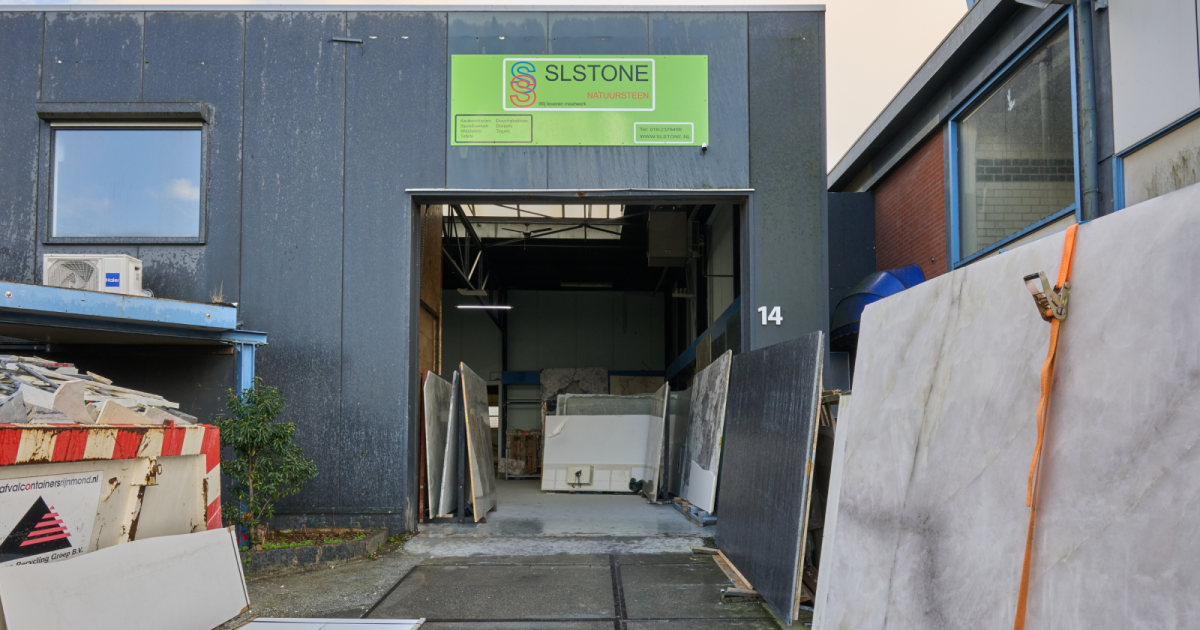
The entrance to the Stone Shop. Photo: Frans Parthesius
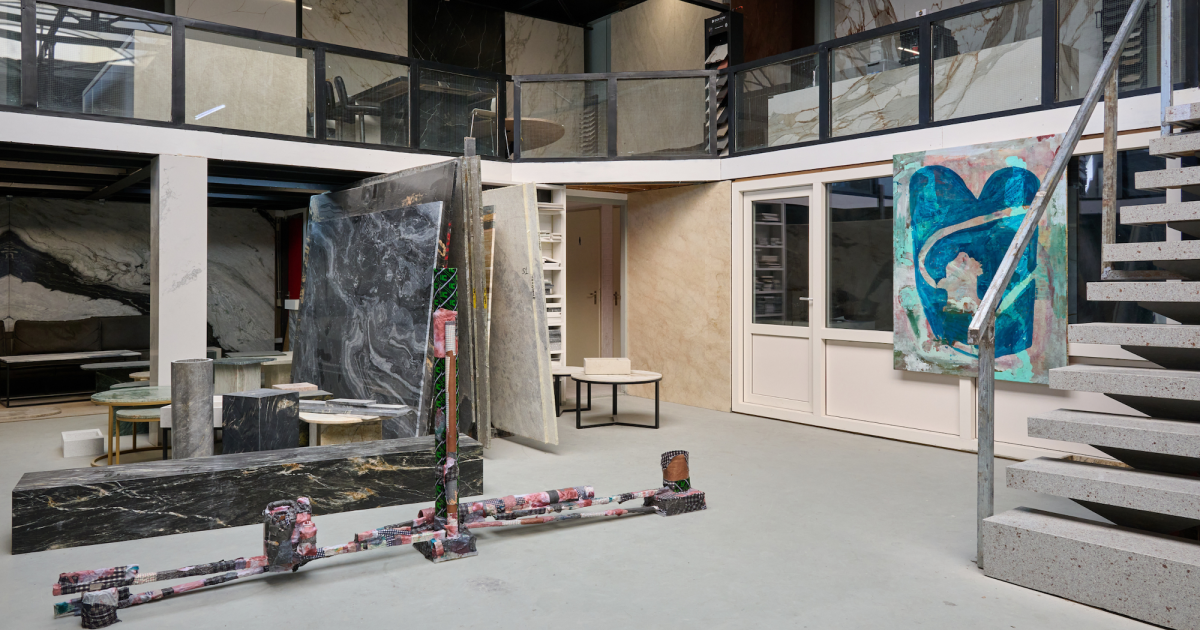
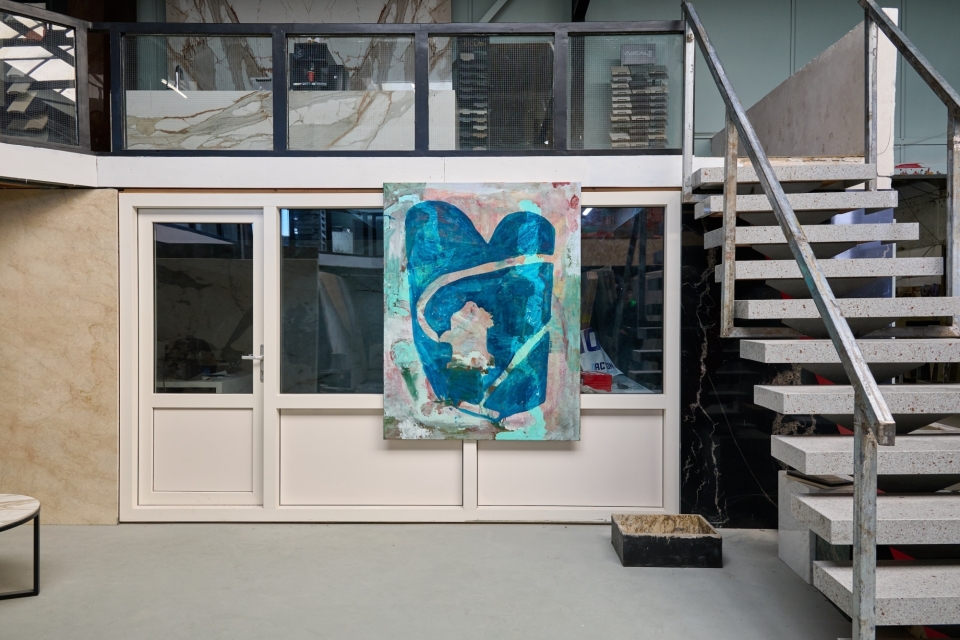
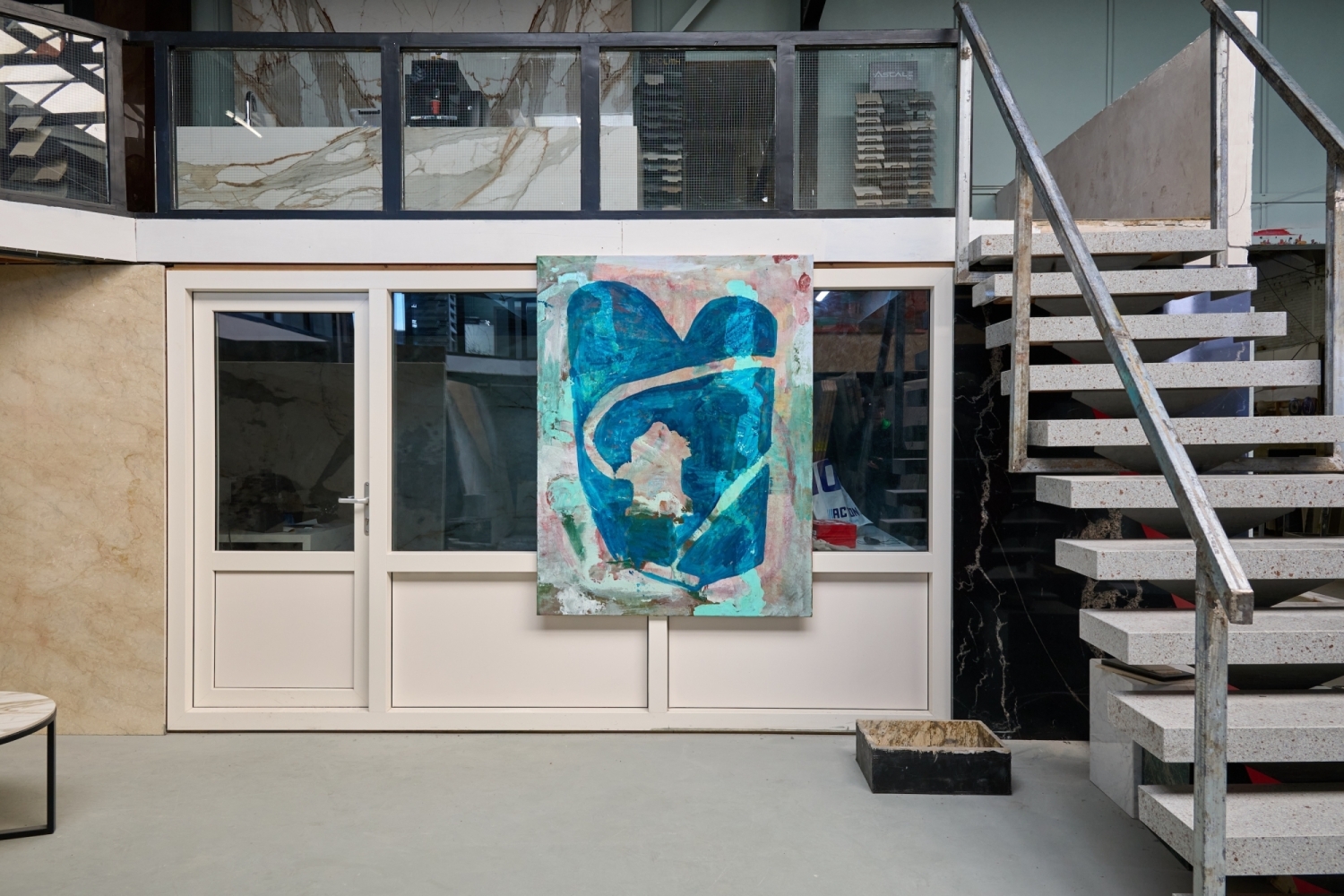
Left: Sam Marshall Lockyer, Concrete Handbag, 2025. Right: Sam Marshall Lockyer, Blue Vacuum, 2026. Photo: Frans Parthesius
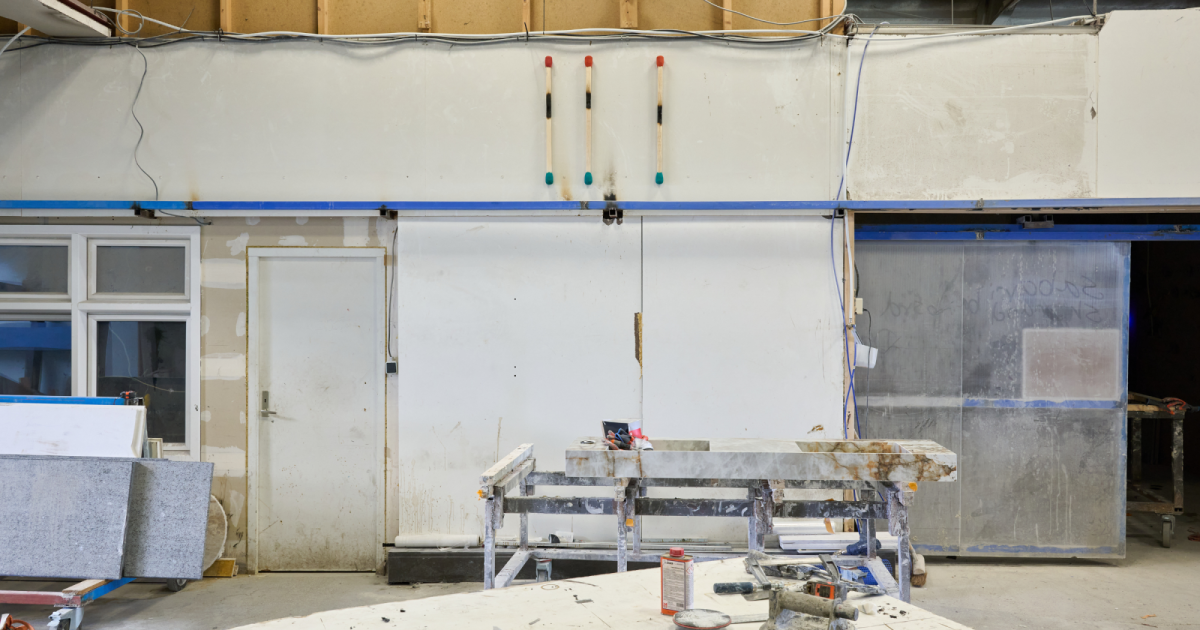
Gabriel Kuri, Error Bars, 2026. Photo: Frans Parthesius
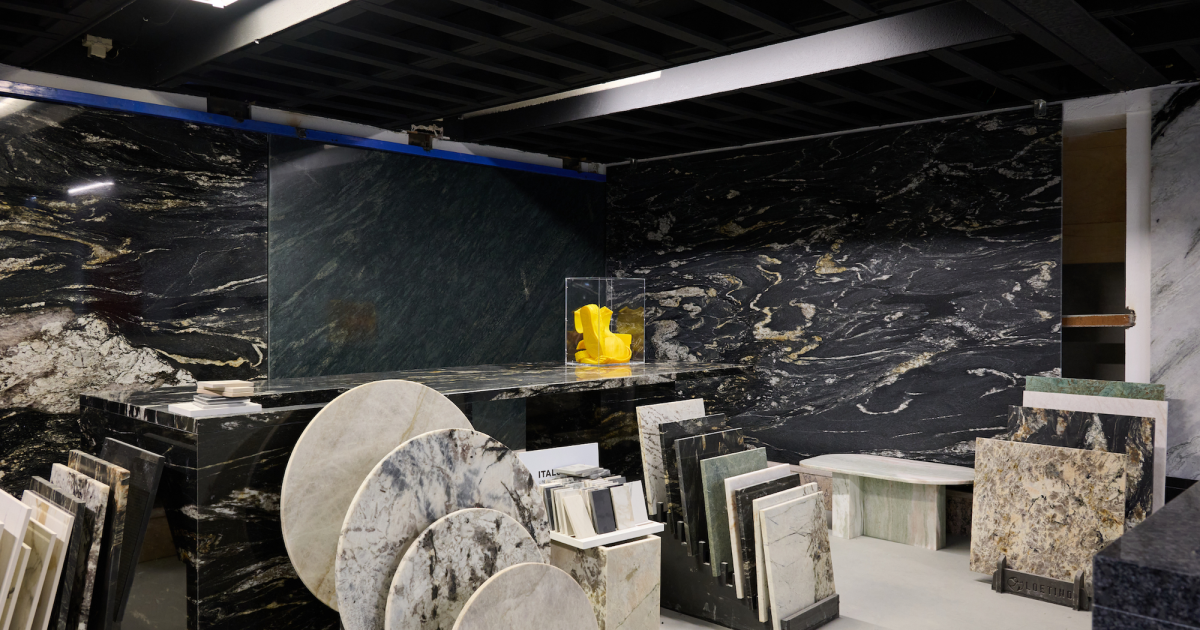
Jakob Brugge, Real Objects, 2025. Photo: Frans Parthesius
SLstone Natuursteen is a stone workshop and showroom on the Plompertstraat that has been active in the Rotterdam region for over twenty years. The space combines a showroom with its own production facility, facing the edge of the harbour in an industrial area of Charlois. Here, slabs of marble, granite, quartzite and composite sourced from countries such as Iran, India, and Brazil are cut and finished into custom countertops, tables, and other interior elements. Het Zuid Manifest presented works by Jakob Brugge, Gabriel Kuri, and Sam Marshall Lockyer among these materials.
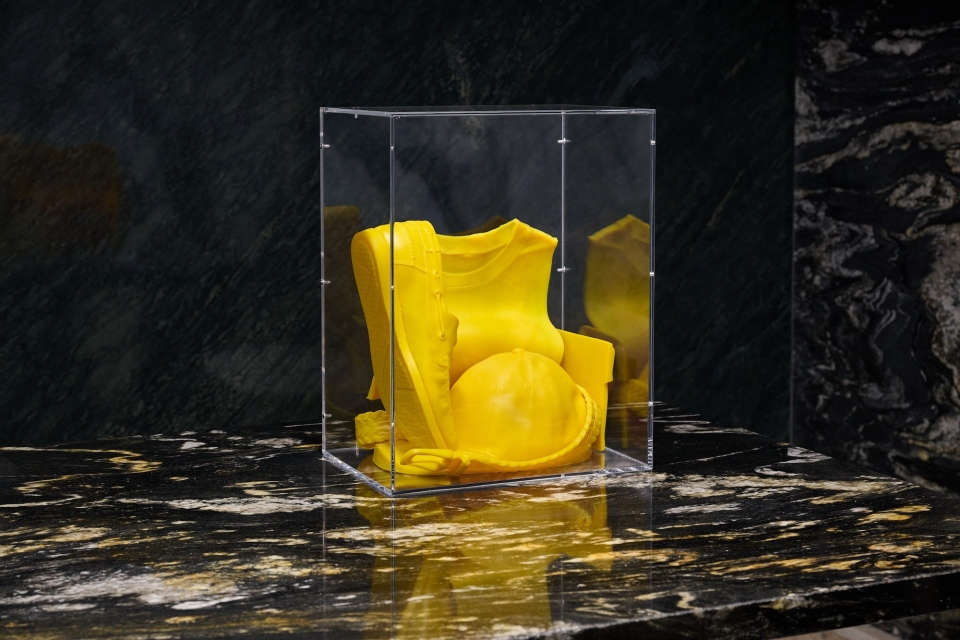
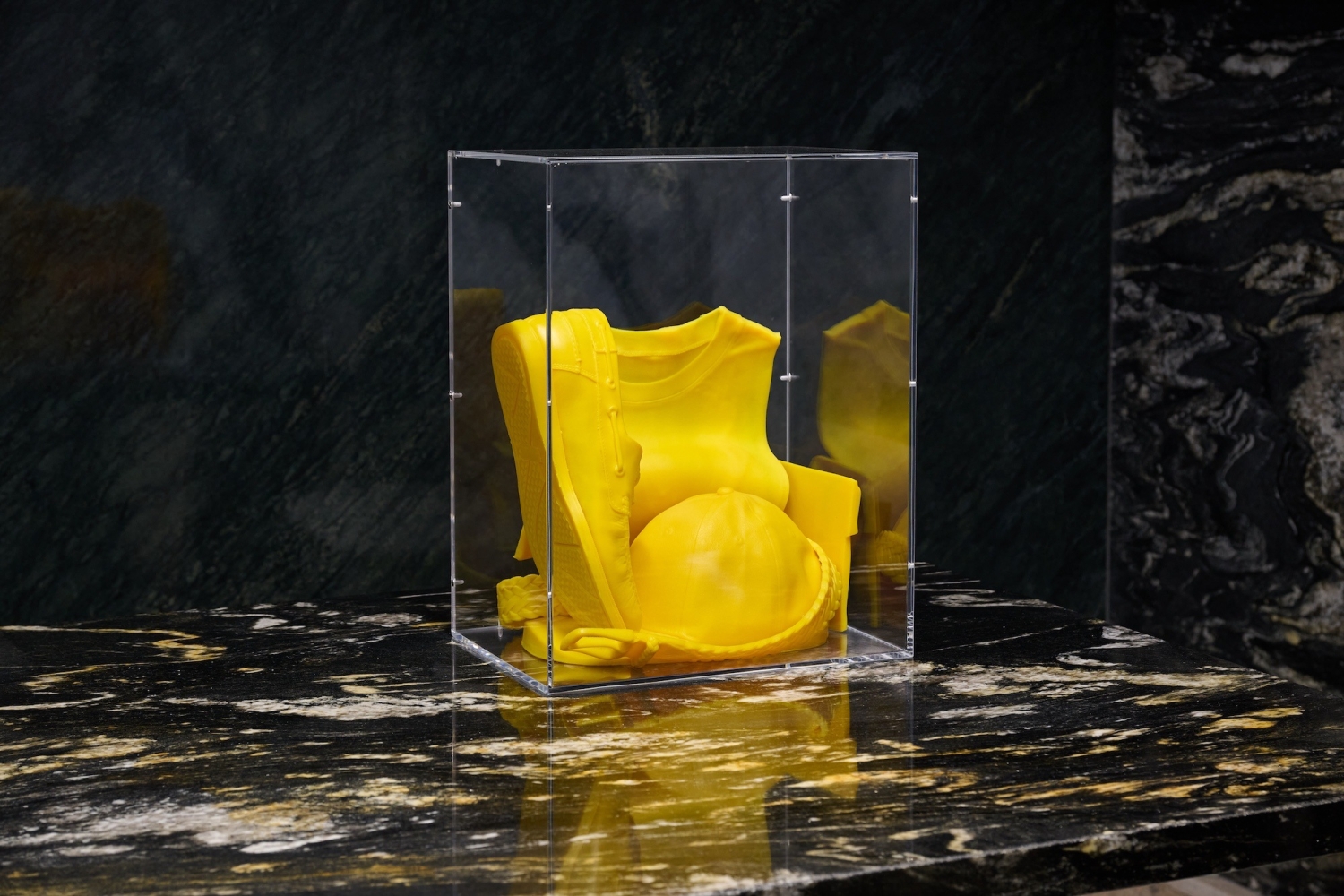
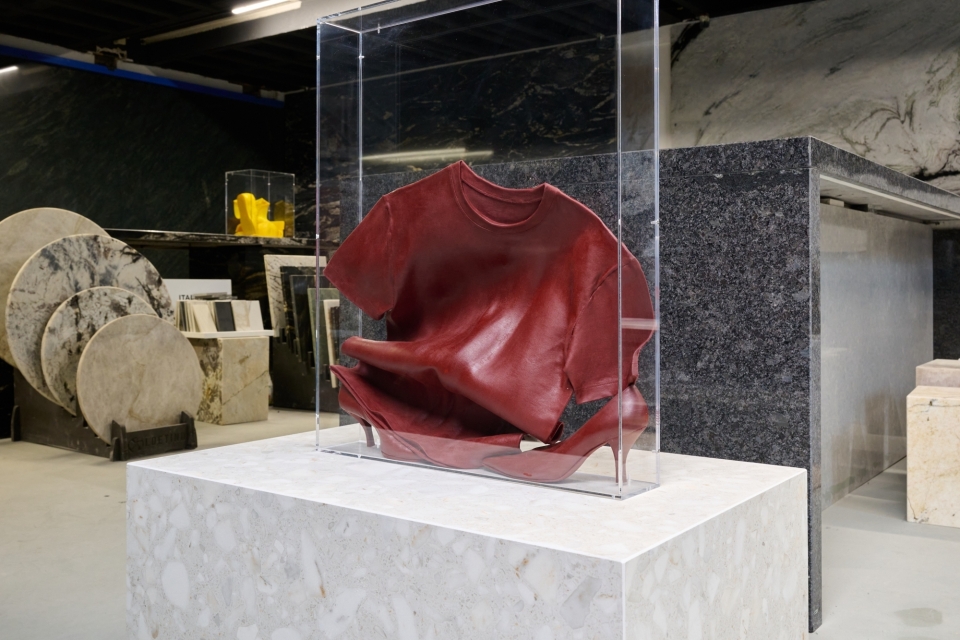
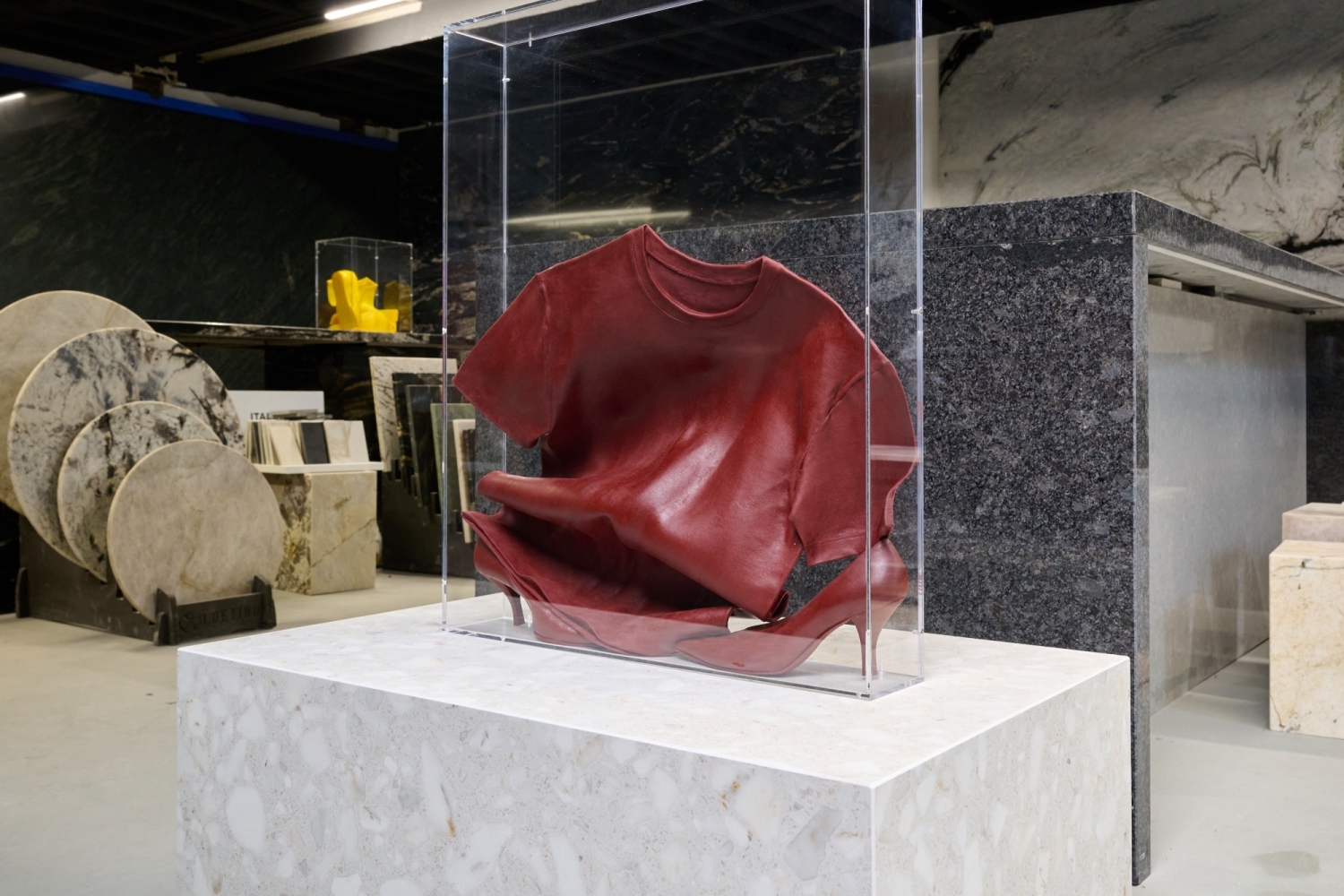
Jakob Brugge's work deals with the symbolic potential of everyday objects, especially clothes, materializing in sculptures that deviate from mere found objects—symbolic clothes that are fabricated, encased, molded, cast, replicated, and transformed by the artist. His works were also presented in other locations of the festival: Rib, Oude Kerk Charlois and Art Rotterdam.
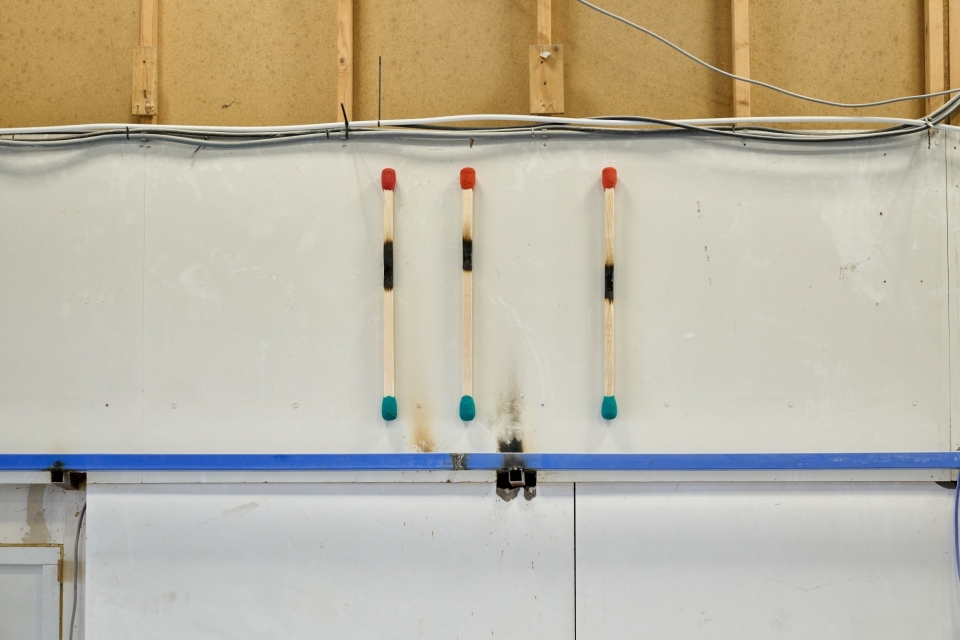
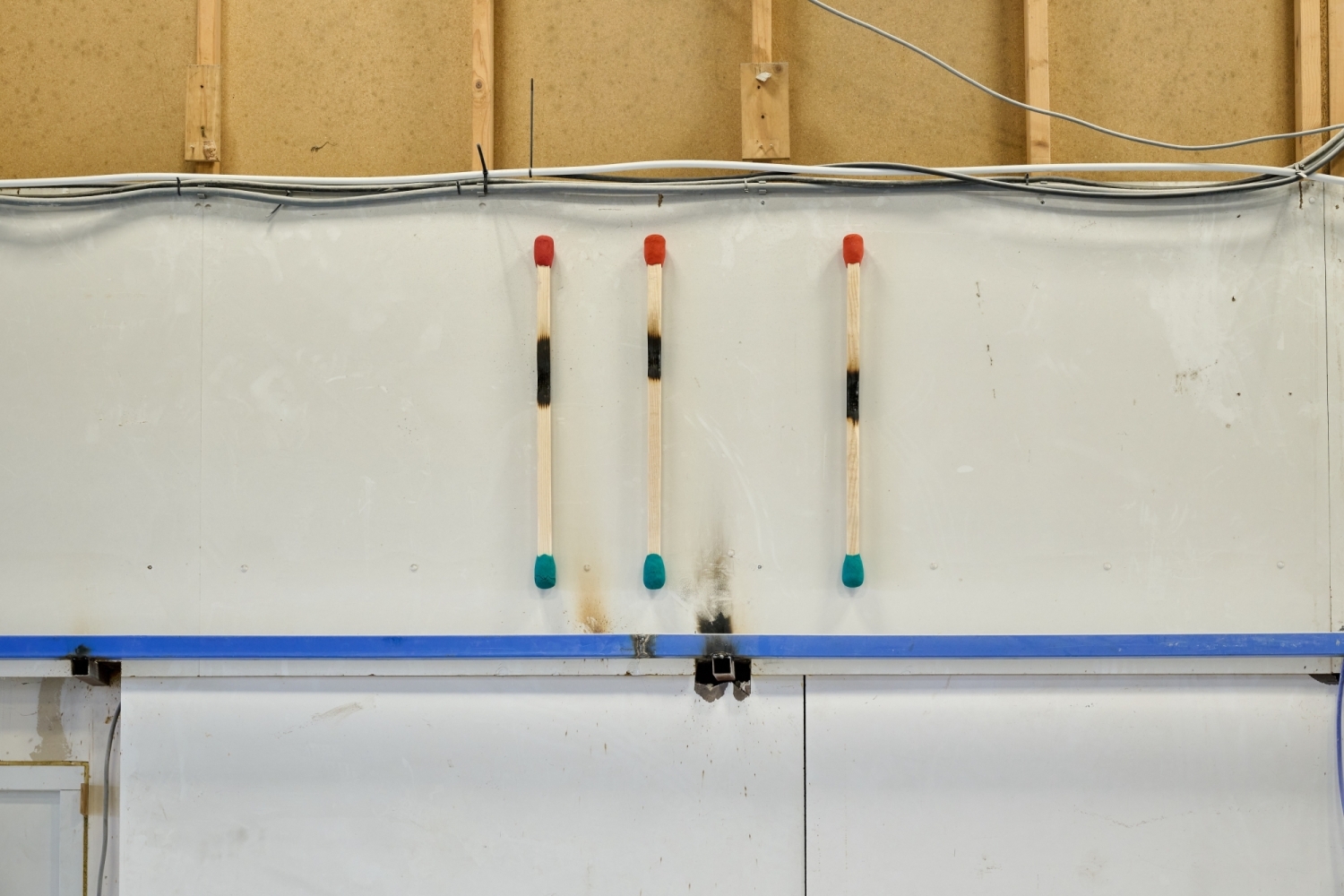
Gabriel Kuri's Error Bars are a series of oversized matchsticks—carved from wood, finished with mixed media, and shown in various states from unlit to charred—distributed across multiple festival locations (Rib, Oude Kerk Charlois, Attractiepark Rivoli, Planet Cake, and Art Rotterdam), where they became a recurring motif that draws attention to the brittle beauty of the everyday. To read more about the work, refer to the documentation of the Oude Kerk location.
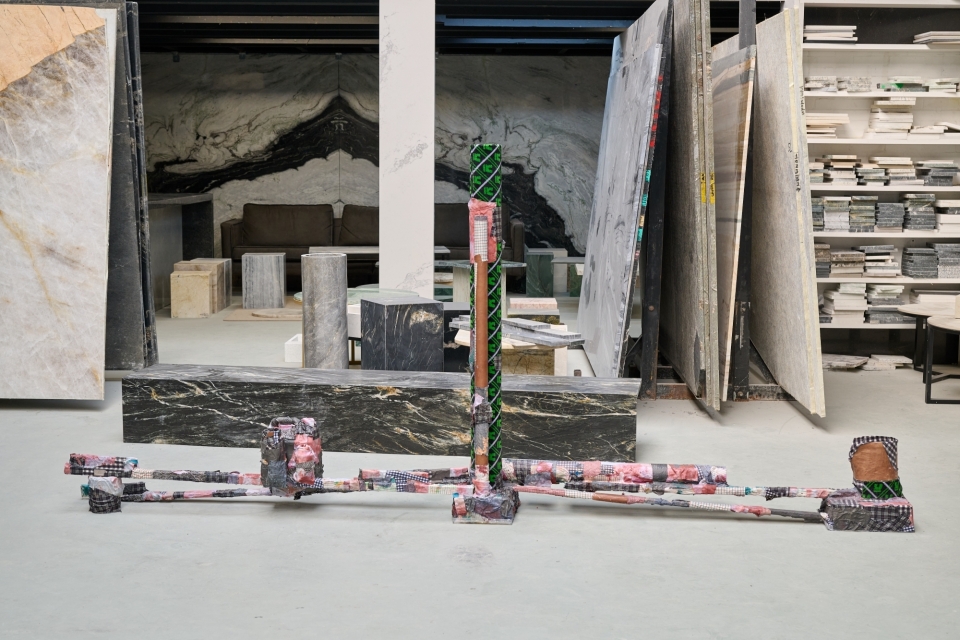
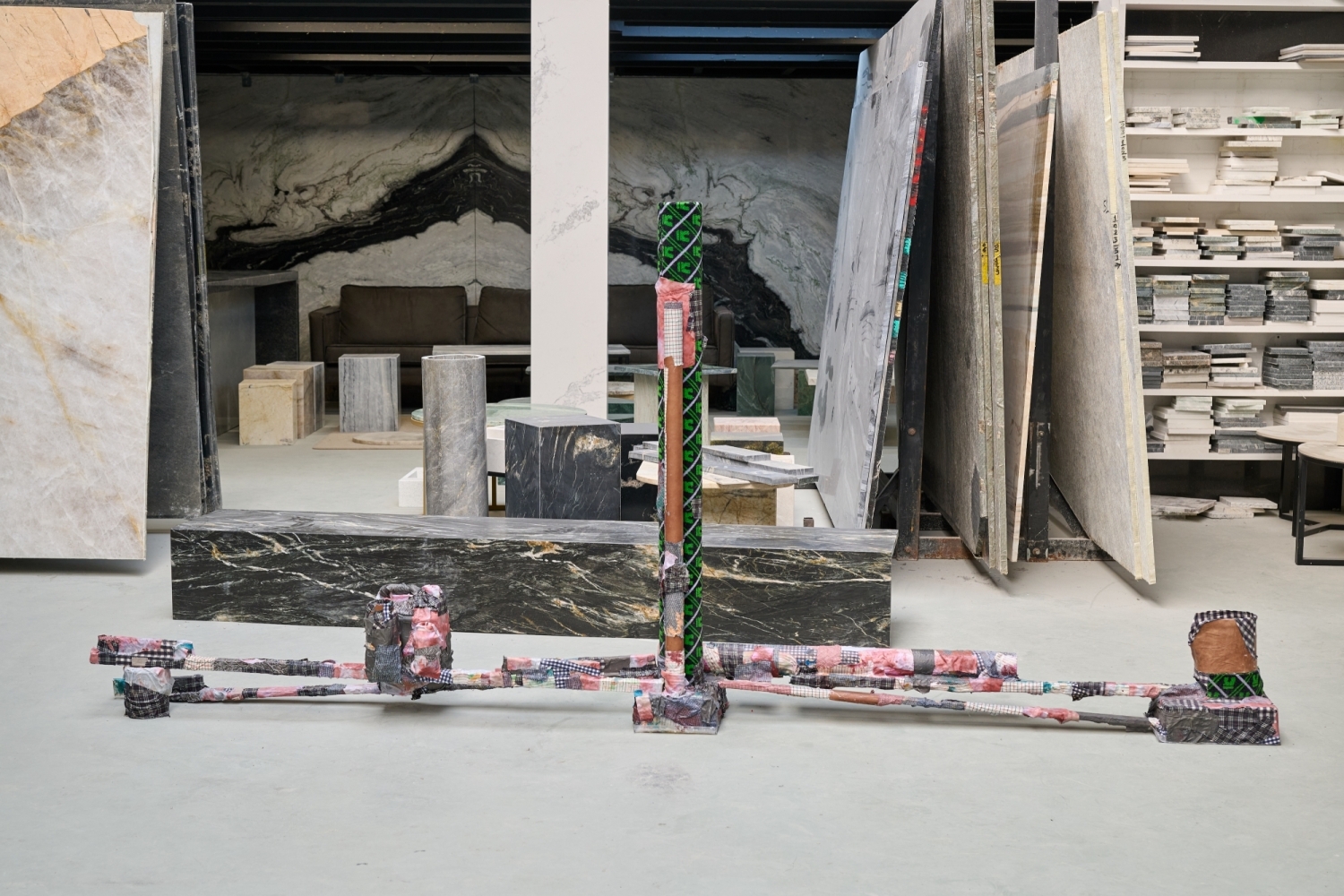
Sam Marshall Lockyer’s sculptures and paintings stood among stone slabs, dust, and industrial tools in the traffic and movement of the space itself. In a short interview, Lockyer noted: “There was someone driving a forklift lifting slabs of stone among the sculptures and paintings. It was great to see the work in such an active space.”
Originally developed through an ongoing studio process using old shirts, rags, and cardboard tubes, the artist’s existing sculpture Box Ship (2026) slowly began taking on new meanings once she knew it would be exhibited in Rotterdam. “I started thinking about the port, and somehow, the sculpture that had evolved in my studio began to resemble a ship or a raft.”
During the installation, the exhibition was shaped around the location. Next to the stone slabs, “my paintings, which had seemed really huge and very impractical, suddenly had a scale relationship to the space”, the artist explained.
Artworks:
Jakob Brugge, Real Objects, 2025
Gabriel Kuri, Error Bars, 2026
Sam Marshall Lockyer, Concrete Handbag, 2025
Sam Marshall Lockyer, Blue Vacuum, 2026
Sam Marshall Lockyer, Box Ship, 2026
Jakob Brugge's work was presented in collaboration with Gauli Zitter.
Gabriel Kuri's works were presented in collaboration with Esther Schipper.
Sam Marshall Lockyer's works were presented in collaboration with KIN.
Jakob Brugge currently lives and works between Paris and Brussels. His work takes the shape of vitrines housing rubber facsimiles of ordinary objects — partially filled boxes that give structure to a haphazard arrangement of hollow cast forms. Braided belts, boat shoes, t-shirts, hats, and high heels press against each other and their containers, forming a loose ensemble whose historical and ideological specificity is masked by their familiarity. Fabricated, encased, moulded, cast, replicated, and transformed, these symbolic clothes ask how a baseball cap or a belt relates to lifestyle, ideology, or political affiliation — and when a specific shirt becomes a uniform, a sign of belonging, a behaviour even.
Gabriel Kuri was born in 1970 in Mexico City, Mexico. He studied at Goldsmiths College in London and at the Escuela Nacional de Artes Plásticas, UNAM in Mexico City. The artist lives and works in Brussels. Gabriel Kuri’s œuvre encompasses diverse media including sculpture, collage and installation, often using repurposed natural, industrial, and mass-produced objects (insulation foam, shells, soda cans, stones, or ticket receipts, for instance) to craft eloquent works of art. Kuri’s works often include traces of past human activities, such as empty bottles or cans, cigarette butts or ticket stubs. They function as signs of spent time, energy or currency — a recurring theme in the artist’s work.
Sam Marshall Lockyer (Brussels/London) is an artist whose practice spans painting, sculpture, drawing, and film, through which she investigates and negotiates notions of failure, grandeur, scale, rules, and humour. Recent exhibitions include: Boat Show at Graw Böckler in Berlin, DE (2025), Channeling at Rue Americaine in Brussels, BE (2025), Science Fiction at The Briefing Room in Brussels, BE (2025), Centre Line at Harrow Project Space, in Harrow, UK (2024). She was a resident at De Ateliers in Amsterdam (2020-2022) and did the postgraduate Drawing Year at the Royal Drawing School in London(2016). She graduated with a BSc in Political Sciences from London School of Economics in 2014.
Esther Schipper founded her first gallery in Cologne in 1989. After German reunification, she opened a satellite space in Berlin in the mid-1990s, where it has since developed an influential international program. Since then, the gallery has expanded globally, integrating Johnen Galerie in 2015 and opening spaces in Seoul, Paris, and New York. Its activities extend beyond exhibitions to include lectures, performances, and events, reinforcing its role as a discursive space for experimentation.
Gauli Zitter is an art gallery founded in 2023 by Piero Bisello and Philip Poppek. It shows Belgian and international artists in its location in Brussels and international fairs.
KIN is a gallery founded by Nicolaus Schafhausen in 2023 located in the heart of Brussels. With a focus on artistic positions that defies easy categorisation, the program strives for an interdisciplinary approach. KIN stands for kinship and, as such, collaboration with others is part of the gallery’s DNA. KIN is a platform for artistic exchange, it presents exhibitions, develops projects, and programs events.