


Kapsalon Charlois
Thomas Helbig, Erwin Kneihsl, Chloé Quenum
26. – 29.03.2026
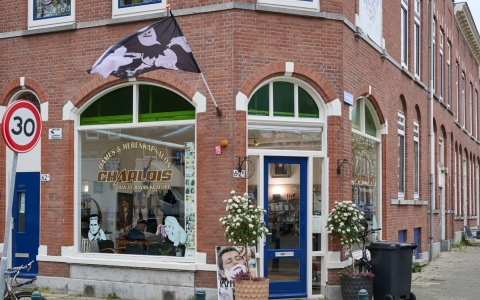
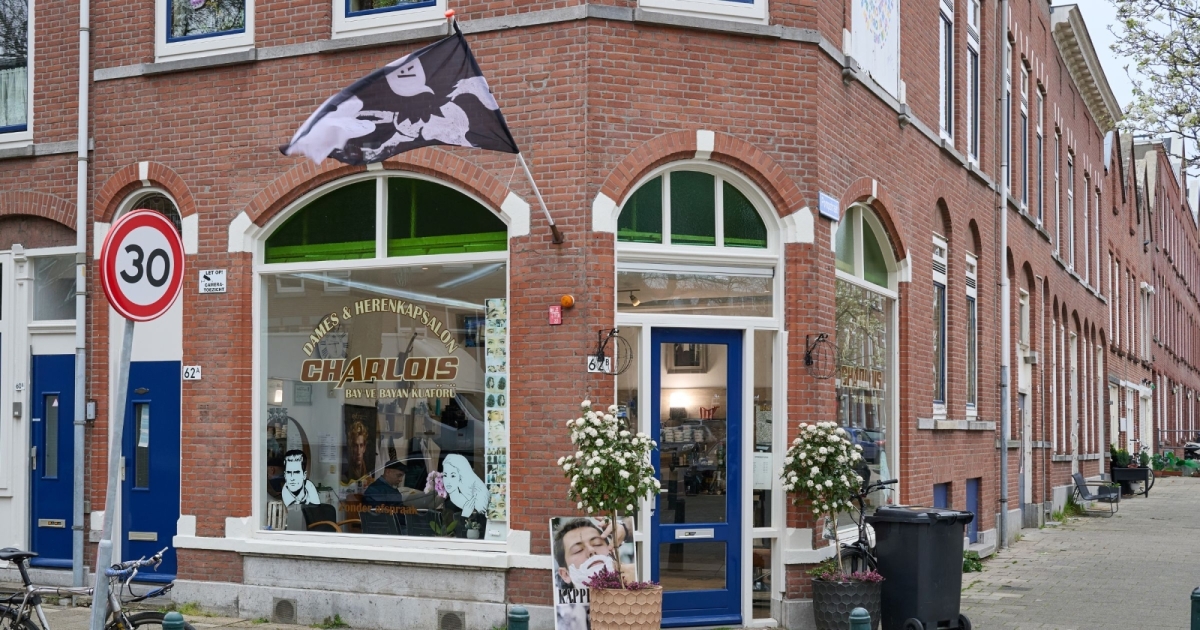
Kapsalon Charlois with one of the flags from the My Secret Life series (2025) by Tina Braegger. Photo: Frans Parthesius
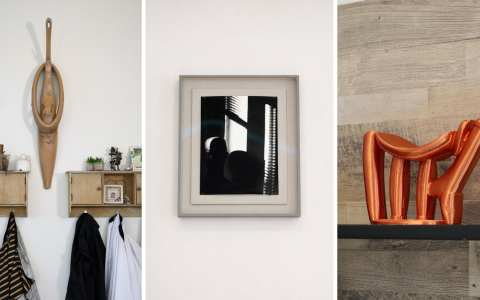
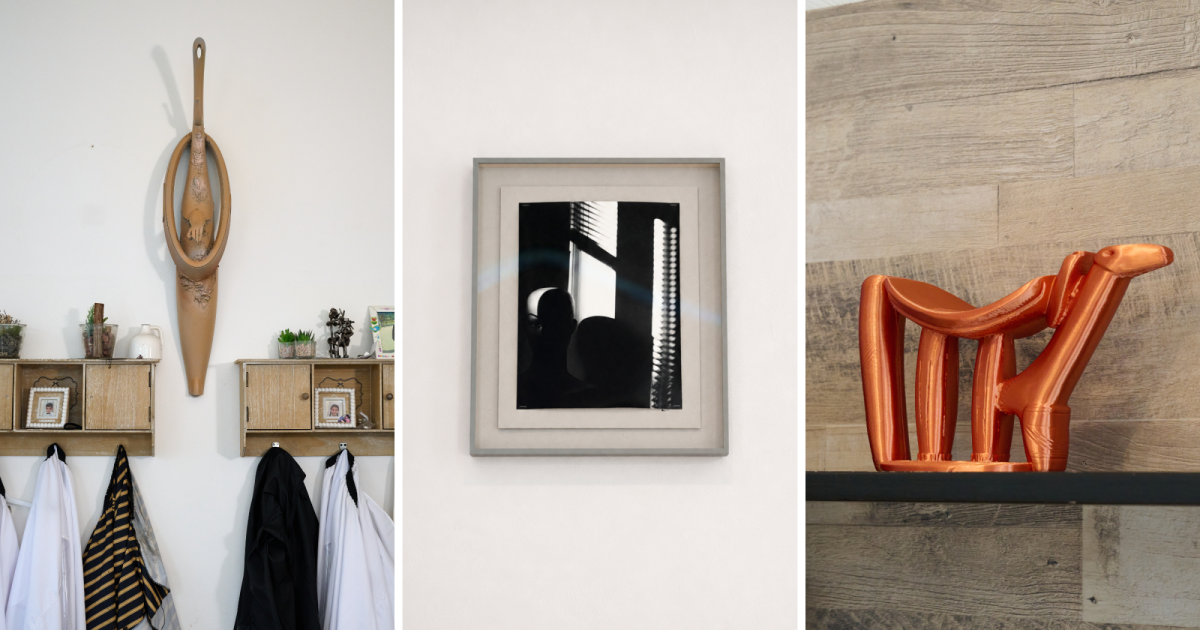
Exhibition view at Kapsalon Charlois, March 2026, with works by Thomas Helbig, Erwin Kneihsl, and Chloé Quenum. Photo: Frans Parthesius
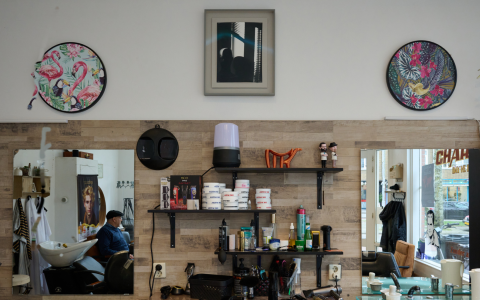
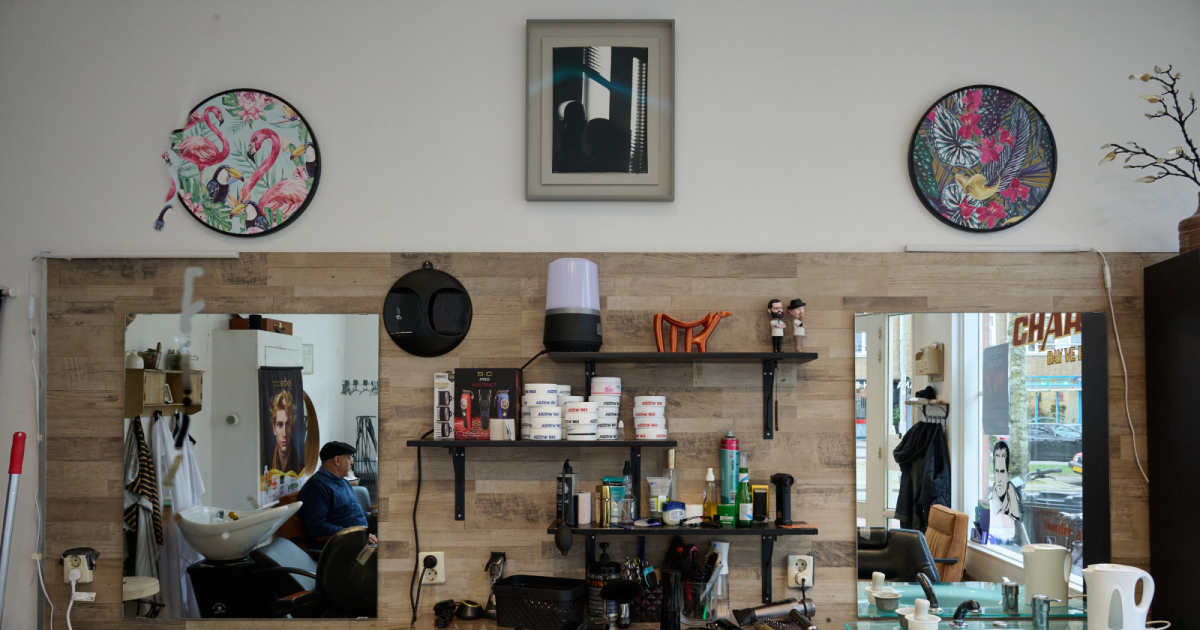
Exhibition view at Kapsalon Charlois, March 2026, with works by Erwin Kneihsl and Chloé Quenum. Photo: Frans Parthesius
At Kapsalon Charlois, visitors were able get a haircut while also encountering a photograph by Erwin Kneihsl, a sculpture by Thomas Helbig and a sculpture by Chloé Quenum. The works were shown within the daily setting of the salon, where they quietly become part of its everyday activity.
Artworks:
Thomas Helbig, Holy Passage Device, 2022
Erwin Kneihsl, Ohne Titel, 2018
Chloé Quenum, Low Light Rituals VI, 2026
Thomas Helbig and Erwin Kneihsl's works were presented in collaboration with Galerie Guido W. Baudauch.
Chloé Quenum's work was presented in collaboration with Agence de Voyages.
Thomas Helbig is an artist based in Berlin. The practice of Thomas Helbig contains painting, drawing and sculpture, while each of the media plays on its own field. The focus of the paintings is colour itself—in its intrinsic value, its materiality and the ability to create spatial illusions from countless shades of light and dark. In contrast, his collage sculptures demonstrate a different kind of transformation of the source materials he uses. His repertoire is based on a fundus of discarded, thrown-out things, as well as kitschy plastic sculptures. Helbig mixes and connects these disparate elements into new forms, which are displayed as coded messages from an enigmatic present. Helbig attended the Academy of Fine Arts, Munich and Goldsmiths, University of London, from 1989 to 1996, and is represented by Galerie Guido W. Baudach, Berlin.
Erwin Kneihsl is an artist and alchemist. His black and white photographs transform landscapes, architectures, and again and again dolls, into inner images with a surreal appearance. The almost exclusively analogue hand prints on baryta paper, characterized by deliberate blurring and extreme contrasts, in reminiscence of the attitude of early punk, are stapled on simple gray cardboard before Kneihsl finally stamps it in the style of classic art photography (EK); albeit with a rather unusual preference for the front of the print.
Chloé Quenum (1983, Paris) explores the circulation, slippage, and transformation of meaning through graphic, linguistic, and symbolic elements drawn from different cultures. By extracting them from their original context, she endows them with a new consistency and vitality, as if transmuted as kind of glitch. Her works become material signs, assemblages of mixed origins where references shift and free themselves from fixed frameworks of interpretation. The artist questions how displacement, translation, and transfiguration reshape our relationship to objects, symbols, and narratives. Through this process of extraction and reconfiguration, she reveals the tensions between memory and erasure, inheritance and reappropriation, transmission and resistance. Crossing the boundaries between disciplines and traditions, Chloé Quenum constructs a cryptic language in which each form acts as a vector of poetic and political resistance. Her works interrogate the evocative power of symbols, their ability to generate new narratives and to make long-silenced or scattered histories resonate.
Galerie Guido W. Baudach is a gallery for contemporary which was founded in 2001 on the base of a former project space. Since then, it has presented a changing program of exhibitions infall kinds of media. Currently the gallery represents fifteen international artists. The gallery participates in art fairs and publishes artist books and catalogs.
Agence de Voyages is an art space founded in 2024 in Paris. Its distinctive feature is its precise and subtle alteration of the perception of art and exhibitions, achieved through its careful placement on an ambivalent threshold where aesthetic delight and critical deconstruction can occur simultaneously. Therefore, it deploys a plethora of strategies involving border-crossing and -suspending within the context of a gallery. These include confronting the interiority of the living space with the exteriority of the commercial sphere; combining classical framing, hanging and installations with unconventional concepts of display and social engagement; and reflecting the relationship between art and literature, intermingling publishing and exhibiting practices. Agence de Voyage is a space which aims to infiltrate contemporary issues into historical formats such as painting and the novel and vice versa. On an analytical level the gallery wants to playfully separate interpretative historical frameworks from their respective disciplines and apply them to other forms of expression. The space showed artists like Monica Bär, David Medallal, Mimosa Echard, Jean-Luc Blanc, Chloé Quenum, Stefano Faoro and Birgit Megerle.