


Attractiepark Rivoli Rotterdam
Vesta Kroese, Gabriel Kuri, Nie Pastille, Chloé Quenum, Hussel Zhu
26. – 29.03.2026
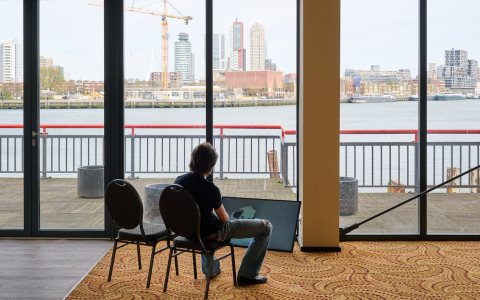
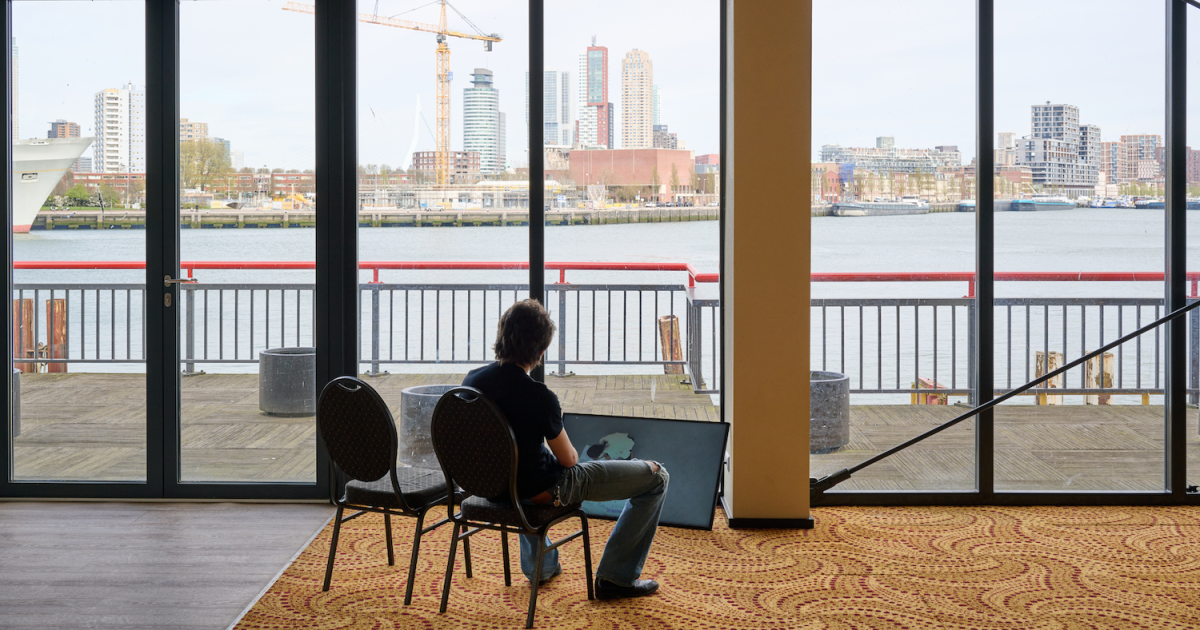
Visitor watching the film Honest language (2024) by Hussel Zhu. Photo: Frans Parthesius
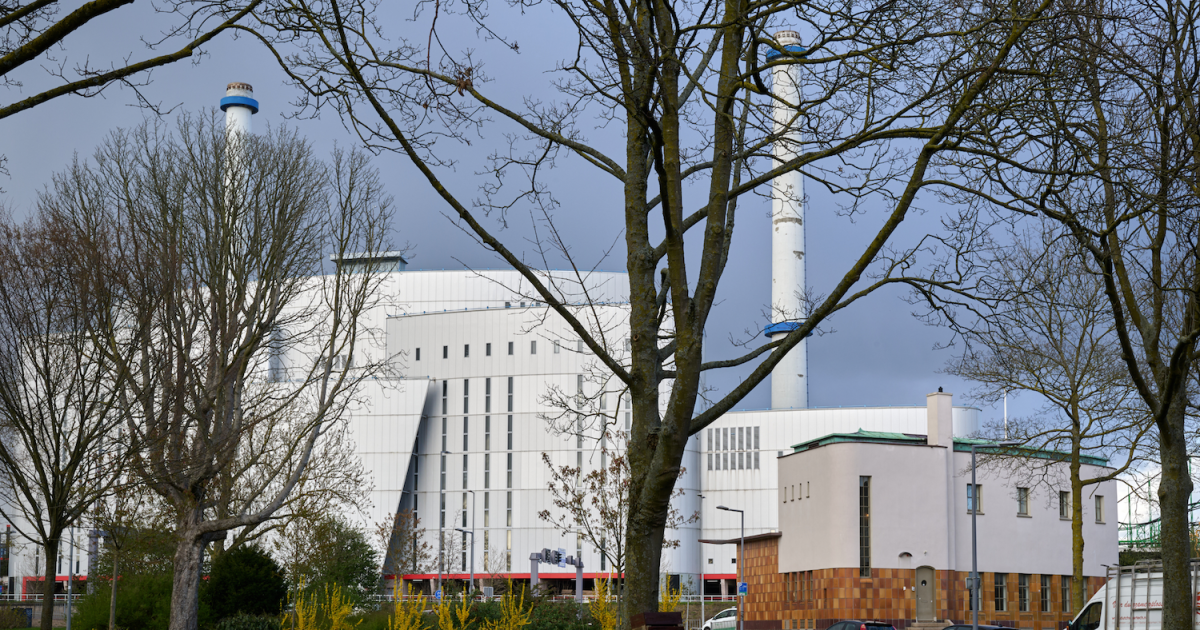
Attractiepark Rivoli Rotterdam. Photo: Frans Parthesius
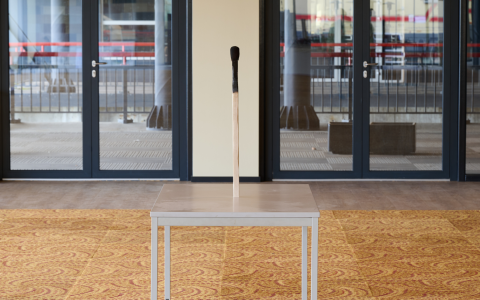
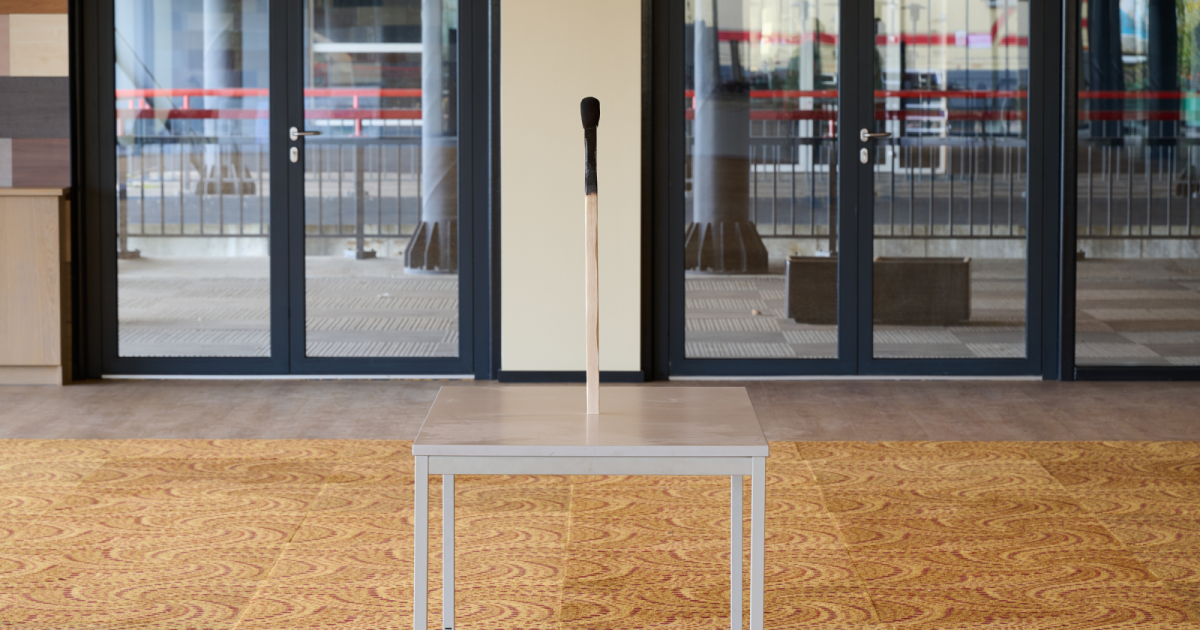
Gabriel Kuri, Error Bars, 2026. Photo: Frans Parthesius
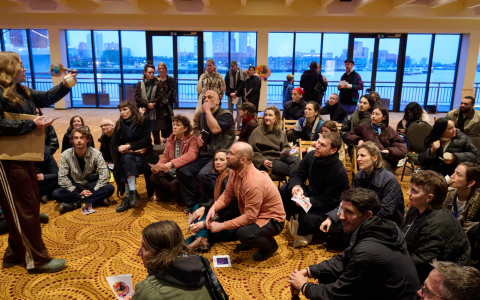
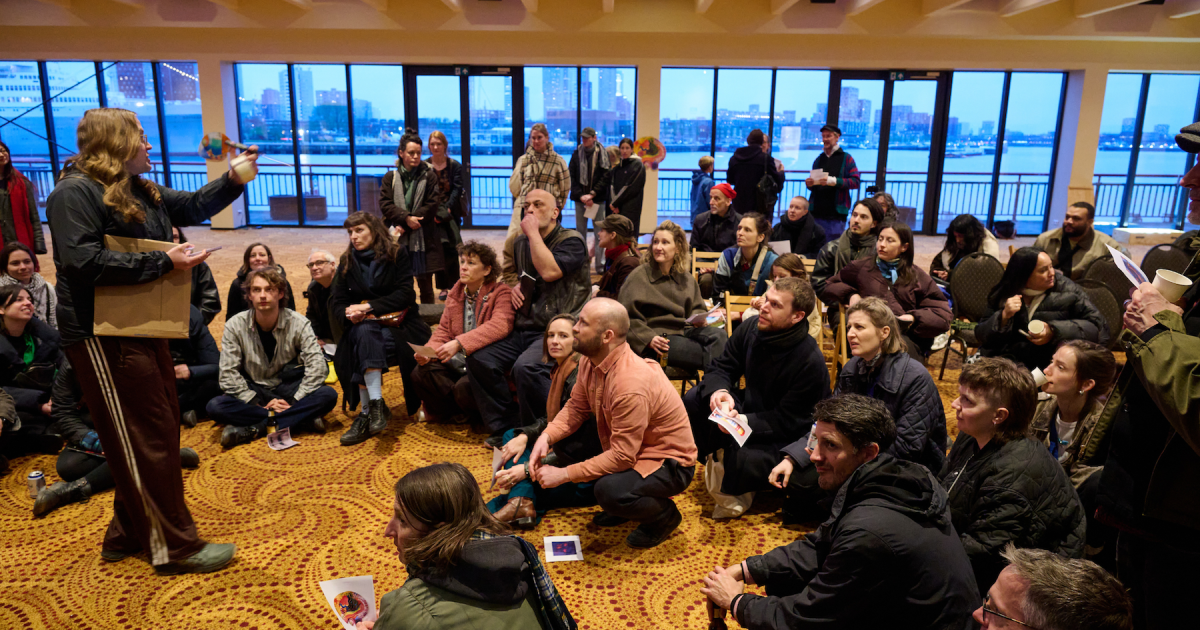
Image-Constellation-Panel guided by Philipp Joy Reinhardt during the gathering at Attractiepark Rivoli Rotterdam. Photo: Frans Parthesius
Attractiepark Rivoli Rotterdam is situated on the former site of the AVR waste incineration plant on the Doklaan, overlooking the Nieuwe Maas river. Since 2012, entrepreneur Hennie van der Most has been transforming the industrial complex into a theme park, assembling rides, restaurants, and attractions from salvaged materials, including a ferris wheel from Walibi Belgium and a ceiling sourced from a world expo in Seville. Het Zuid Manifest was the first to use the park for exhibitions in 2025 and returned in March 2026 with works by Gabriel Kuri, Vesta Kroese, Nie Pastille, Chloé Quenum, Hussel Zhu, and an outdoor work by Sinaida Michalskaja. The park's sprawling, half-finished interior of repurposed structures and idle fairground machinery offered a setting unlike any other. In April 2026, just after Het Zuid Manifest had ended, the site was sold at a forced auction for €6.5 million to entrepreneur Wim Beelen.
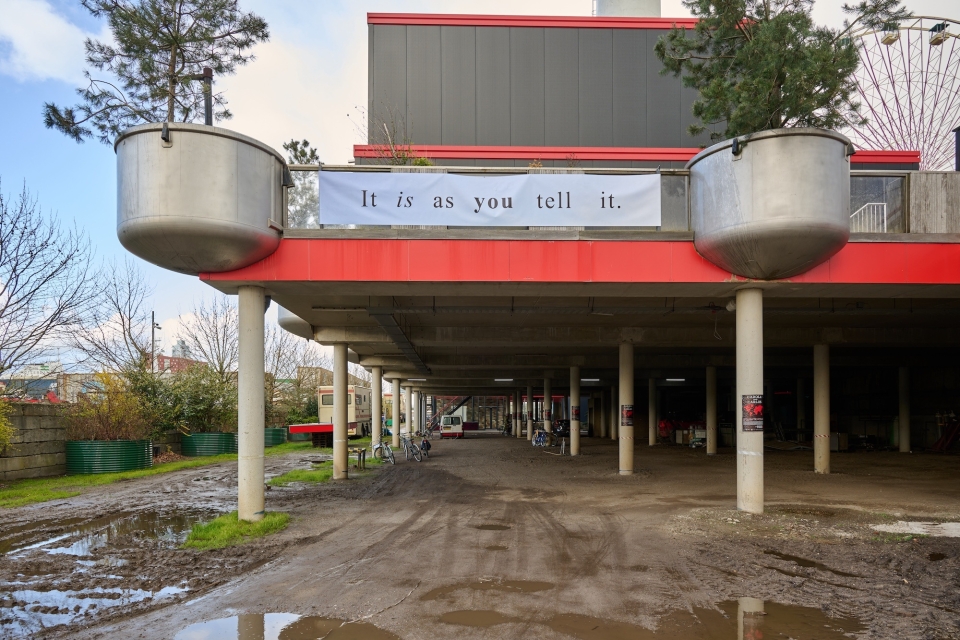
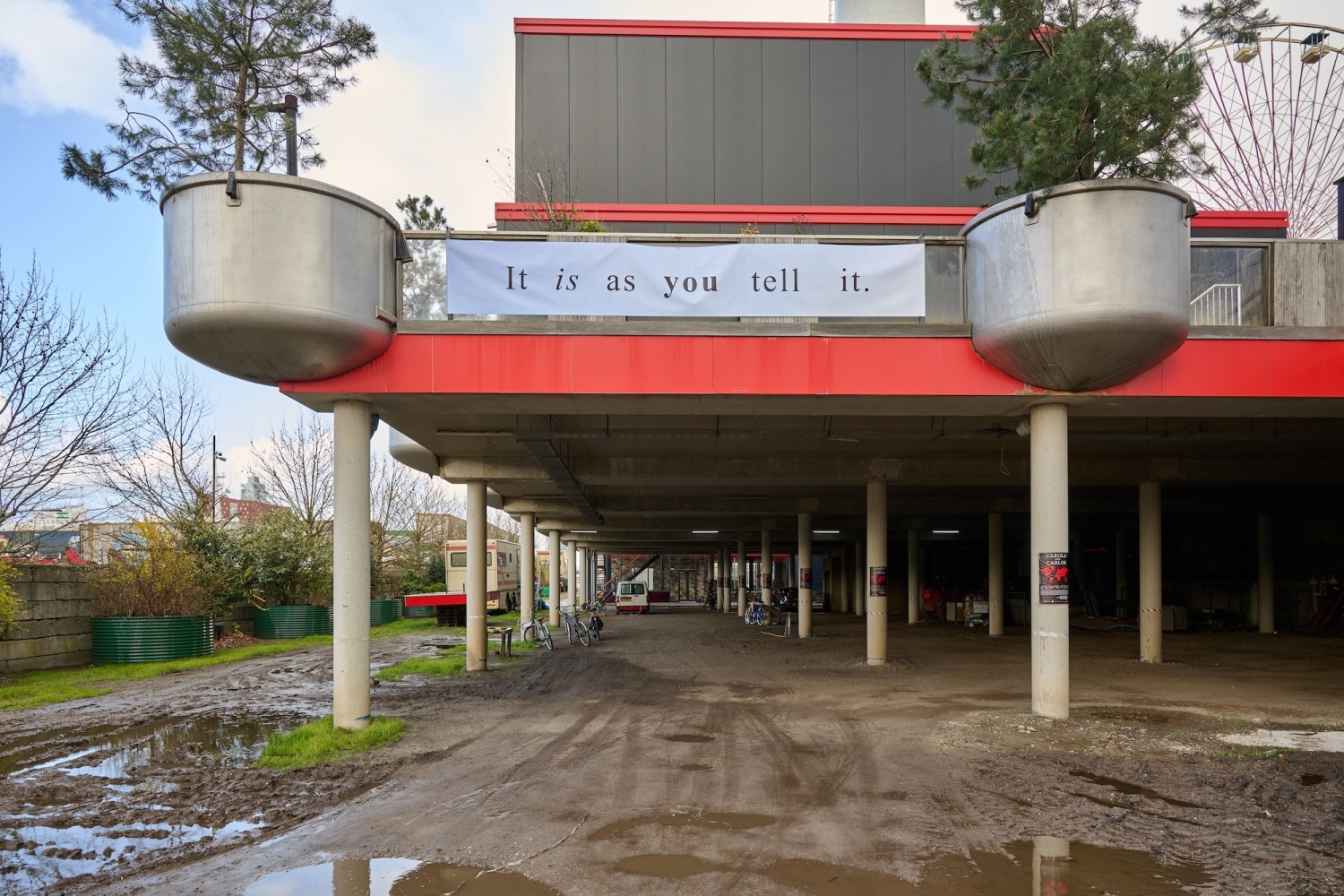
Sinaida Michalskaja's outdoor work welcomed visitors to Attractiepark. It is as you tell it (for Heinz von Foerster), 2026, materialises an anecdote by scientist, philosopher, and magician Heinz von Foerster (1911–2002). Walking past the New York Times building one day, where a banner proclaimed "Tell it as it is," von Foerster remarked: "How naïve on their part, there should be written 'It is as you tell it.'" Another version of the anecdote has him teaching a class at Stanford University's journalism school, where a banner bore the same slogan. He walked in and told the students: "My God, gentlemen, do you want to get rid of the responsibility of being a writer by telling it like it is?" Nobody knows how it is. It is how you tell it.
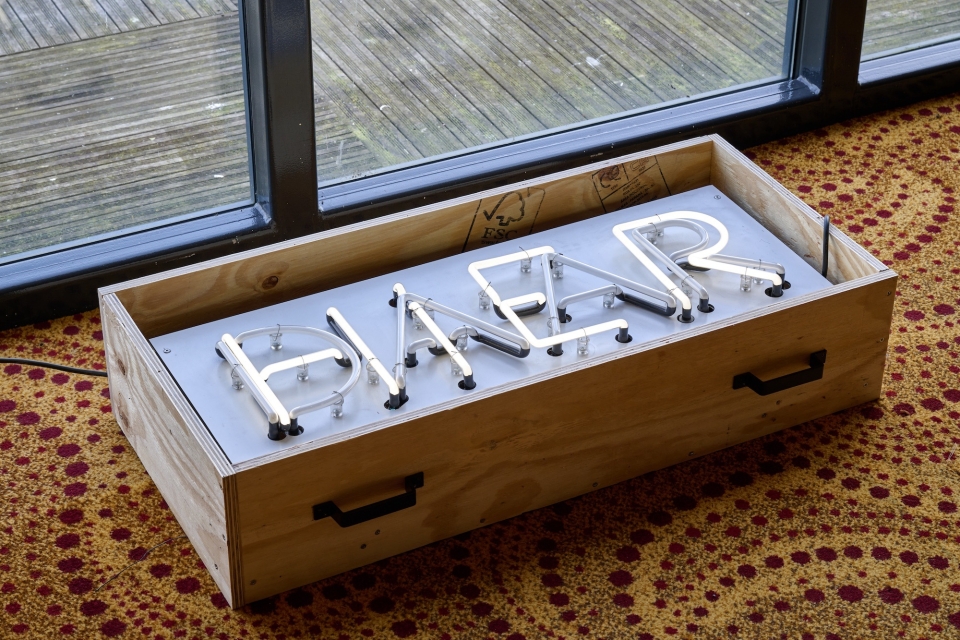
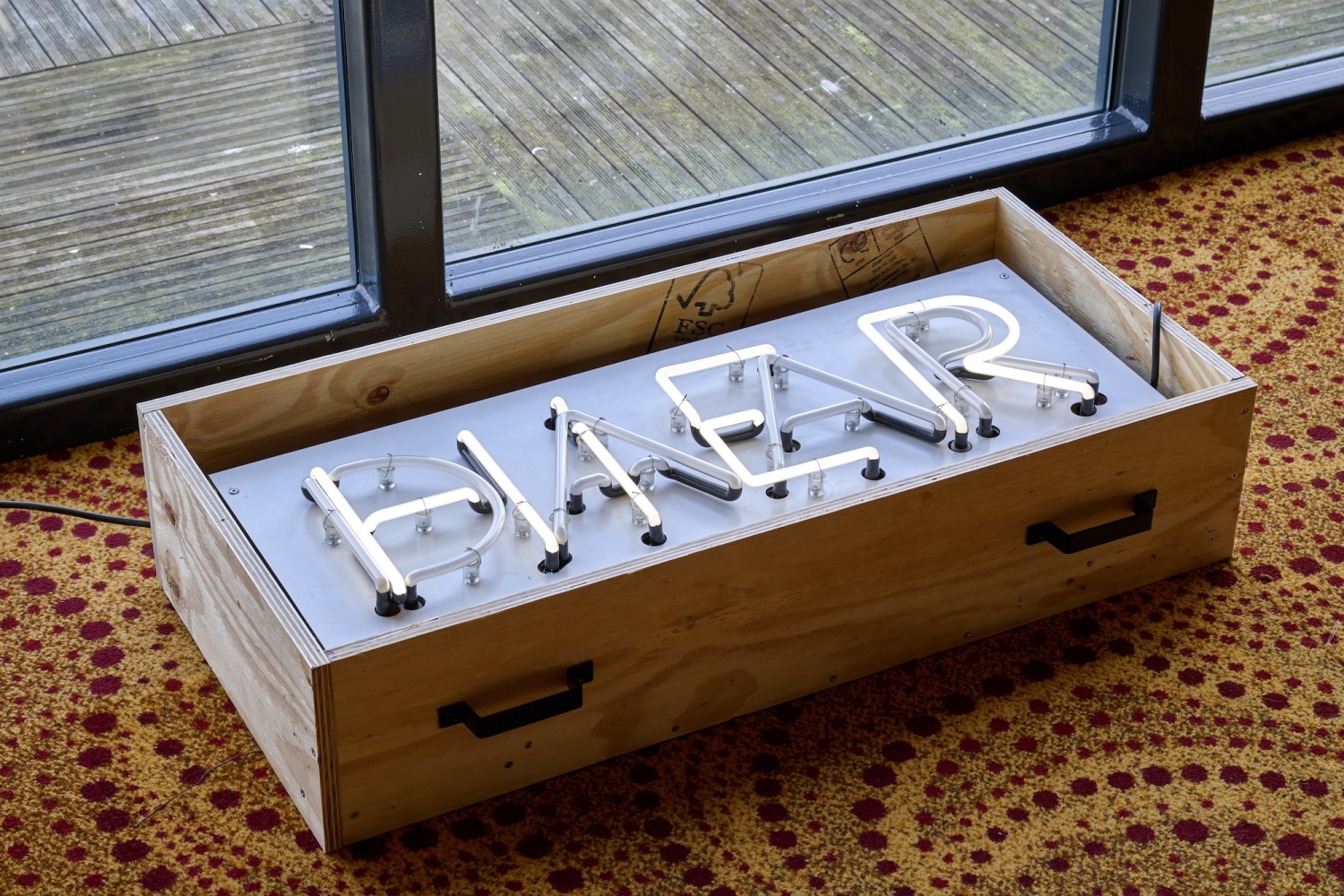
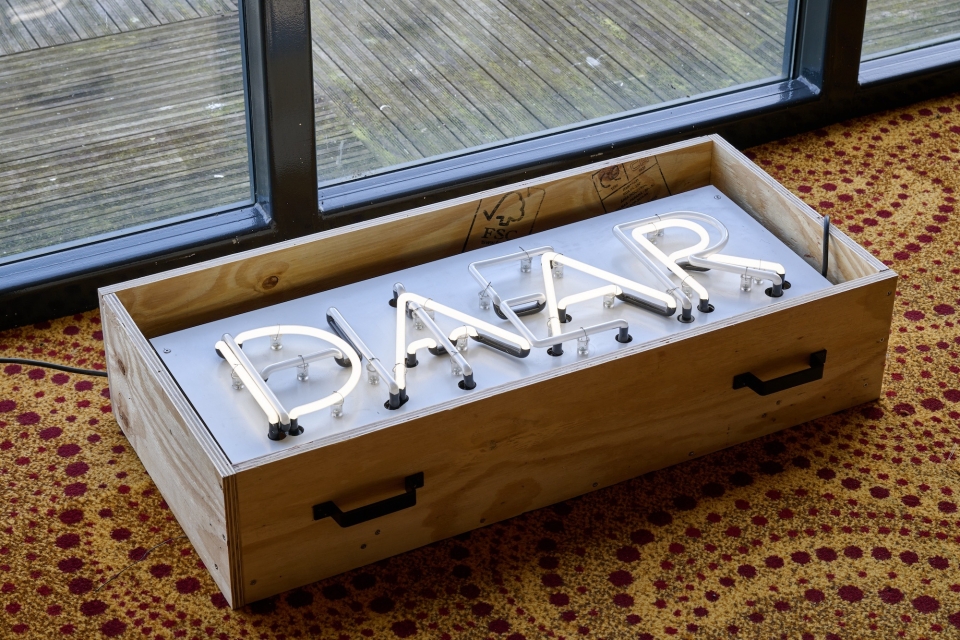
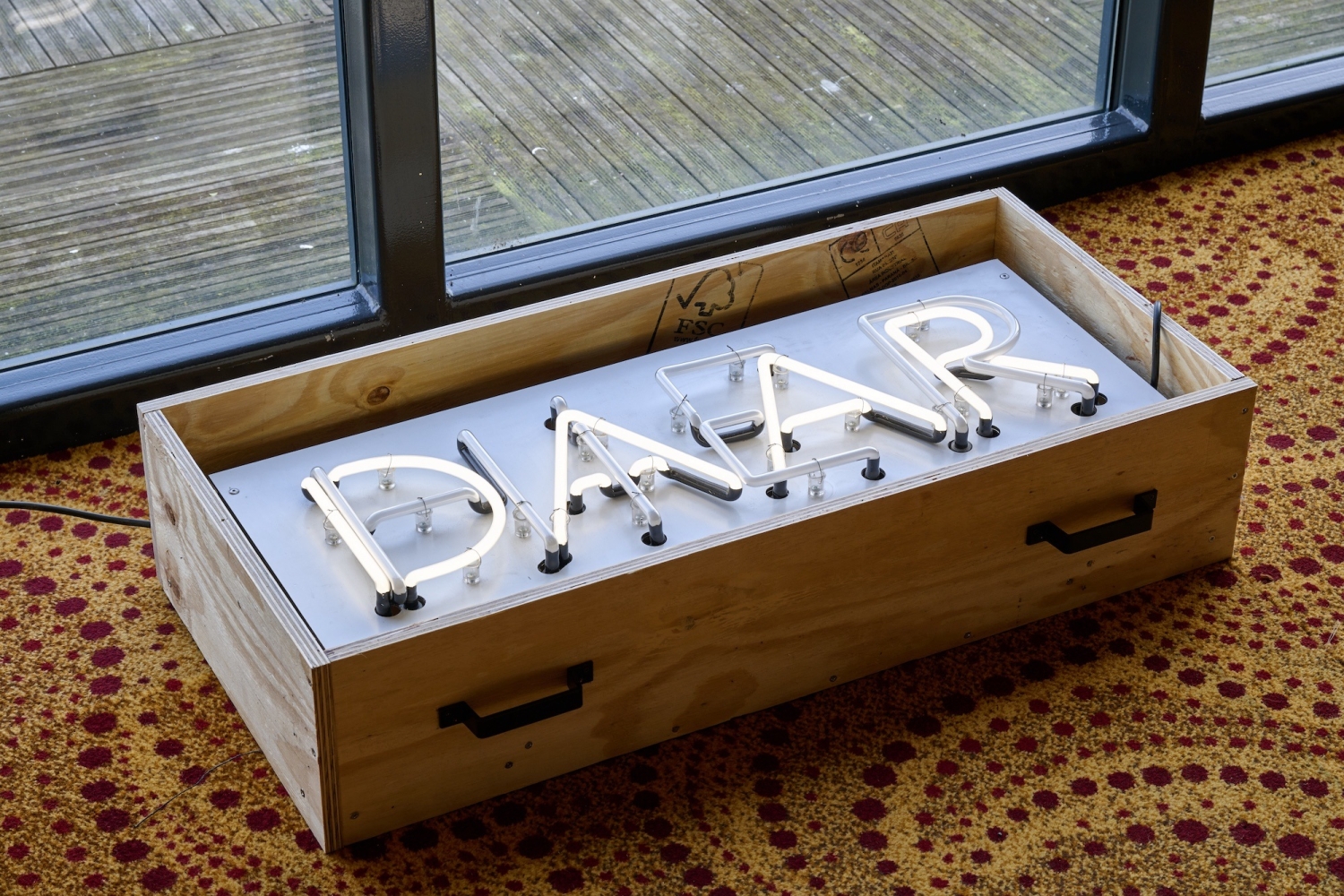
The work by Vesta Kroese presented here was a maquette of her original piece Hier / Daar, originally installed between 2011 and 2016 as two identical neon signs on the façades of the Maastunnel's ventilation buildings in Rotterdam. The maquette, contained within a wooden box also constructed by the artist, distills the two identical structures that once faced each other across the river Maas. When one side read HIER (here), the other became DAAR (there) — neither one remaining always here, nor always there. That this maquette is now shown at Attractiepark, overlooking the Maas itself is significant, placing the work once again within sight of the river whose crossing it described.
Hier / Daar by Vesta Kroese was presented during the festival in different formats:
a sketch of Hier at Rib, a film at Café the Buccaneer, the maquette, and a sketch of Daar at Art Rotterdam.
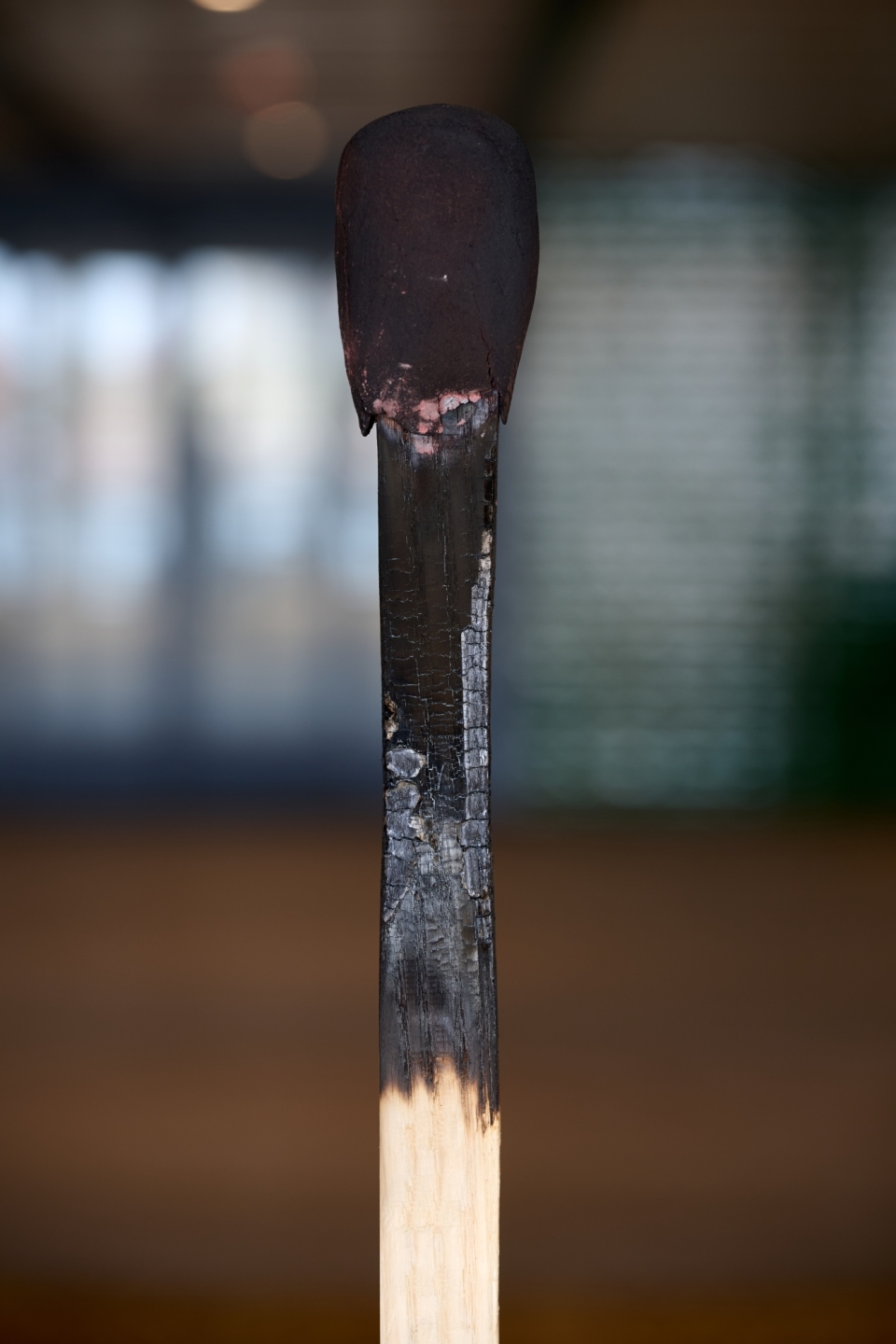
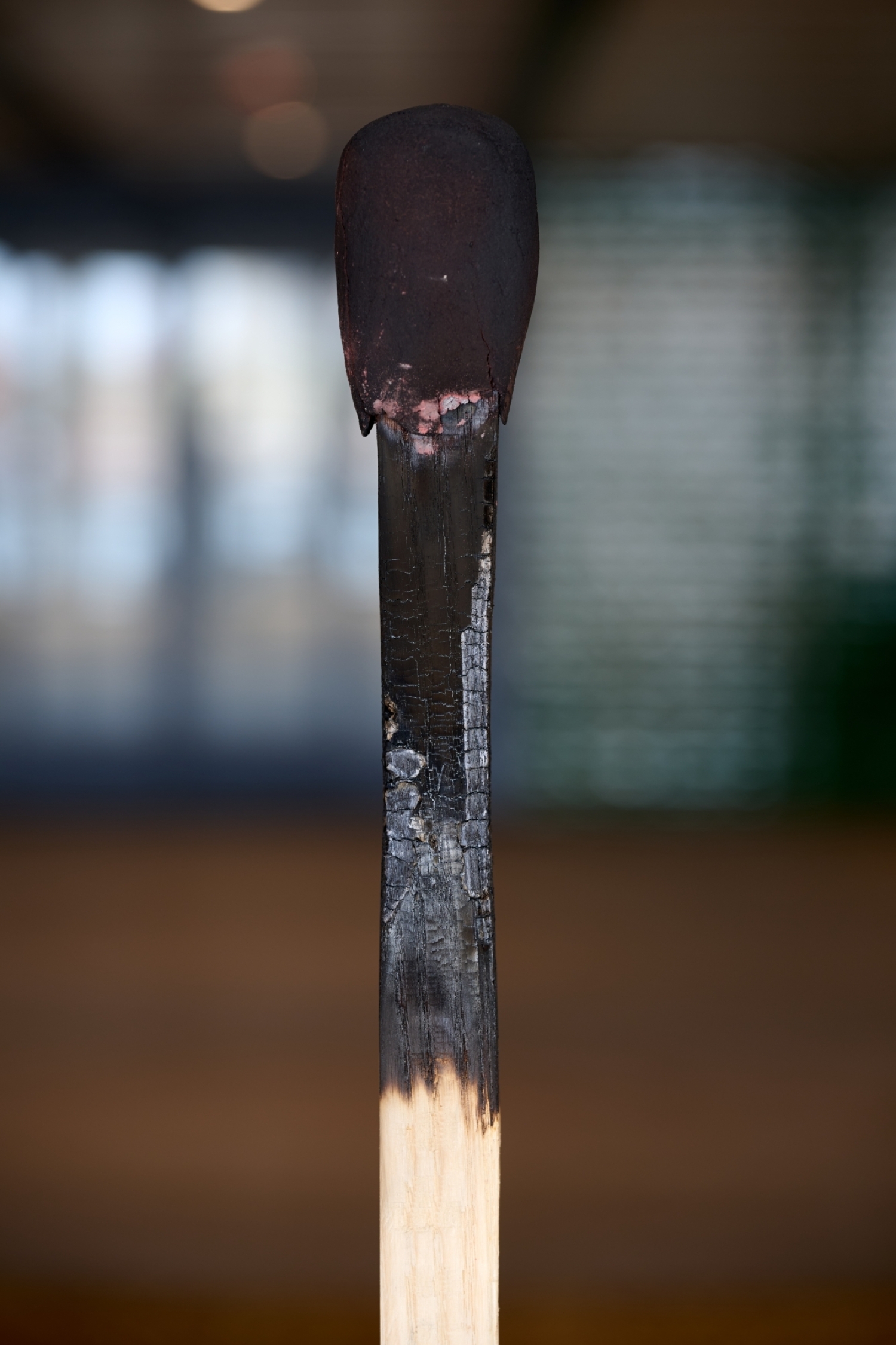
Gabriel Kuri's Error Bars are a series of oversized matchsticks—carved from wood, finished with mixed media, and shown in various states from unlit to charred—distributed across multiple festival locations (Rib, Oude Kerk Charlois, Attractiepark Rivoli, Planet Cake, and Art Rotterdam), where they became a recurring motif that draws attention to the brittle beauty of the everyday. To read more about the work, refer to the documentation of the Oude Kerk location.
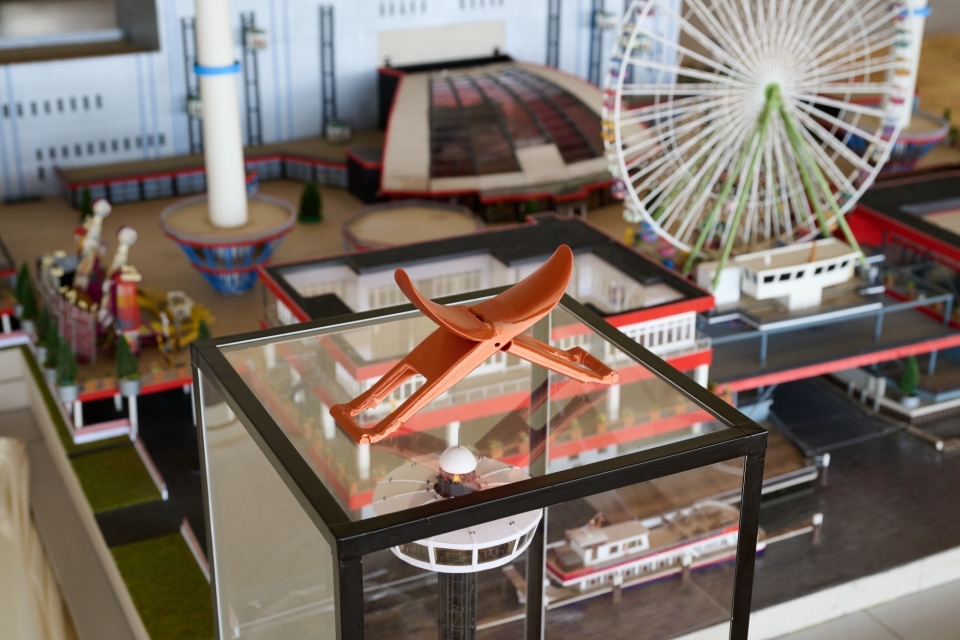
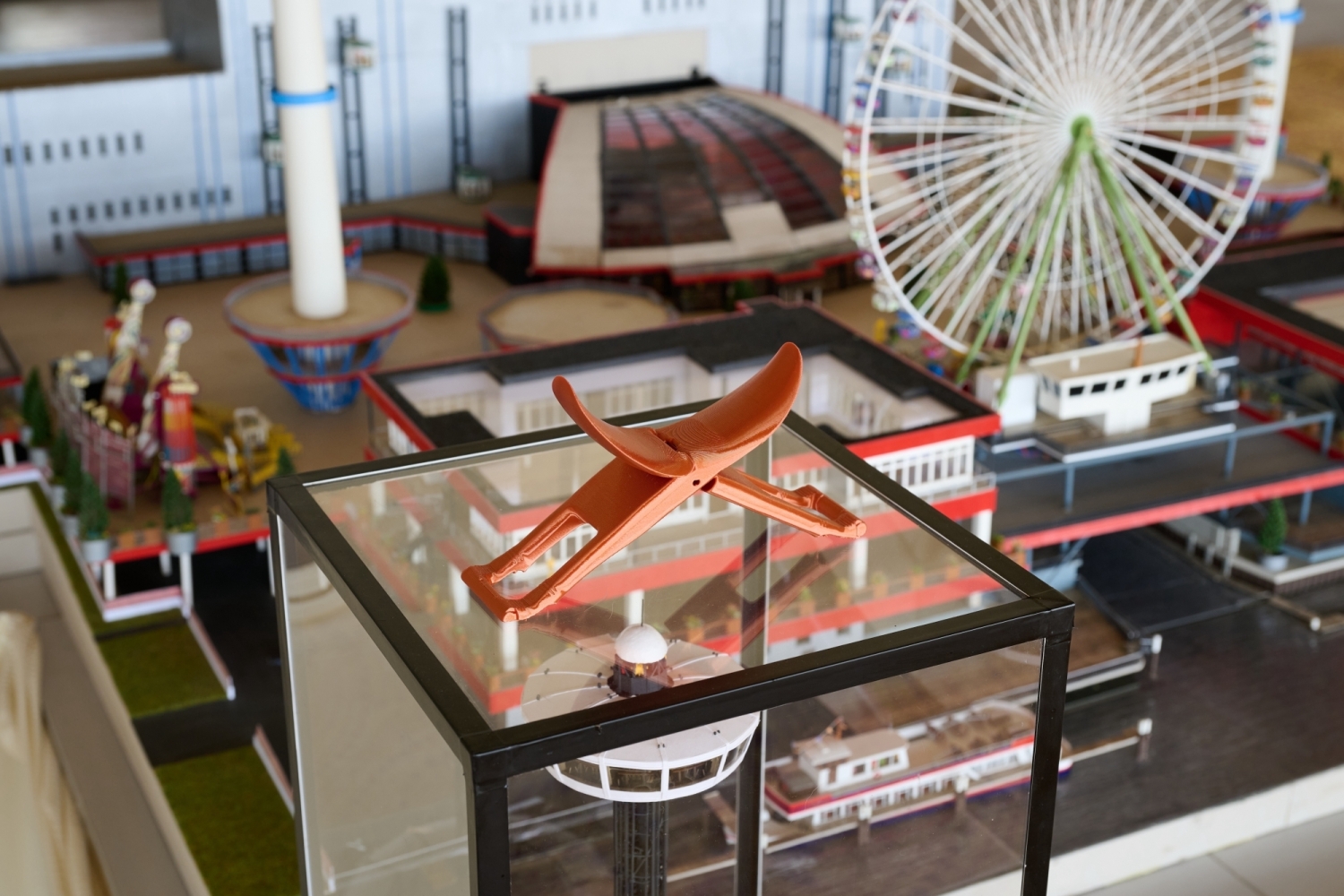
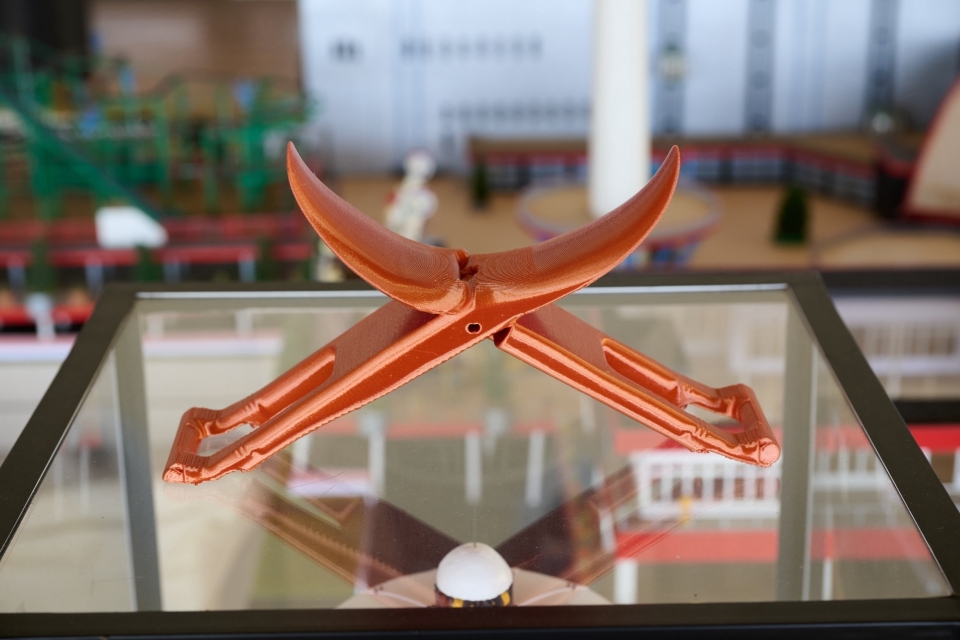
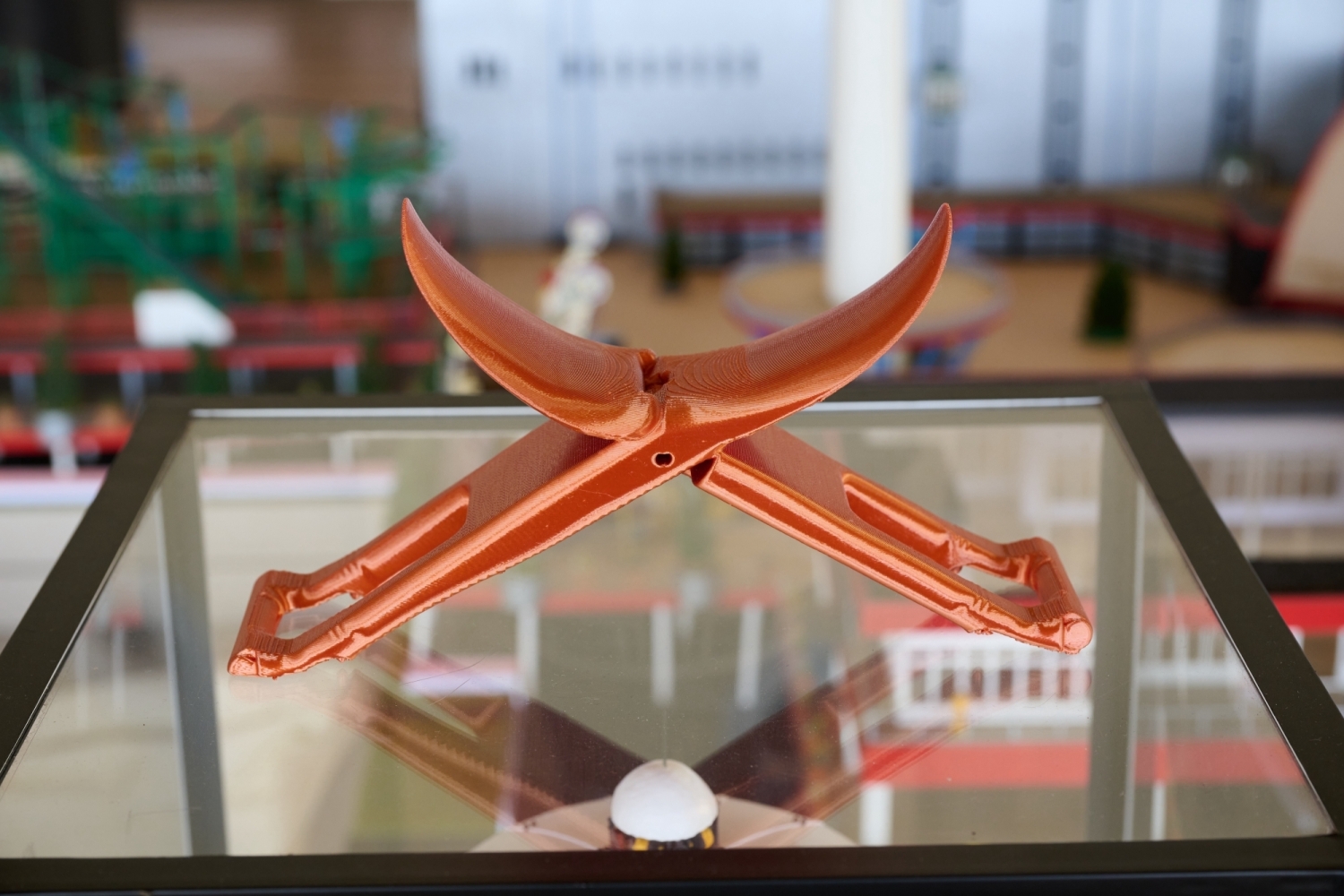
Chloé Quenum's work at Attractiepark Rivoli Rotterdam belongs to her series Low Light Rituals, which reimagines traditional headrest forms from West Africa, Asia, and Oceania as 3D-printed objects. Sitting between ritual artifact and speculative fiction, the hollow headrests use a technology of mass reproduction to revisit forms shaped by colonial history. Other works from the series have been shown at Kapsalon Charlois, Subway Pool Café, Oude Kerk Charlois, Planet Cake, and Art Rotterdam. Those who want to read more can find further information on the Oude Kerk documentation page.
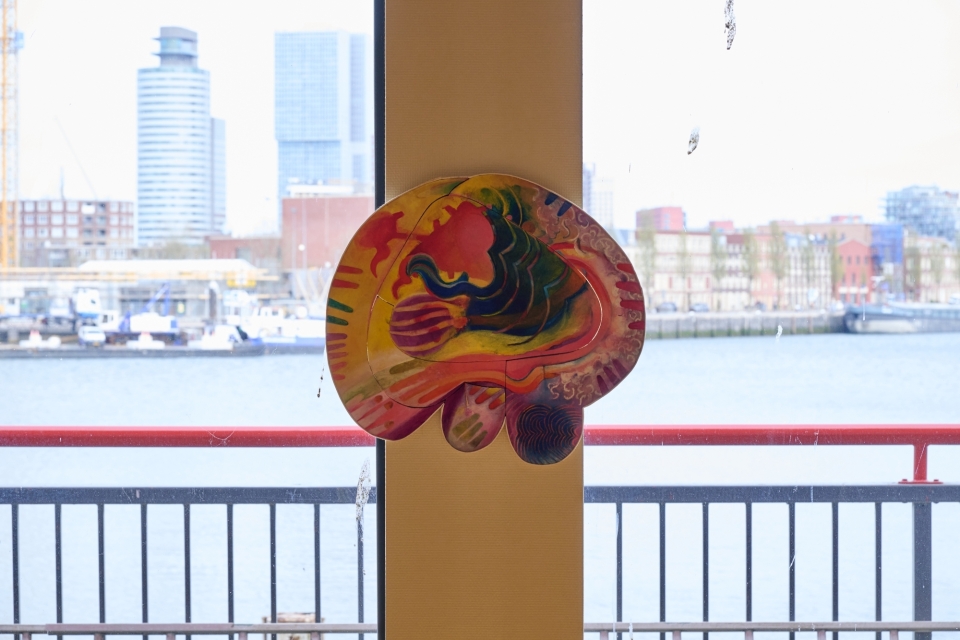
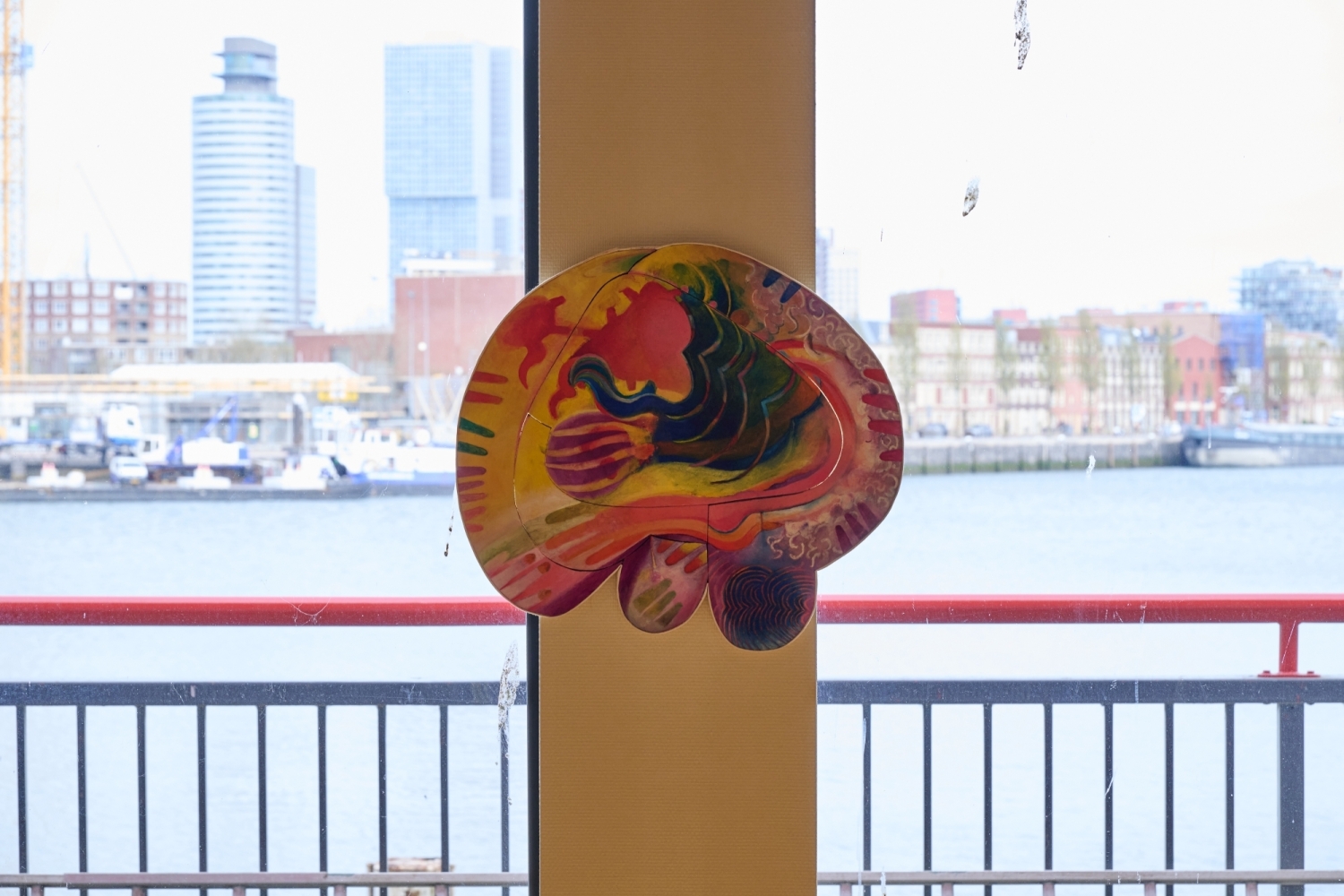
Nie Pastille’s work begins with fragments of random gestures. It feels familiar, awakens memories, triggers moods, but remains open. Colors, shapes, bodies, structures - they open up worlds that cannot be explained, but felt. Like a walk-in dream world that is not always gentle. What holds the work together is affection and care – less a theme, more an inner force. It conveys a feeling of being safe and secure that is not tied to a place, but to closeness and connection. Other artworks by the artist were presented at Rib, Art Rotterdam, Oude Kerk Charlois, Planet Cake.
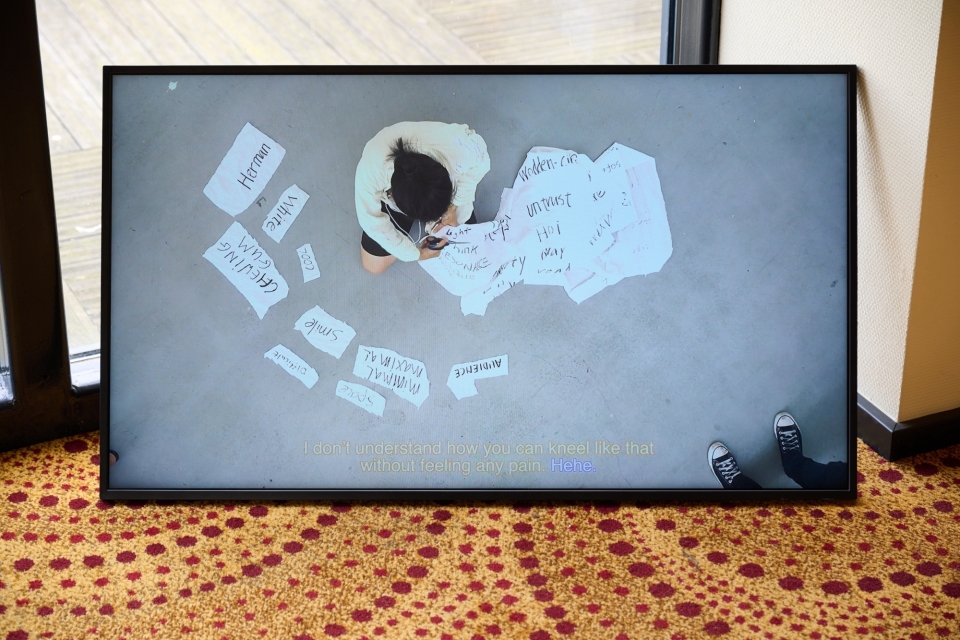
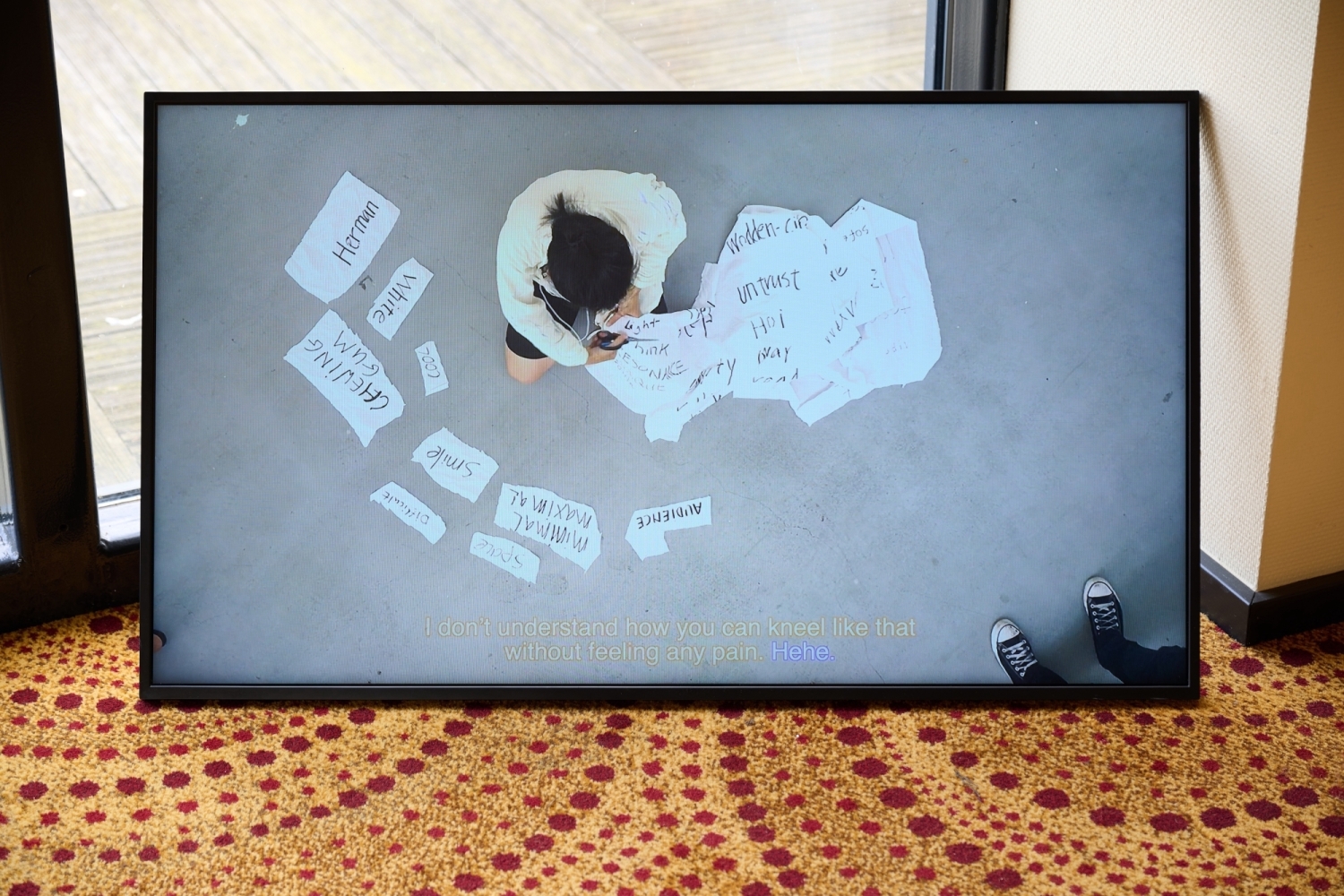
Hussel Zhu's film Honest language is an excerpt from a performance realized in 2022 at Frank Taal Gallery, Rotterdam. The action took place without announcement and was largely ignored by visitors. In 2024, the artist re-edited the documentation together with video recordings of my parents reacting to the work. Having no background in contemporary art and not having seen Zhu for nearly four years after he became an artist, their responses introduced another layer of distance and misunderstanding.
Artworks:
Vesta Kroese, Hier/Daar (miniature), 2011
Gabriel Kuri, Error Bars, 2026
Sinaida Michalskaja , It is as you tell it (for Heinz von Foerster), 2026
Chloé Quenum, Low Light Rituals IV, 2026
Nie Pastille, W.F., 2025
Nie Pastille, Wetter, 2025
Nie Pastille, Nachtbäume, 2025
Hussel Zhu, Honest language (film), 2024
Gabriel Kuri's work was presented in collaboration with Esther Schipper.
Sinaida Michalskaja's work was presented in collaboration with Shahin Zarinbal.
Chloé Quenum's work was presented in collaboration with Agence de Voyages.
Nie Pastille's works were presented in collaboration with JUBG.
Hussel Zhu's work was presented in collaboration with Galerie Mieke van Schaijk.
Vesta Kroese works as a visual artist, educator and facilitator. Combining conceptual and experiential learning, she is interested in the influence and relationship between the individual (the self) and the systems in which we live. Her inspiration to create comes from experimenting with living life fully towards a world that works for all. Site specific projects are informed by co-creation with the local context (e.g. spatially, historically, socially), leaning on values of interdependence and generosity. Formally she beholds a master in Architecture from TU Eindhoven and Sculpture from RCA London. She has shown work in galleries, shops and public spaces in Europe (including UK) and participated in art residency programs in The Netherlands, England, Germany and Spain.
Gabriel Kuri was born in 1970 in Mexico City, Mexico. He studied at Goldsmiths College in London and at the Escuela Nacional de Artes Plásticas, UNAM in Mexico City. The artist lives and works in Brussels. Gabriel Kuri’s œuvre encompasses diverse media including sculpture, collage and installation, often using repurposed natural, industrial, and mass-produced objects (insulation foam, shells, soda cans, stones, or ticket receipts, for instance) to craft eloquent works of art. Kuri’s works often include traces of past human activities, such as empty bottles or cans, cigarette butts or ticket stubs. They function as signs of spent time, energy or currency — a recurring theme in the artist’s work.
Sinaida Michalskaja was born in Moscow and lives and works in Berlin, Germany. Her practice treats paradox as a tool for world-building, merging linguistic observation with sensual experience across sculpture, photography, video, and text. Michalskaja often works with found footage and visual or textual citations, re-contextualising fragments and bringing them into dialogue. Her process is one of rigorous collection: concepts drawn from cybernetics, systems theory, and queer theory are paired with physical artefacts – such as rakes, windows, keys – to guide seemingly incompatible systems into conversation. Circularity is not merely a motif in her work; it shapes its very structure, framing both concept and experience.
Nie Pastille lives and works in Cologne. The artist attended the Sandberg Institute in Amsterdam and the University of Fine Arts in Arnhem. Pastille's paintings on linen and chipboard take the form of unconventionally constructed wall objects: canvases are sawn apart and reassembled into rounded, irregular shapes with soft edges and open partitions, sometimes incorporating painted stuffed linen cushions or papier-maché elements. Drawing is central to her process, often informing the origin of a work. Colorful and dreamlike, her compositions move between esoteric imagery and psychedelic figuration.
Chloé Quenum (1983, Paris) explores the circulation, slippage, and transformation of meaning through graphic, linguistic, and symbolic elements drawn from different cultures. By extracting them from their original context, she endows them with a new consistency and vitality, as if transmuted as kind of glitch. Her works become material signs, assemblages of mixed origins where references shift and free themselves from fixed frameworks of interpretation. The artist questions how displacement, translation, and transfiguration reshape our relationship to objects, symbols, and narratives. Through this process of extraction and reconfiguration, she reveals the tensions between memory and erasure, inheritance and reappropriation, transmission and resistance. Crossing the boundaries between disciplines and traditions, Chloé Quenum constructs a cryptic language in which each form acts as a vector of poetic and political resistance. Her works interrogate the evocative power of symbols, their ability to generate new narratives and to make long-silenced or scattered histories resonate.
Hussel Zhu (1994, Shanghai/Rotterdam) is a visual artist, researcher, short story writer. He obtained his Master’s degree in Visual Arts and Post-Contemporary Practice at AKV | St. Joost. Hussel has a long-term interest in the “Fool” figure of the Western Renaissance, such as the court jester (‘hofnar’ in Dutch). While the Fool speaks playfully or nonsensically, these words often conceal sharp truths. This figure enables him to embrace mistakes, work unprepared, and step outside conventional artistic roles.
Agence de Voyages is an art space founded in 2024 in Paris. Its distinctive feature is its precise and subtle alteration of the perception of art and exhibitions, achieved through its careful placement on an ambivalent threshold where aesthetic delight and critical deconstruction can occur simultaneously. Therefore, it deploys a plethora of strategies involving border-crossing and -suspending within the context of a gallery. These include confronting the interiority of the living space with the exteriority of the commercial sphere; combining classical framing, hanging and installations with unconventional concepts of display and social engagement; and reflecting the relationship between art and literature, intermingling publishing and exhibiting practices. Agence de Voyage is a space which aims to infiltrate contemporary issues into historical formats such as painting and the novel and vice versa. On an analytical level the gallery wants to playfully separate interpretative historical frameworks from their respective disciplines and apply them to other forms of expression. The space showed artists like Monica Bär, David Medallal, Mimosa Echard, Jean-Luc Blanc, Chloé Quenum, Stefano Faoro and Birgit Megerle.
Esther Schipper founded her first gallery in Cologne in 1989. After German reunification, she opened a satellite space in Berlin in the mid-1990s, where it has since developed an influential international program. Since then, the gallery has expanded globally, integrating Johnen Galerie in 2015 and opening spaces in Seoul, Paris, and New York. Its activities extend beyond exhibitions to include lectures, performances, and events, reinforcing its role as a discursive space for experimentation.
JUBG is a Cologne based gallery for contemporary art, founded in 2020 by Jens-Uwe Beyer, Albert Oehlen and Alexander Warhus. In 2022, the gallery’s own label was added. JUBG wants to be understood as a space for conversation and inspiration that connects art and music, sound. JUBG passionately works with artists, musicians, writers, whether from the underground or acclaimed positions. The gallery program shows international artists and influential musicians combined in unique collaborations.
Galerie Mieke van Schaijk hangs as a bespoke dress in the small yet sturdy Dutch
wardrobe in the city of ‘s-Hertogenbosch. Completely unique, and delicate in detail, it
is a piece that follows no generic pattern in favor of the risk to be something other. Not
simple/easy to hold, (and why should it?) the fabric is woven with an idiosyncratic thread, with an imaginative approach. Appliquéing artistic visions since 2012 and hemmed by the stitch of contemporary, the program cuts a shape proportioned meticulously through the ‘savoir-faire’ of balancing asymmetric creative practices, unafraid to be bejeweled, sheer, or figure-hugging [Text by Fiona Mackay].
Shahin Zarinbal is a contemporary art gallery based in Berlin, working with international artists across generations and disciplines. Since its founding in 2022, the gallery has supported rigorous artistic practices, with a program shaped through ongoing dialogues grounded in the specific concerns and methodologies of the artists’ work. Spanning sculpture, installation, painting, and conceptual practices, the gallery approaches exhibition-making as an active, collaborative process that fosters long-term relationships and an organically growing network of artistic exchange.