


All of Me for a Piece of You, Part 5
Lecture & Workshop with Jan Verwoert
22.05.2026, 19:00 & 23.05.2026, 11:00
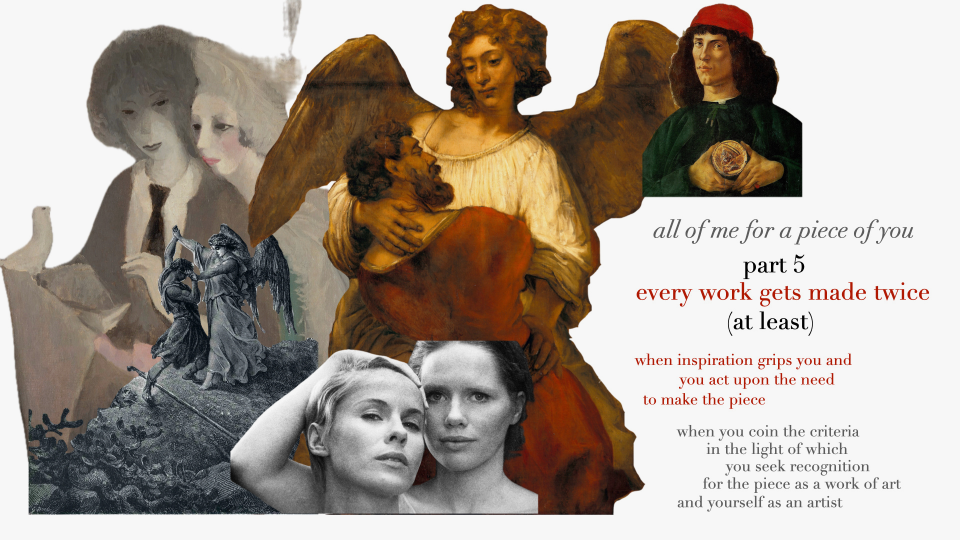
Every Work Gets Made Twice (at least) — when inspiration grips you and you act upon the need to make the piece — when you coin the criteria in the light of which you seek recognition for the work as a piece of art, and yourself as an artist.
In this series of talks, Jan Verwoert addresses dominant protocols surrounding the recognition of authorship in the arts, and searches for alternatives. This talk will attempt to describe the highly different modes in which you may relate to a piece of art, when you receive inspiration for making it, when you make it, and when you explain to yourself and others on what grounds you wish the piece to be recognized as a work of art, and yourself to be credited as its author.
The talk will then try to reckon with how these different modes—the discourses of inspiration, making, and recognition—get mixed up randomly when art and authorship are validated, in normative terms today. Arguably, protocols for presenting art and authorship get streamlined so much that your pitch, aka the terms of recognition you propose, must be super flat and wholesale, for your art and authorship to be rendered identifiable. The pressure to then embody your own pitch and deliver goods that fit the bill, tends to erase all internal difference between maker and piece (producer and product), as well as differentiation between discourses of inspiration, making and recognition. All gets subsumed under the pressure to coin a unique selling point (USP), for offering your self & art up, as a single coherent, readily identifiable product.
Meanwhile, people of course still speak back to art in ever so many different, in different places, moods and modes. The arts of recognizing authorship in different keys are not lost, in every day life. A conversation in a gallery may be followed up a chat over drinks, or by an unexpected exchange years later, when the impression a piece made, has lingered over time, and maybe inspired someone to do some art, in response to yours, unbeknown to you. How to refuse the pressure to compress and identify, and instead cultivate modes of mutual recognition in the key of live difference and living differentiation?
The event is accompanied by a workshop session on Saturday morning in which the ideas proposed in the talk, and shared in excerpts from the manuscript for a forthcoming book, will be discussed in more depth, in the form of communal peer-reviewing.